
AI summary
Summary of article:
Tan Dunsi reminded that when cleaning your home after a typhoon, you should first take precautions, remove standing water, and pay attention to the safety of food and drinking water to avoid infection and disease caused by coming in contact with sewage, eating food soaked in water, or drinking unclean water.
After Typhoon Qiangbi passed, people were busy cleaning their homes. Tan Dunxi, the “godmother of non-poisoning” and a former nurse at the Clinical Poison Center of Linkou Chang Gung Memorial Hospital in Taiwan, reminded that the stagnant water and mud brought by typhoons may contain pathogenic bacteria. If you clean it with bare feet or bare hands, it can cause cellulitis or even leptospirosis, if lesions appear on the skin. When cleaning up after a disaster, you should follow the three major principles of “take good protection, remove standing water, and pay attention to the safety of food and drinking water” to avoid harming your body when cleaning your home.
Tan Dunsey said the most important thing to clean up after a disaster is to wear gloves and waterproof shoes. Some elderly people are accustomed to walking barefoot in the house, or think that wearing gloves while working is inconvenient, and ignore protective measures. Standing water after a storm may contain sediment, trash, and animal feces. If the skin is cut, bacteria can take advantage of it and cause infection in the wound. Among them, Leptospira can enter the human body through contaminated water or soil, skin wounds or mucous membranes.
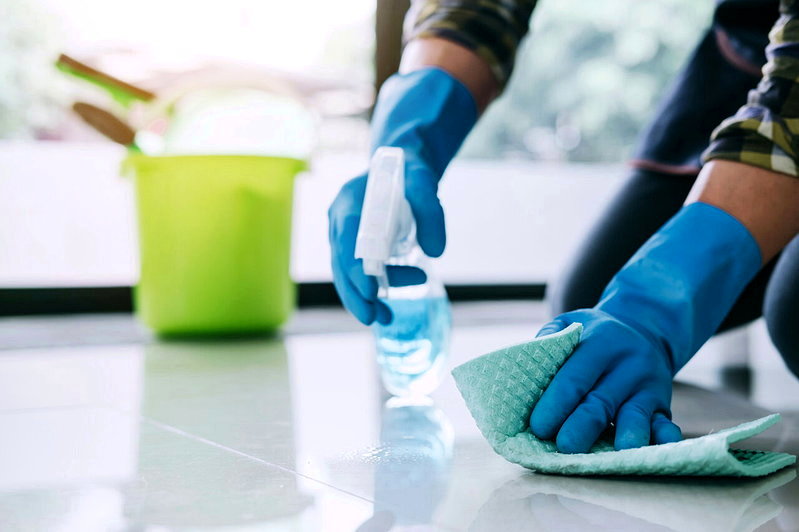
In addition to preventing infection, cleaning up stagnant water is also a focus of post-disaster epidemic prevention. Tan Dunsi said stagnant water can easily become a breeding ground for mosquitoes. People should clean the water accumulated inside and outside the house as soon as possible and clean rotten things, garbage and mud. Floors, furniture and other washable items soaked in water should first be cleaned of dirt and then disinfected with diluted bleach of appropriate concentration depending on the material.
As for water-soaked tableware, Tan Dunsi recommends thorough cleaning and disinfection using a disinfection method suitable for food contact equipment, and finally rinse thoroughly with clean drinking water to avoid disinfectant residues. Food security cannot be ignored after a disaster. Food soaked in feces, especially food that has been opened, has damaged packaging, or is easily spoiled, should be thrown away directly. Don’t eat it reluctantly because you are reluctant to give it up. If the fruit is rotten or moldy, you should not just cut off the moldy part and continue eating it to avoid fungal infections invisible to the naked eye.
If there is a power outage during a storm, food stored in the refrigerator may also spoil due to the rising temperatures. Tan Dunsi reminded that checking the storage condition of refrigerated and frozen foods should be given priority. If there are any abnormalities such as odor or mucus, they should be discarded immediately. However, even if food has no odor, it does not mean it is safe. You can’t judge whether it’s still edible or not based on its appearance alone.
Regarding drinking water, Tan Dunsi emphasized that the turbidity of tap water may increase after a storm. Even if a water purifier is installed in the house, it cannot be taken completely lightly. Changes in water quality may cause increased load on the water purifier filter element, so attention should be paid to replacement and maintenance. It is advisable to boil drinking water before drinking it. If the water quality is obviously turbid, it is recommended to let it sit for about half an hour to an hour. After the suspended solids settle out, the top layer of clean water can be used for treatment to avoid the risk of infection and gastrointestinal diseases.
Summary FAQ
-
Wear gloves and waterproof shoes first to avoid contact with standing water, mud and debris with bare feet or bare hands. If there are wounds on the skin, be careful of invading germs by taking advantage of the opportunity to reduce the risk of infection.
-
Because standing water can be mixed with sediment, trash, and animal feces, it is easy for bacteria and mosquitoes to breed. If it enters the human body through a wound or mucous membrane, it can cause cellulitis or leptospirosis.
-
Food that has been soaked in water, opened, damaged in packaging, or spoiled should be thrown away; Tableware should be thoroughly cleaned and disinfected before washing with clean drinking water. It is advisable to boil drinking water. If the water is cloudy, allow it to settle before using.