
AI summary
Summary of article:
A second wave of fake bomb threats swept through Europe this week, disrupting flights in several countries and briefly grounding military aircraft. Although the outside world suspects that it is related to Russian hybrid attacks, the mastermind behind it has not yet been identified.
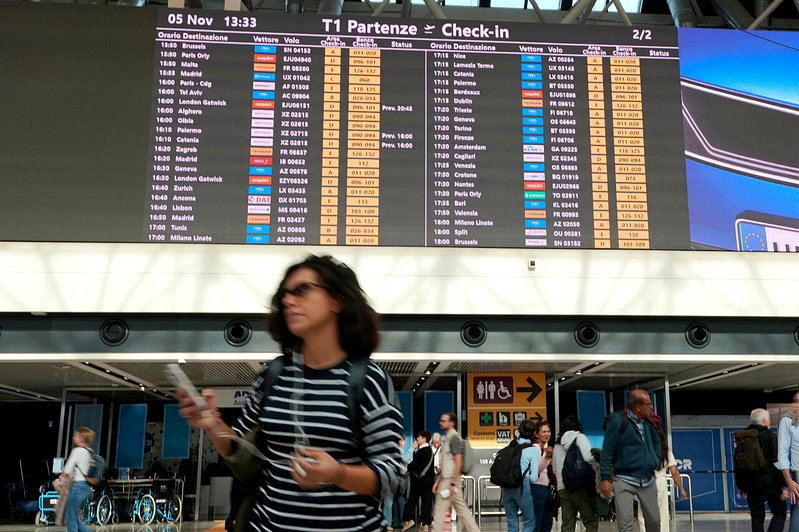
Fake bomb threat surfaced again today in Europe. At least 27 passenger flights were disrupted, some forced to make makeshift landings, and fighter aircraft were scrambled to escort or intercept. This was the second wave of similar incidents this week.
Reuters reported that although no country has yet claimed responsibility for the threats, the incident occurred as several European officials have alleged.Russia Planning sabotage and “hybrid attacks”. Such attacks are generally cheap, easy to discredit, and are not expected to provoke armed retaliation.
On November 3, at least seven flights and one cruise ship received fake bomb threats.
denmark ,poland and Romania, which were both affected by today’s flight disruptions, previously directly accused Moscow of being behind the hybrid attacks. Germany blamed Russia for the attack on Leipzig airport in August this year; Britain, which has blamed Russia in the past, has this time pointed the finger at Iran for a suspected plot to target a US military base.
Both Russia and Iran have denied involvement.
Eric Schouten, head of aviation security organization Dymi, said most of the affected countries support Ukraine in the war against Russian aggression.
While analysts at aviation risk consultancy Osprey Flight Solutions said it was “really highly likely” that the incidents were linked to the Russian hybrid campaign in Europe, they cautioned that other possibilities, such as actions by individuals motivated by personal vendetta or copycat crimes, could not be ruled out.
An Italian airport source told Reuters that an email titled “Threat Report” was sent to the mailboxes of several airlines, airport operators and airport service providers at Rome’s Fiumicino and Milan’s Malpensa airports.
The email claimed the sender was a “soldier of the male nation” and said that explosive devices were planted on flights arriving from Helsinki and Dublin and would detonate within 60 minutes.
Reuters was unable to independently verify the identity of the email sender, and there was no indication who was behind the other threats across Europe.
Summary FAQ
-
At least 27 passenger flights were disrupted in Europe today, with some forced to make makeshift landings and even have fighter planes scramble to escort or intercept. This shows that this incident has placed obvious pressure on aviation safety and airspace management.
-
Denmark, Poland and Romania were all affected, and Italy’s Rome Fiumicino and Milan Malpensa airports received threatening emails. Additionally, on 3 November, 7 flights and 1 cruise ship also received similar threats.
-
Some European officials linked the incident to Russian hybrid attacks because such operations are cheap and easy to deny; But analysts also cautioned that other possibilities, such as personal revenge or copycat crimes, could not be ruled out.