
AI summary
Summary of article:
Alphabet’s financial report and doubts about AI spending created selling pressure on technology stocks, sending the Nasdaq and the Federal Reserve down. However, the funds gravitated towards small stocks and medical stocks. The overall decline in US stocks was limited. The market is also paying attention to higher inflation and the Fed’s follow-up actions.
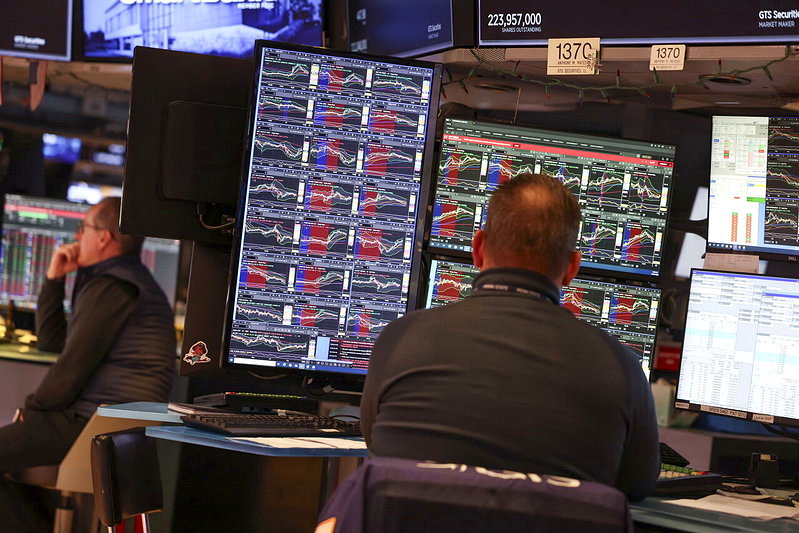
The US stock market fell on the 29th. Alphabet’s financial results bleak and AI spending soars. On the 29th, the stock price fell 12.6%, and its market value decreased by nearly US$500 billion.Nasdaq It fell 1.4%, ending four consecutive gains. However, the selling pressure has not fully spreadUS stocks The funds are diverted to other shares.
The Dow Jones Industrial Average fell 132.54 points, closing at 52,342.56, a decrease of 0.3%; The S&P 500 index fell 23.59 points to 7,720.39, down 0.3%; The Nasdaq Composite Index fell 365.13 points to 26,184.72, a decline of 1.4%.
The Philadelphia Semiconductor Index fell 1.4%, ending four consecutive sessions of gains. Marvell Technology is in advanced talks to acquire optical communications components company Lumentum in hopes of expanding its AI hardware business, Bloomberg reported, citing people familiar with the matter. Marvell shares fell 13%, while Lumentum rose 0.6%.
TSMC ADRs fell 1.8%, ending four consecutive gains.
Alphabet fell 12.6% to US$281.73, its biggest one-day decline in history. Its market value declined by US$499.8 billion, the second largest single-day market value loss for a single company in history.
Google’s cloud business performed strongly, but its other core businesses did not perform as well as expected, and its AI search profitability was low, which also slowed search revenue growth. Even if there is a significant increase in operating profit, it still cannot allay market concerns about huge AI expenses and cash burn.
Microsoft’s financial report was better than expected and capital spending was lower than expected. The stock price still closed down 0.2% at $530.14. The company issued US$25 billion of bonds to attract strong demand to finance AI manufacturing.
New cloud players also came under selling pressure. CoreWeave fell 5% to $60.74; Nebius fell 5.7% to $171.99. A basket of AI-profit stocks fell 2.7%, and the Nasdaq 100 fell 1.4%.
Software stocks fell even more. ServiceNow’s subscription revenue outlook for the quarter failed to dispel market skepticism about the impact of AI on its business, and its share price declined 27%, making it the worst-performing component of the S&P 500 on the day. Although Fortinet’s profits were better than expected, it was still under pressure from profit-taking selling. The stock price fell 20%, but is still up 75% this year.
The after-hours financial report also did not reassure the market. Amazon fell 4.3% during regular trading hours. After announcing its financial report, Amazon fell 6.5% in the market due to a disappointing fourth quarter revenue outlook and increased spending to meet AI needs. Intel’s revenue forecast also fell short of market expectations.
As technology stocks declined, funds turned to smaller stocks and medical stocks.
The selling pressure on technology stocks did not extend to the entire market. More than 400 S&P 500 component stocks closed higher, and the Russell 2000 index rose 1%, reflecting a shift of funds to other investment goals.
Baird investment strategist Ross Mayfield said it was a positive sign that small-cap stocks still performed well as the market sought safety. The market currently believes that if there are problems in AI investment, it does not mean that there are problems in other areas as well.
Chris Larkin of Morgan Stanley subsidiary E*Trade said the market price on the 29th was a microcosm of the October market: AI concerns dragged down technology and communications services stocks, and the impact on other sectors was relatively limited.
Healthcare stocks benefited from the earnings report. Eli Lilly raised its revenue forecast, rising 6.6% to US$1,373.7, due to strong demand for diabetes and weight-loss drugs; Merck rose 3.8% to US$146.33; Bristol-Myers Squibb raised its full-year revenue forecast, closing 1.4% higher at US$61.39.