
AI summary
Summary of article:
The expansion of Democratic Party power could slow US data center construction and recalibrate the valuation of the AI supply chain. Although this has led to a decline in technology stocks and economic concerns, it may also put the brakes on overinvestment.
After the US midterm elections,wall Street The celebratory market only lasted a day before it turned into a selling wave of AI stocks.
A Democratic victory could slow data center construction and force the market to reevaluate the AI industry’s growth prospects. However, this political change that has caused technology stocks to decline could also put the brakes on excessive AI investment and put the industry on a more stable growth path.
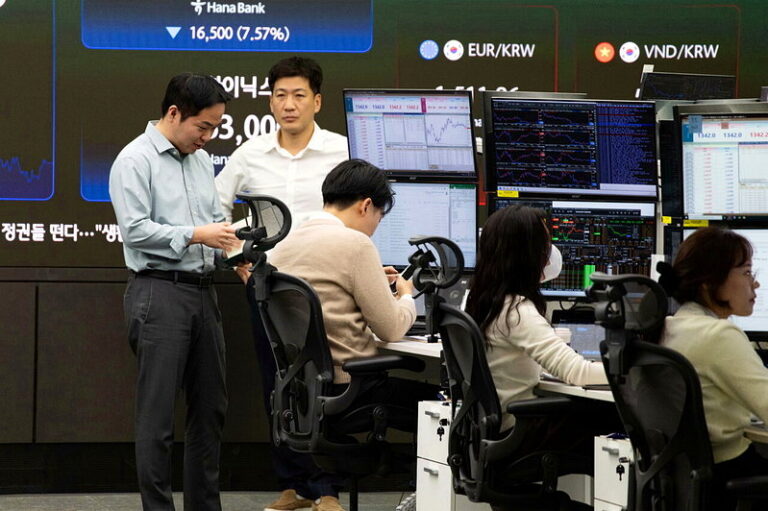
US stocks fell sharply on Thursday (5th), with the Philadelphia Semiconductor Index falling 12.3%. The S&P 500 index fell 4.4%, with the value of component stocks evaporating by nearly US$2.9 trillion in a single day, setting a record.
Barron’s Weekly pointed out that how fast data centers can be built in the future has now become a difficult question to answer, and it has also shaken the valuation basis of the entire AI supply chain.
Wall Street believed that AI data centers would continue to expand at a rapid pace, and this was based on forecasting the revenues and profits of chip, memory and power equipment suppliers in the next few years and setting stock target prices.
Now that the pace of construction may be limited, original growth forecasts must be reevaluated, and previously rising AI stocks are also facing valuation revisions.
A sharp decline in stock prices also triggered financing calls, forcing traders to sell stocks to pay margin, creating a vicious cycle of selling as the stock price fell, and the selling pressure even spread to defensive stocks such as health care and consumer goods.
According to a CNN analysis, Democratic governors who support a moratorium on data center construction or extend the measures will control states that account for about 45% of planned data center capacity in the United States after taking office next year, of which Texas accounts for 25%.
This does not mean that relevant projects will be suspended, but obtaining building permits, power supply guarantees and tax incentives may face greater resistance in the future.
Wells Fargo estimates that if planned data center capacity in Texas was reduced by 10%, spending on AI infrastructure by large technology companies could be reduced by 1.6%.
ING estimates that AI investment could contribute as much as a quarter to U.S. economic growth this year, and the impact of the manufacturing slowdown may not be limited to technology stocks.
However, AI investment cooling off is not a bad thing. CNN reported that the massive expansion of data centers has increased inflationary pressures and triggered a backlash from local residents.