
AI summary
Summary of article:
As TSMC and its supply chain relocated to Phoenix, Zhang Shengyi used his years of experience in real estate and the overseas Chinese community to help Taiwanese businessmen solve their factory, office and housing needs. He also wondered how the overseas Chinese community could attract younger generations to take power.
withTSMC After setting up the factory in Phoenix, Arizona, United States, has gradually become an important base for Taiwan’s semiconductor industry layout. From suppliers looking for factories and companies arranging office space, to Taiwanese families who immigrated there for work looking for housing, to companies investing in the United States, there are many life and operational problems that must be solved one by one in an unfamiliar environment.
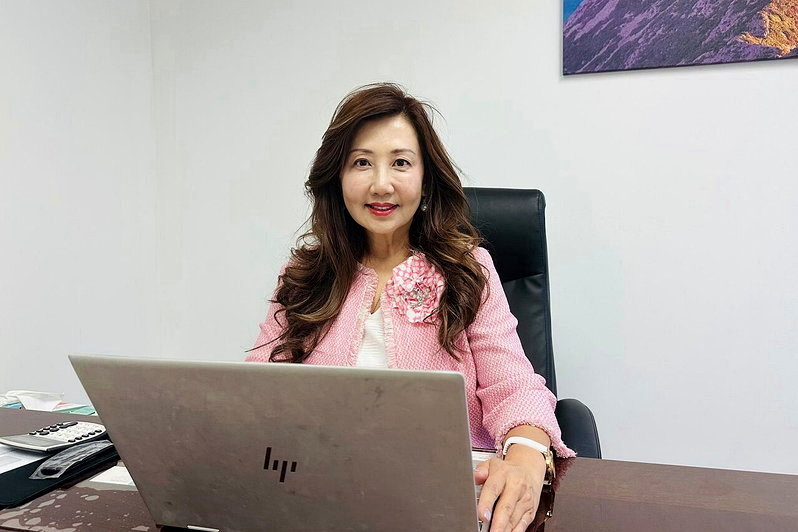
Zhang Shengyi, who has been working in Phoenix for more than 30 years, is one of those helping Taiwanese companies and new immigrants connect with local resources. Fromreal estate Investment and commercial real estate services, assisting TSMC and related suppliers in handling local needs, and even establishing a supplier company PFEAZ to explore the local market in-depth. She uses her professionalism, connections, and life experience gained over the years to provide assistance to Taiwanese people wishing to develop in the United States. She also serves as the founder and current president of the Taiwan Semiconductor Suppliers Association in Phoenix, which actively connects Taiwan’s corporate resources.
Zhang Shengyi’s real estate business includes residential buildings, commercial buildings, medical spaces and industrial real estate. As TSMC and related supply chains relocate to Phoenix, Zhang Shengyi relies on her real estate expertise and local connections to help Taiwanese businessmen find industrial land, factories and office space, and also support related housing needs by becoming local assistants for companies in the United States.
He explained that when a company sets up shop in the United States, it not only needs land or factory buildings, but also includes arrangements such as transportation space, operational space, and employee housing. This also motivates employee families to immigrate. From finding a place to live, understanding the tasks of life to adjusting to the new environment, these are all challenges that new immigrants face. So, they expanded their services beyond real estate transactions to help companies and families become familiar with Phoenix’s life and resources more quickly and reduce search time.
Talking about why she is willing to devote so much time to helping the people of Taiwan, she recalled that when she first came to the United States, she only had two suitcases. She started with an F-1 student visa, then got a work visa, and then built her career and life step by step. For a person who leaves a familiar environment and starts over in a foreign country, many things have to be discovered on one’s own, and it also takes time to accumulate experience and connections. Because she has experienced these hardships personally, she hopes to share what she knows with those who come after her, so that new immigrants don’t have to start from scratch.
In addition to the business field, Zhang Shengyi, who is currently a member of the Overseas Chinese Affairs Committee, has also long been involved in the local community and overseas Chinese affairs. He has gained experience in the mainstream business community in the United States and continues to participate in local public affairs and national diplomacy related to Taiwan through community activities and exchanges.
He said that when he entered the commercial real estate sector in his early years, there were not many Asian businessmen. Facing skepticism in the market, he decided to prove himself with his professional abilities and practical results, and gradually built up confidence in the industry. This experience also made her realize that in addition to developing professional skills in the United States, it is equally important to understand the local culture, establish trusting relationships, and be prepared to invest in the community.
However, as the Taiwanese population and businesses in Phoenix continued to grow, they also began to think about how the Taiwanese overseas community could continue. He observed that some traditional overseas Chinese groups are still dominated by older generations, and how to attract youth to participate and take charge is important.
He believes that generational inheritance should not just be about handing over positions, but more importantly, it should give space to the youth to play, be willing to engage in activities, propose new ideas and gradually develop the ability to take responsibility.
For them, younger generations do not need to fully follow the practices of the previous generation, but should have the opportunity to develop their own ways of making overseas activities more relevant to the needs of new immigrant families and youth.
Summary FAQ
-
With her real estate expertise and local connections, she assists Taiwanese businessmen in finding industrial land, factories and office space. She also supports employee housing arrangements, helping companies and families quickly adapt to Phoenix’s living and operating environment.
-
As TSMC set up factories in the United States and moved up the supply chain, Phoenix gradually formed a semiconductor cluster. In addition to looking for land and factories, companies also need offices, transportation, housing and other supporting facilities, further increasing the demand from local Taiwanese businessmen.
-
He believes that inheritance is not just about handing over positions, but also about allowing youth to participate, propose new ideas, and gradually take over responsibilities, so that overseas Chinese activities can be closer to the needs of new immigrant families and the younger generation.