
AI summary
Summary of article:
The Japanese drama co-branding controversy led to Sanrio apologizing and withdrawing the case in China, but netizens questioned its lack of sincerity. At the same time, the controversy over Mbappé’s apology has spread, which has revealed that the Chinese market is increasing the pressure on foreign companies and public figures to apologize.
「mbappe After apologizing, it’s Hello Kitty’s turn to apologize.”Japan The news that the company Sanrio recently issued an apology on its official website has caused heated discussion on the Chinese Internet. Foreign media revealed that some Chinese netizens summarized the two “apology” incidents that occurred this week, and some people joked that “Welcome to the era of the great apology.”
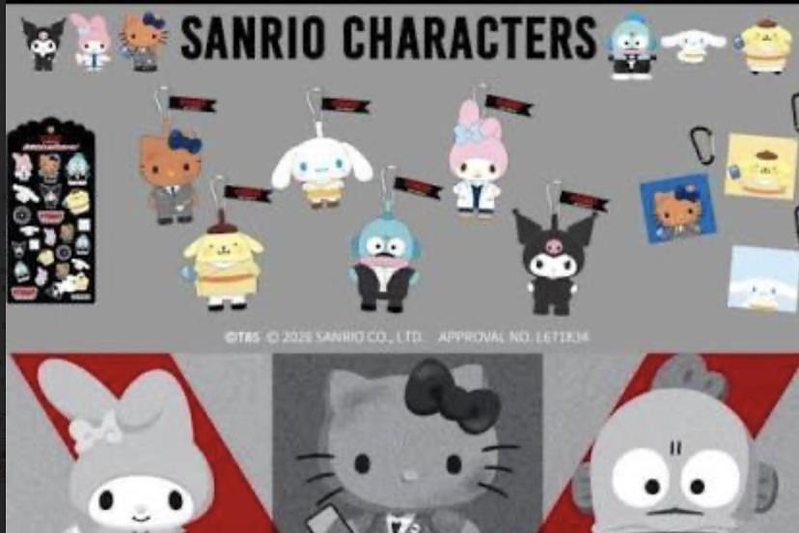
In the second season of the Japanese TBS TV series VIVANT, Chinese personnel cut off Japanese agents’ fingers and stabbed them in the stomach. China’s state broadcaster CCTV recently criticized the series as a deliberate plot to defame China, and also said the series glorifies Japan’s overseas operations. The controversy later spread to Japan’s Sanrio Hello Kitty and other characters and VIVANT co-branded products.
Singapore’s Lianhe Zaobao reported on the 30th that the Global Times, a subsidiary of the People’s Daily of the Communist Party of China, published an editorial criticizing Sanrio for “never playing with fire with the Japanese right wing”, and reported that Sanrio China’s revenue in the first half of this year reached 781 million yuan, an increase of more than 40% year-on-year. The editorial emphasized that since Sanrio attaches great importance to the Chinese market, it should show respect through actions.
Sanrio International Trading, Sanrio’s subsidiary in China, later apologized on Chinese social media Weibo and announced the termination of this joint brand and all subsequent projects.
However, many Chinese netizens didn’t buy it and believed that the statement, which was only visible on Weibo, was “fooling the Chinese people.” The most liked comment under the post read, “Is this posted on an external network (foreign online platform)?”; Some netizens then asked why it was not announced simultaneously on X and other platforms, “If not, you can copy the homework from Mbappe.”
A day before Sanrio’s apology event, the Chinese internet was still discussing French football superstar Kylian Mbappé’s apology for remarks that “insulted China”. Video of a recent online interview shows that Mbappé said in a previous interview that the emoticon superimposing his face onto the face of a “Chinese dictator” was the funniest thing. The video also featured a meme in which Kylian Mbappe’s face was juxtaposed with the image of late Chinese leader Mao Zedong.
Many Chinese companies have ended cooperation with Mbappé on the 27th. State media CCTV also stopped broadcasting Mbappé’s Spanish football league matches and matches involving Mbappé, and removed Mbappé-related advertisements from shelves.
Mbappé issued an apology in Chinese, English and French on his personal X account that night. Earlier, La Liga and the president of La Liga had publicly apologized, but Real Madrid, the club where Mbappé plays, did not make any statement for the first time. A spokesperson for the Sports Youth Center of China Central Radio and Television Station publicly declared that “There is no need to discuss anything until Real Madrid’s apology is received.” The Real Madrid club later announced an apology for “the unhappiness and offense caused by Mbappé’s comments towards the Chinese people”. China Radio and Television confirmed that it had received Real Madrid’s apology letter, and a Chinese Foreign Ministry spokesperson also responded that “it values the apology made by the person involved.”
According to reports, at this point, this growing public opinion storm shows signs of finally subsiding.
The report said it is not unusual for public figures, companies or institutions to apologize after their words and actions arouse controversy, but two incidents this week show that “the Chinese public’s demand for an apology continues to grow and standards continue to improve: in addition to the specific wording of the apology, the visible extent of the statement has also become a yardstick for measuring sincerity.”
“The confidence behind this comes from the strong purchasing power of the Chinese market,” the report said. According to Agence France-Presse, Sanrio has more than 60 stores in China, and the Chinese market accounts for 40% of the company’s overseas sales and about 25% of its operating profit. Spanish media Vojpopuli quoted estimates that La Liga’s television broadcasting business in the Chinese market will be worth more than 400 million euros by 2030.
Mark Dreyer, a games analyst who has long observed China’s games industry, said that in the past, foreign companies had responded to similar controversies by issuing a brief and apologetic statement on Weibo, then keeping a low profile and waiting for the focus of public opinion to shift, but that strategy is no longer feasible.
After Mbappe, La Liga and Real Madrid issued apology statements one after another, many Chinese netizens still believe that the apology was not sincere enough. Statements like “Mbappé’s apology does not mean changing the story” were also hot searches on Weibo.
The report said that the endless controversy over the apology has exhausted some Chinese netizens. “I just said a few words, but apologized and the whole world knew about it. I don’t know who is more embarrassed.” Some suggested that “foreigners should stop praying before eating every day and ask for forgiveness from China instead.”
The report further states that multinationals and public figures understand the need to respect the Chinese market and consumers and repair trust and relationships through an apology. However, as the standards of apology continue to improve, the goals of apology continue to expand, and the controversy over apology prolongs, the meaning of apology may become increasingly weakened in the process, and people may even forget why it happened in the first place.