
AI summary
Summary of article:
As electricity demand increases from the expansion of AI data centers, residents of many states in the United States protest power grid upgrade projects that invade their backyards. Victoria homeowners like Vicky Hu and others are protecting their rights and interests through lawsuits and struggles.
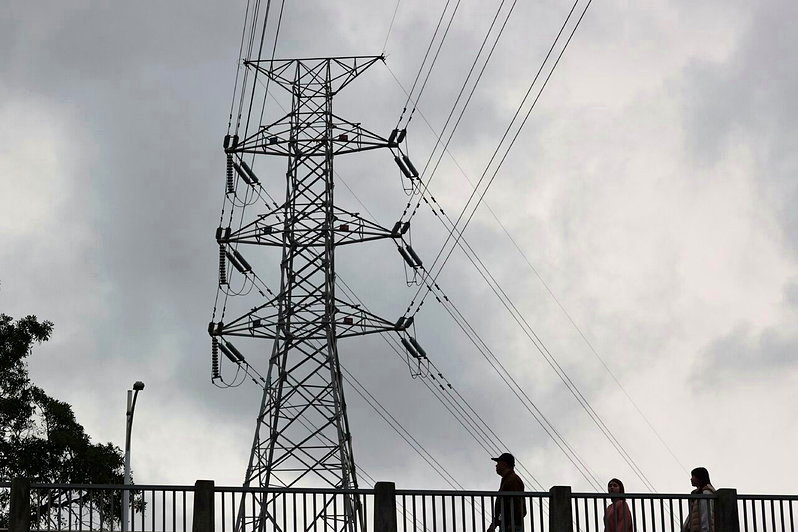
The Wall Street Journal reported on the 2nd that the expansion of artificial intelligence (AI) features has increased the demand for electricity, and more and more homeowners have built large power towers in their backyards and are protesting against it.Virginia Ashburn resident Vicky Hu is an example of this. Dominion Energy plans to build a 165-foot-tall transmission tower on its land.
In the summer of 2025, Hu Weiqi realized that his home was actually at the center of the electricity network when a representative from the power company called to tell him that transmission lines would be laid and poles erected in the backyard. He said power company personnel claimed they would minimize the damage and impact, “you won’t even notice there are power poles in the backyard.”
However, the so-called “telephone pole” is a 165-foot 5 million volt transmission tower. Trees on 1.3 acres owned by Vicky Hu must be cut down, and hundreds of trees in the forest behind it must also be removed.
Hu Weiqi, who is engaged in real estate and construction industry, has lived on this street in Ashbourne for 20 years. The rear of his house is adjacent to a protected forest area. He thought it was impossible to develop the forest land, but later learned that Dominion Energy had eminent domain authority, which allows it to take private land for public use as long as proper compensation was paid. Hu Weiqi’s petition case has been receivedVictoria The Supreme Court accepted.
Hu Weiqi realized that he was not far from the world’s largest data center market. As of March this year, a total of 233 data centers had been completed or were in various stages of construction in Loudoun County, Victoria, known as “Data Center Alley”.
Demand for electricity has increased due to the rapid growth of data centers, and residents have been affected by conflicts caused by power grid upgrades.
In Texas, country singer Tanya Tucker was also one of the residents who joined the protests. His farm in Burnett County could be divided into two by a high-voltage power line.
“You can’t come in and turn other people’s lives upside down,” Tucker told state lawmakers at a public hearing in July.
In Georgia, Cynthia Van Eps spent more than a year fighting Georgia Power over a power line construction project passing through her backyard, which meant her backyard swimming pool would have to be demolished and her future home would be just 12 feet from the power line.
Van Eps hired a lawyer to prepare for the lawsuit, but later signed a confidential settlement agreement with the power company, and the power company agreed to buy the house and demolish it. He said not all people facing similar situations like him can afford a lawyer and he hoped for a comprehensive amendment to land acquisition rules.
Summary FAQ
-
Following reports focused on electricity demand driven by the expansion of AI facilities, power companies installed large-scale transmission facilities in residents’ backyards to upgrade the power grid, leading to objections, lawsuits or negotiations from homeowners in several states, reflecting the conflict between public construction and private residential rights.
-
Because Dominion Energy plans to build a 165-foot transmission tower on its land, it will also need to cut down 1.3 acres of trees and woodland behind it. He originally thought that the conservation forest would not be developed, but later learned that the company had ownership rights.
-
Texas singer Tucker fights against high-voltage power lines crossing his farm; Van Eps of Georgia battled the power companies for more than a year, ending in a confidential settlement. Both cases show that grid expansion is causing widespread reaction among residents.