
AI summary
Summary of article:
The commentary pointed out that Trump’s suspension of arms sales to Taiwan may cause Xi Jinping to misjudge the US position. If arms sales are resumed in the future, it could lead to stronger retaliatory attacks from Beijing and increase risks across the Taiwan Strait.
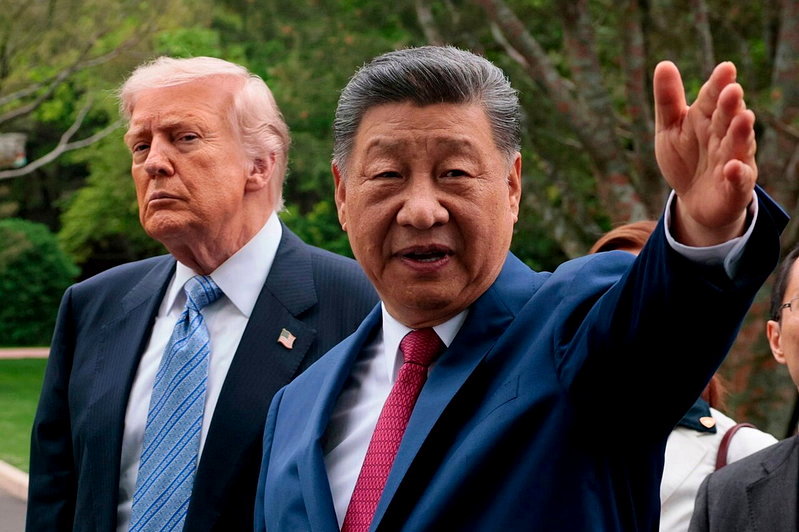
The New York Times published a commentary on the 2nd by Craig Singleton, senior director of the China program at the American think tank Foundation for Defense of Democracies. He said:trump The headline “Take a risky step on the Taiwan issue” suggests that US President Trump’s freeze on US$14 billion in arms sales to Taiwan at the beginning of the year has sent an alarming signal. President of Mainland ChinaXi Jinping Due to fear of wrong decision, this move can be interpreted asWashington It has been acknowledged that stability between the United States and China is premised on the United States limiting its support for Taiwan. However, the United States is obliged to resume arms sales to Taiwan in the future. Historical experience shows that if Beijing determines that the United States has reneged on its commitments, it will take strong retaliatory measures, which could lead to a repeat of the Taiwan Strait crisis in the 1990s, or even more serious consequences.
Singleton pointed out that Trump has been delaying the arms sale since the beginning of this year. Given that the United States and China are working hard to maintain the trade truce, this makes sense from a diplomatic perspective. Trump has described the arms sale as a “very good bargaining chip” when negotiating with Xi Jinping, and said how it is ultimately handled “depends on China.”
For Trump, suspending arms sales not only preserves negotiating leverage, but also does not rule out the possibility of a future sanction. However, Beijing may attach deeper political significance to this decision than Trump originally intended. In particular, Xi Jinping has placed the Taiwan issue at the core of US-China relations, and urged Washington to change its position at the Trump-Xi meeting in September and make it clear that it “opposes Taiwan independence.”
Singleton analyzed that for decades, the United States and China have dealt with the Taiwan issue through vague diplomatic terms, allowing both sides to maintain their own space for interpretation. For example, in the 1972 US-China joint communique, the United States only recognized Beijing’s claim that “Taiwan is part of China,” but did not express agreement. After the United States and China established diplomatic relations in 1979, the United States recognized the Beijing government as the sole legitimate government in China, but did not express any stance on the status of Taiwan and continued to maintain informal relations with Taiwan.
However, the United States has drawn clear lines in the past when it comes to selling arms to Taiwan. In 1982, then-President Ronald Reagan agreed to gradually reduce arms sales to Taiwan in order to improve US–China relations, but stressed that Beijing should continue to deal peacefully with Taiwan. Reagan also assured Taipei that the United States has not set any timetable for ending arms sales and will not consult Beijing before deciding whether to sell arms to Taiwan in the future.
In contrast, Trump’s suspension of arms sales this time did not set the same limits.
History also proves that once Beijing believes that the United States has violated its previous guarantees, it can take violent retaliatory measures. In 1995, US officials told Beijing that then-Taiwanese President Lee Teng-hui would not be allowed to visit his alma mater, Cornell University. However, then-U.S. President Clinton changed his stance under pressure from Congress and approved Lee Teng-hui’s visit to the United States. China immediately recalled its ambassador to the United States and began military exercises around Taiwan. The following year, on the eve of Taiwan’s presidential election, missiles were fired into the waters near Taiwan, forcing the United States to send two aircraft carrier battle groups to the area.
Singleton warned that the United States will continue to sell arms to Taiwan in the future, but if arms sales are resumed after a long period of suspension, it may appear that Xi Jinping has misjudged the intentions of the United States and will face greater pressure and will have to respond with stronger action.
On the other hand, Beijing has so far not shown proper restraint in response to Trump suspending arms sales. Since Trump’s return to the White House, China has continued to conduct air and sea patrols around Taiwan and hold military exercises simulating an attack on Taiwan. This year, coast guard patrols were expanded to eastern Taiwan to signal that Beijing is capable of cutting off Taiwan’s vital supply routes through the blockade.
Singleton called on Trump to immediately delink arms sales to Taiwan from US-China trade talks and approve smaller but still substantial arms sales. Before Beijing reads the suspension of arms sales as a new tacit understanding between the United States and China, it should clearly state the United States’ position that it is still committed to assisting in Taiwan’s defense. Singleton stressed that vague tactics have indeed helped maintain US-China relations in the past, but some things should not be left open to interpretation by both sides.
Summary FAQ
-
The greatest risk is that Beijing could interpret the suspension of arms sales as the United States’ acceptance of limiting support for Taiwan in exchange for US-China stability, thereby misjudging Washington’s intentions. Once this misconception is made, when the United States resumes arms sales in the future, Beijing may believe that its commitments have been reneged on and respond strongly.
-
It is used in the article to make it clear that if Beijing feels that the United States has deviated from its previous tacit understanding, it will often retaliate by military means. Lee Teng-hui’s visit to the United States that year prompted China to recall its ambassador, military exercises, and missile tests. Ultimately, the United States dispatched an aircraft carrier in response, showing that a miscalculation could quickly escalate a crisis.
-
The author suggests that Trump as soon as possible delink arms sales to Taiwan from the US-China trade talks and approve small but substantial arms sales to clearly convey that the United States still supports Taiwan’s defense and prevent Beijing from viewing the suspension of arms sales as a new political understanding.