
AI summary
Summary of article:
The 2026 New York City Marathon will be held on November 1. Police and the MTA deployed massive security and traffic control to ensure that the more than 60,000 runners completed the race safely.
2026new york city The marathon will be held on November 1 (Sunday) and is expected to attract over 60,000 runners and over 2 million spectators. The event will take place in five districts across the city, and traffic control will be imposed on some major bridges and roads. NYPD Chief Jessica S. Tisch recently announced security arrangements for the event, stating that there is currently no known, specific and credible threat to this year’s marathon, but that the police will still deploy thousands of police officers, helicopters, drones and other equipment to strengthen vigilance; Metropolitan Transport Authority (MTA ) also announced traffic adjustments.
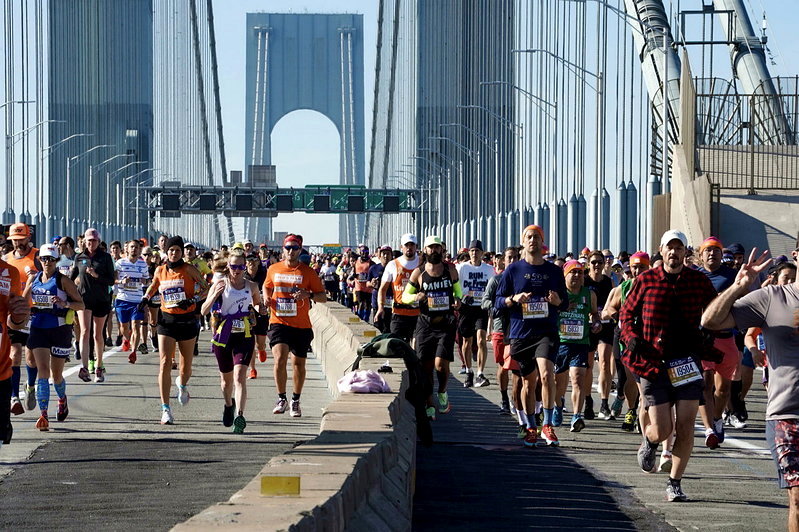
This year marks the 50th anniversary of the New York City Marathon adopting a track spanning the five boroughs. The 26.2-mile race starts at 8 a.m. SundayStaten Island Starting from the Verrazano-Narrows Bridge, the runners ran in batches, passing through Brooklyn (Brooklyn), Queens, Manhattan and the Bronx, and finally reached the finish line in Central Park.
Teich said city police have been preparing for the event for months and are working closely with the New York Road Runners, city, state and federal law enforcement agencies. Thousands of police officers will be deployed along the route on race day, supported by emergency services, mounted police, dog units, port patrol, aviation and bomb disposal teams.
Police will also send helicopters and drones for real-time aerial surveillance, and install more than 10,000 metal barriers along the way, with hundreds of vehicles used as security barriers. Joint Operation Center will also be activated to monitor the situation around the track through fixed and mobile cameras and intelligence personnel will also keep an eye on social media to timely investigate potential threats.
Tichy reminded that the luggage of people entering the designated viewing area in Central Park may be inspected. Coolers, large handbags, chairs, umbrellas, weapons and other items are prohibited. People have also been prohibited from operating drones during the program. Police will deploy a special team to detect and deal with unauthorized drone activities.
Additionally, the upper lanes of the Verrazzano-Narrows Bridge will be closed in both directions beginning at 11 p.m. on October 31 (Saturday), and the lower lanes will be closed at 7 a.m. on November 1. According to the MTA announcement, the bridge will be closed to all non-emergency vehicles from 7 a.m. to 4 p.m. On that day, more drivers will have to reroute. The Bay Street and Lily Pond Avenue exits in Staten Island will also be closed beginning at 3 a.m. Sunday and are expected to reopen around 4 p.m.
Other affected bridges include the Ed Koch Queensboro Bridge, which will close at 6:30 a.m.; the Pulaski Bridge, which will close at 7:15 a.m.; and the Willis Avenue Bridge and Madison Avenue Bridge, which will close at 7:30 a.m. Each bridge will be reopened one by one after the last batch of runners crosses the respective sections.
Additionally, the Central Park Transverse Roads at 65th Street, 79th Street, and 96th Street will be closed for most of the day, and buses will not be able to cross Fifth Avenue during the game. Several bus routes across the city are expected to be rerouted, and some subway lines will also have service adjustments due to scheduled construction.
Summary FAQ
-
The race will be held on Sunday, November 1, with a total length of 26.2 miles. It is expected to attract more than 60,000 runners and more than 2 million spectators, and will span the five boroughs of New York City.
-
The NYPD will dispatch thousands of police officers, helicopters, drones, mounted police, police dog units and bomb disposal teams, as well as set up joint operations centers, metal roadblocks and community surveillance systems.
-
The Verrazano-Narrows Bridge, Queensboro Bridge, Pulaski Bridge, etc. will be closed at certain times, and the Central Park cross-roads will also be closed, bus routes will be rerouted, and some subway services will be adjusted simultaneously.