
AI summary
Summary of article:
A 127-year-old roller piano has been restored to its street style at the Italian Museum of New York, symbolizing the return of Italian immigrant musical culture and reflecting the far-reaching impact of the 1935 ban on the industry.
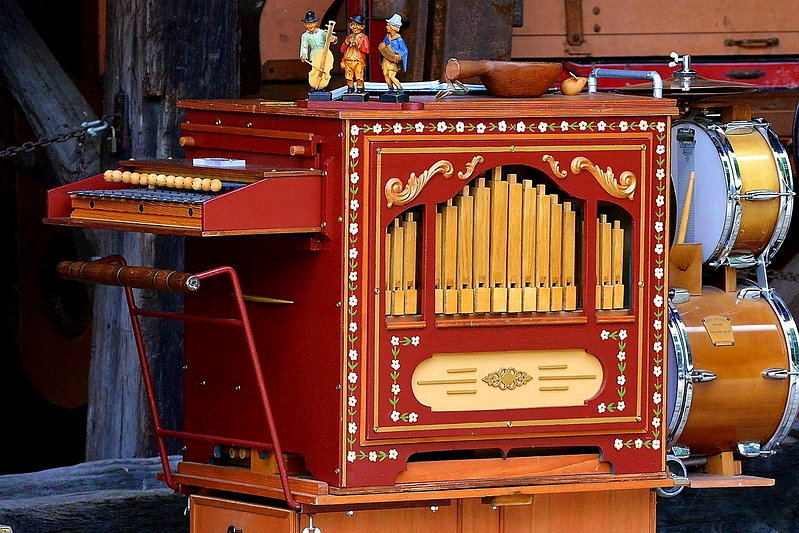
It is a “traveling house” that has lasted for 100 years. Recently a rare piano was unveiled once againnew york city manhattan Playing folk tunes, it has been almost a century since former mayor Fiorello LaGuardia banned such instruments from appearing on city streets.
The New York Post reports that this 127-year-old barrel piano has been revealedItaly A special historical exhibit at the Italian American Museum revisits the time when this device was a ubiquitous sight on the streets of the Big Apple.
Tony Gangi, who owns this piano, said it is a great homecoming not only for the instrument, but also for the history of the entire ethnic group. He is extremely happy that it can be reunited with the city where it was born.
The piano’s appearance marks its first return to the Big Apple since 1899, when it was built on Chambers Street by Cesare Maserati, one of the most prolific builders of roller pianos and pipe organs at the time.
The great busker Marino Persechini owned the piano during his 70-year career. He was famous for carrying a piano and sharing music on the streets throughout Boston until his retirement in 1974.
Street organ-grinders like Persechini, also known as the “Hurdy-Gurdy Man”, were mostly Italian immigrants who came with the American dream in mind, and these instruments quickly became a symbol of Italian-American identity.
Gangi explains that these tools provided them a way to earn a living and build their careers without being discriminated against by employers, but unfortunately, it also created a stereotype about Italian-American immigrants. As a teenager in Arizona, LaGuardia was reportedly taunted by a man who used racial slurs against the future politician and jokingly asked, “Where’s your monkey?”
Later, in 1935, LaGuardia refused to renew the licenses of street hurdy-gurdys and roller piano players in New York City on the grounds of “begging” and “obstructing traffic”, driving this culture out of the city entirely.
This ban remained in place until lifted by Mayor John V. Lindsay in 1970, but its impact on the once booming industry was irreversible. Gangi said the ban is harmful in many ways because unfortunately no one makes these devices in the United States anymore; Even those instruments that survive today have a bleak future as even antique dealers do not know much about the history of the drum piano.
Ganzi and his wife Suzanne told the story of the Persechini family, the piano, and LaGuardia in a special exhibit at the museum, where the museum also encouraged visitors to play the keys that the great composer once touched.
Curator Joseph V. Scelsa said this extraordinary instrument is not only part of Italian-American culture, but also reflects the hardships of immigrants and their enthusiasm to share this culture in their new homeland.
Summary FAQ
-
As it returns to Manhattan, New York for the first time since it was built in 1899, it has been more than a century since its original birthplace. For the owners and the Italian community, it is also a return to culture and history.
-
In 1935, they stopped issuing licenses to street accordionists and roller piano players on the grounds of begging and obstructing traffic, which led to the gradual withdrawal of this type of street music from New York City and serious damage to the industry.
-
Through the story of the piano and the Persechini family, the exhibition presents the struggle of Italian immigrants to earn a living and share their culture on the streets through music. It also highlights that these musical instruments were once a symbol of their identity and the American dream.