
AI summary
Summary of article:
Daylight savings time ends on November 1 in the United States. People can get an extra hour of sleep, but experts remind that they should rely on an earlier bedtime and morning light to gradually adjust their biological clocks.
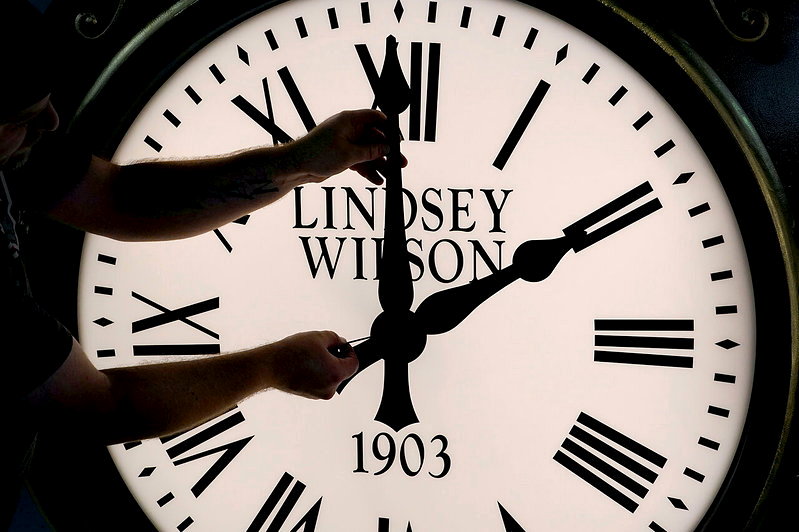
Daylight Saving Time will end on Sunday, November 1, when clocks will be turned back one hour, giving people across the United States an extra hour of sleep, but the sky will become darker in the afternoon. Experts recommend getting up early in the morning and getting exposure to sunlight to help your biological clock adjust smoothly.
Daylight saving time will end at 20:00 a.m. on November 1 everywhere and will return to “standard time” (standard time), which will last until March 14 next year, when it will change back to daylight saving time.
Living in the United States, we have to adjust our time twice a year, which many people complain about. The Associated Press-NORC Public Affairs Research Center (AP-NORC) last yearvoting It found that only 12% of adults surveyed in the United States support daylight saving time, and about half of the respondents oppose it.
Lawmakers debated whether to maintain the time adjustments again this summer.
People often have difficulty adjusting to time adjustments in the spring because they lose an hour of sleep, but many also lament the end of daylight saving time in the fall. Not only are the days getting shorter, but once the clocks adjust, there is less daylight available for exercise or outdoor activities after school or after work.
Health organizations such as the American Medical Association and the American Academy of Sleep Medicine have called for the adoption of year-round standard time, saying it is more consistent with the time the sun rises and the biological rhythms of the human body. Bright light in the morning and dim light at night are key to keeping your circadian rhythm on track, helping people wake up on time and develop healthy sleep habits.
Countries around the world that implement daylight saving time are mainly concentrated in North America and Europe, and the dates of clock adjustment vary. In the United States, Hawaii and most areas of Arizona do not observe daylight saving time, but instead use standard time.
Adjusting the time twice a year is a test for the body. As for how to adjust to jet lag, experts recommend that, whether it’s fall or spring, a few days before adjusting to jet lag, go to bed 15 minutes earlier each night to help acclimate. Additionally, morning sunlight is important for resetting circadian rhythms and achieving healthy sleep. It is advisable to go outside for sunbathing or sit near the window.
In the United States, repeal of Daylight Saving Time is discussed every year; An attempt was made in the 1970s, but there was strong public opposition and it had to be canceled within a year. In July this year, another attempt was made to repeal Daylight Saving Time. The House of Representatives overwhelmingly passed the Sunshine Protection Act in hopes of permanently adopting Daylight Saving Time. President Trump supported it, but the Senate took no action.
Summary FAQ
-
Daylight saving time will end at 2 a.m. on November 1, and clocks will be set back one hour to standard time by March 14 next year.
-
Experts recommend going to bed 15 minutes earlier each night before your time adjusts, and going outside or sitting in the sun near a window to use morning light to reset your circadian rhythm.
-
The AP-NORC poll shows that only 12% of adults support daylight saving time, and nearly half oppose it. While Congress has discussed repealing Daylight Saving Time several times in recent years, the House of Representatives has also passed a bill, but the Senate has yet to act.