
AI summary
Summary of article:
China’s State Administration of Cultural Heritage has received two stone statue heads from the royal tombs of the Northern Song Dynasty in Australia, one from the Yongchang Mausoleum and the Yongyu Mausoleum respectively, which shows that China and Australia continue to cooperate in the recovery and return of lost cultural relics.
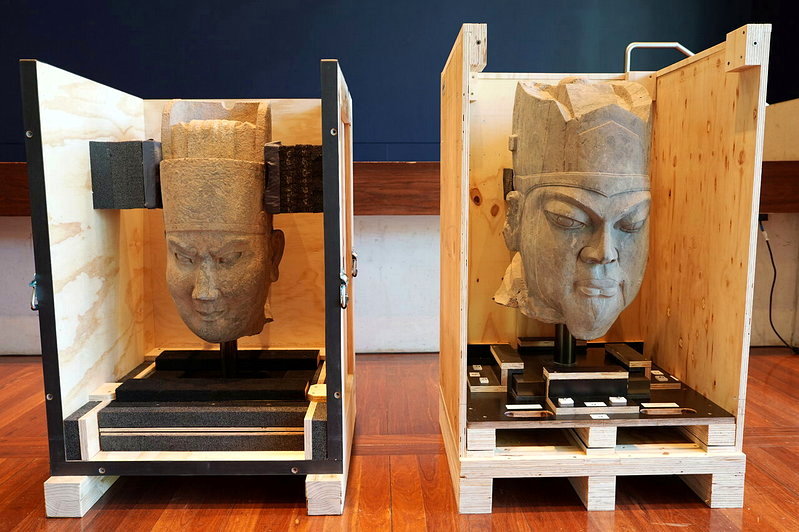
On the afternoon of the 28th local time, China’s State Administration of Cultural HeritageAustralia The National Gallery of Art has received two lost cultural relics returned from Australia to China, namely the head of a civil official statue in the Yongchang Mausoleum, an imperial mausoleum of the Northern Song Dynasty, and the head of a military attache statue in the Yongyu Mausoleum.
CCTV news stated that the Yongchang Mausoleum and the Yongyu Mausoleum are locatedHenan Gongyi has China’s largest and relatively well-preserved collection of stone carvings from imperial tombs of the Northern Song dynasty. It contains human figures, auspicious animals and other richly sculptured stone carvings (stone carvings from the tombs of nobles and high-ranking officials). The heads of civilian and military officials returned this time are representative relics of the stone carving art of the Song Dynasty.
According to collection records previously announced by the National Gallery of Australia (NGA), the two cultural relics are made of limestone, Xinhua news agency reported. The heads of the military and civilian official statues are 68 cm and 70 cm high respectively; Their weight is 132 kg and 223 kg respectively. It is also the renewed cooperation between China and Australia in the field of recovery and return of lost cultural relics. Earlier, in October 2023, Australia also returned 4 cultural remains and artefacts and 1 fossil fossil to China.
The Chinese Embassy in Australia previously announced that on October 25, 2023, authorized by the State Administration of Cultural Heritage of China, the Chinese Embassy in Australia held the “Chinese Cultural Relics Return and Handover Ceremony” and received a total of 4 lost cultural relics and artifacts and 1 fossil fossil from Australia. At that time, the Australian government returned painted pottery equestrian statues from the Northern Dynasties to the Tang Dynasty, gilt bronze Buddha statues from the Late Sui Dynasty to the Tang Dynasty, fossils of Qianlong from the Late Jurassic to the Early Cretaceous; Modern sacrificial figurines and hairpins from the Ming and Qing or Qing dynasty. Donated respectively by the National Gallery of Australia and Australian friend John MacDonald.
Chinese officials said that since 1949, through law enforcement cooperation, judicial litigation, negotiated donations, salvage collection and other methods, it has successfully facilitated the return of more than 300 batches and 150,000 Chinese cultural relics lost overseas.
On September 16 and 18 this year, China’s State Cultural Heritage Administration received two batches of 64 pieces (sets) of cultural relics, artifacts and paleontological fossils returned to China from the US Homeland Security Investigation Bureau and the Manhattan District Attorney’s Office in Washington and New York respectively, including the Bodhisattva body on the north side of the western wall of Cave 17 in Tianlong Mountain, as well as statues, pottery. Statues, fossils of dinosaur skeletons, fish fossils, and dinosaur egg fossils were all confiscated by US law enforcement agencies.
In addition, on September 23 this year, local time, the United Kingdom returned to China 12 lost cultural relics and artifacts that were seized by the London Metropolitan Police when handling the case.
Summary FAQ
-
What was returned this time were the head of the imperial tomb of the Northern Song Dynasty, the head of the civil official statue in the Yongchang Mausoleum, and the head of the military attaché statue in the Yongyu Mausoleum. Both cultural relics are made of limestone and have important remains of stone carvings of royal tombs of the Northern Song Dynasty.
-
The Yongchang Mausoleum and the Yongyu Mausoleum are located in Gongyi, Henan province. They preserve the largest and most complete group of stone carvings on royal tombs of the Northern Song dynasty in China. The heads of civilian and military officials returned this time are representative relics of the stone carving art of the Song Dynasty.
-
This is another cooperation between China and Australia in the field of recovery and return of lost cultural relics, the report said. In October 2023, Australia also returned 4 cultural relics and artifacts and 1 fossil fossil, which shows that the two sides have established a sustainable cooperation mechanism.