
AI summary
Summary of article:
China’s anti-corruption campaign remains under constant pressure. Some of the cadres who have fallen under corruption charges were involved in corruption for a long time and had huge amounts of money. Most of them did not restrain themselves after the 18th National Congress. Officials do not expect that the intensity of corruption will reduce in the future.
hong kong Wen Wei Po pointed out that according to expert data, there are some “cadres under central management” under investigation in ChinaCommunist Party of China After the 18th National Congress of the Communist Party of China, 86% of people did not restrain themselves or stop taking action.Corruption The average “latent” time for a behavior is 17.3 years, and the average amount of corruption per capita is RMB 146 million (about US$21.89 million). The Fifth Plenary Session of the 20th Central Committee of the Communist Party of China, which is currently being held, will further clarify the direction and path of Party management in the new era. It is hoped that in future there will be no relaxation in the intensity of punishing corruption.
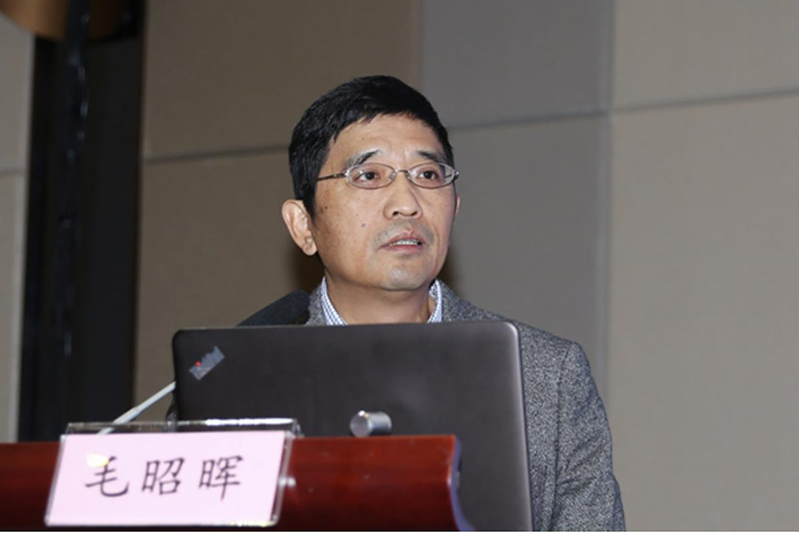
According to Hong Wen Wei Po, Mao Zhaohui, director of the Anti-Corruption and Integrity Policy Research Center of Renmin University of China, pointed out that since the 18th National Congress, the Central Committee of the Communist Party of China has firmly promoted comprehensive and strict party governance and anti-corruption struggles, and has made great achievements that have attracted worldwide attention, especially in the treatment of symptoms. The stock of corruption has reduced to a great extent, and the goal of not being afraid of corruption has initially been achieved. However, as Xi Jinping, General Secretary of the Communist Party of China, said, “The situation in the anti-corruption struggle is still serious and complex.” This is mainly reflected in the fact that the stock of corruption has not yet been exhausted, continues to increase, and a series of new situations and trends have emerged that require great attention.
Data from the Central Discipline Inspection Commission and the National Supervisory Commission show that after the 20th National Congress, 87, 92, and 181 “cadres under central management” were investigated in 2023, 2024, and 2025, respectively; National discipline inspection and supervision agencies opened 626,000, 877,000 and 1.012 million cases respectively. Since the beginning of this year, it has been announced that around 60 central management cadres have been investigated. Not only has the number reached a new high, but they also include members of the Political Bureau of the Central Committee, former “frontline officials”, current “heads of ministries and commissions”, as well as many high-ranking “top leaders” and “star officials” who have been retired for many years.
Mao Zhaohui believes that the gradually increasing number of cases investigated and disposed of is a clear sign that the intensity of anti-corruption remains intact and the momentum is unchanged, but it also shows that the task of curbing the increase in corruption and eliminating the existing stock is still difficult.
At the same time, as the world situation, the country’s situation, and the Party’s situation have undergone profound changes, the anti-corruption struggle is facing new conditions and new trends: power protects capital, and capital enters the political arena. Businesses support officials, officials protect businesses, and collusion between officials and businessmen is rampant, which seriously endangers the political ecology and economic development environment; new forms of corruption and hidden corruption such as expected returns, agreed holdings, and the “revolving door” of politics and business; Phenomena such as issues of style and corruption, integration of style and corruption, and intersection of style and corruption.
Mao Zhaohui said he hopes China will not relax its efforts to punish corruption in the future, and will always maintain a high-pressure posture to build a strong deterrent, achieve no restricted areas, full coverage and zero tolerance. This will further purify the political ecology and remove obstacles to the central government’s major decisions and deployments such as the implementation of the “15th Five-Year Plan” and comprehensive deepening of reforms.
Summary FAQ
-
The report pointed out that some cadres under investigation refused to stop or stop their actions even after the 18th National Congress, amounting to 86%, indicating that many cases were not short-term mistakes, but long-term and sustained systemic corruption.
-
According to expert data cited in the article, the average latency of these corruption acts is 17.3 years, and the amount of corruption per capita reached 146 million yuan, or approximately US$21.89 million, showing the staggering scale of corruption involved.
-
The article believes that the direction of anti-corruption will be clearer after the Fifth Plenary Session of the 20th Central Committee of the Communist Party of China. In the future, the intensity of punishing corruption will not be relaxed, and a high-pressure posture will still be maintained to achieve the effect of no restricted area, full coverage and zero tolerance.