
AI summary
Summary of article:
Major PHP vulnerabilities have attracted global attention. Although patching is primarily the responsibility of suppliers and service providers, the public can still rely on multi-factor authentication, automatic updates, and anti-fraud measures to mitigate risks.
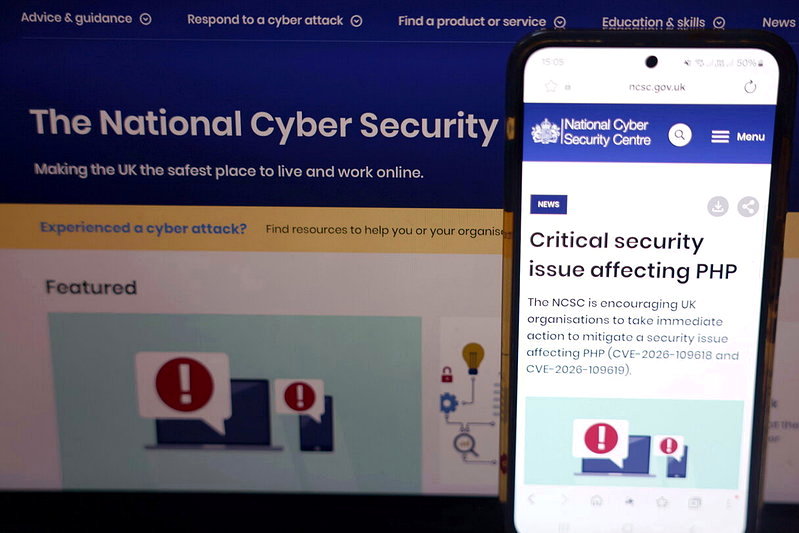
PHP is the underlying programming language used by approximately 70% of websites worldwide, but most people have never heard of it. On the 21st, people in many parts of the world woke up and discovered that PHP couldhacker Vulnerabilities were exploited, leaving businesses and governments scrambling to find solutions.
The US National Security Agency (NSA) warned that attackers could exploit vulnerabilities to take control of web servers, steal data, disrupt services, or move within networks through services people use every day. Experts point out that the main responsibility for patching lies with software suppliers and service providers, but people can still take basic measures to protect themselves. Here are five key findings compiled by Reuters.
MFA requires users to provide two verification methods to log in to protected websites, such as an SMS verification code or a password combined with a security key. Emily Austin, chief security researcher at Internet security company Sensis, suggested that people should set independent passwords for different websites and regularly check transaction records. He acknowledged that in the face of PHP vulnerabilities, end users “really don’t have much to do” and can only hope that the services they rely on do not use PHP, or that service providers are actively fixing the vulnerabilities.
Dan Guido, CEO and co-founder of cybersecurity company Trail of Bits, suggests that people “turn on automatic updates on your phone, computer, and home router.” Enterprises typically release security updates when patches for known vulnerabilities become available, and timely installation can reduce the time it takes for criminals to exploit vulnerabilities.
Granit founder and digital security expert Runa Sandvik said people should update apps and services on their devices in a timely manner, and not neglect other connected devices at home. He said some homes may have Internet of Things (IoT) devices that are rarely or never updated, and suggested checking with the vendor to see if updates are available.
Dr. Daniel Gardam, a lecturer at the University of Surrey, said attackers have an advantage in the AI age. Companies and organizations should know what software they use, install patches in time and check if the system has been compromised. He said: “Vulnerabilities are becoming faster and easier to find, but more difficult to fix the various systems that rely on this software. Whether organizations can properly handle this gap will determine whether artificial intelligence will make the Internet more secure or more unsafe.”
Nick Adams, co-founder and CEO of cybersecurity technology company 0rcus, said that whenever a major cybersecurity threat hits the news, scammers and cybercriminals will try to take advantage of the situation, and people should be wary of unwanted links. He said, “When such news comes out, you should open the affected company’s app yourself, or enter the company’s website address to check the official instructions. For emergency messages that ask you to ‘protect account security’, you should check carefully.”
Paul Benda, executive vice president of risk, fraud and cybersecurity at the American Bankers Association, said that after the PHP vulnerability was exposed, you should be even more careful when purchasing from unfamiliar retailers or using websites that “may not have as complete security protections as your bank.”
Banda suggested that consumers should not reuse passwords across different shopping websites and use a passkey instead if possible. It is a digital key that is used exclusively for specific websites. There is no need to enter a password when logging in and it also has features to prevent phishing attacks.
Summary FAQ
-
Because PHP is the underlying programming language for approximately 70% of the world’s websites, vulnerabilities could allow attackers to take control of servers, steal data, or disrupt services, impacting corporate and government systems.
-
You can turn on multi-factor authentication earlier, enable automatic updates for devices and routers, and ensure that apps and connected devices are patched in a timely manner, avoiding reusing the same set of passwords for different websites.
-
Major information security incidents are often used by scammers to pretend to have official information, to trick people into clicking on links or handing over their account passwords. Once you get the urgent information, you should go directly to the official app or website to verify it.