
AI summary
Summary of article:
US stocks weakened in early trading as doubts grew about AI spending and financing. Earnings reports from Meta and Tesla failed to boost stock prices. At the same time, geopolitical risks pushed oil prices higher, and funds turned to US debt as a safe haven.
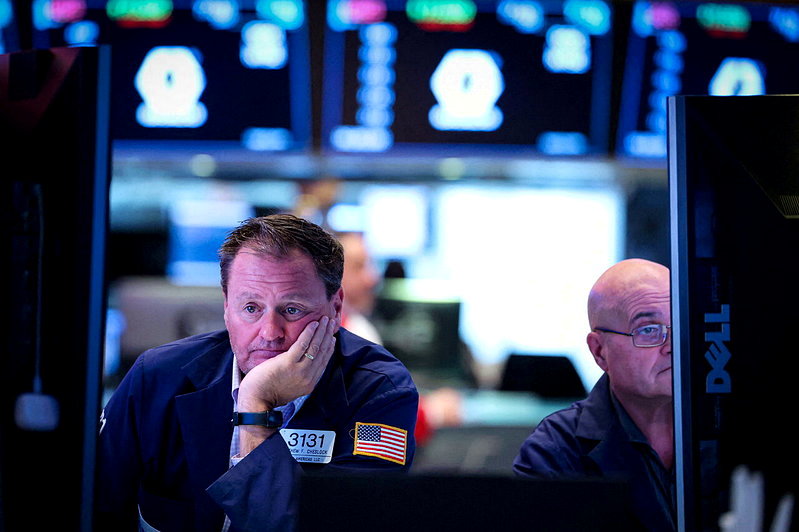
US stocks All four major indexes fell in early trading on the 22nd, reflecting growing market skepticism about artificial intelligence (AI) spending and the intensification of geopolitical tensions, which also pushed international oil prices higher.
The Dow Jones Industrial Average fell 272 points, or 0.5%, in early trading, the S&P 500 fell 0.9%, and the Nasdaq fell 1.5%. The Philadelphia Semiconductor Index fell 4%, and TSMC ADRs fell 2.7%.
AlthoughTesla The third quarter financial report was better than expected, but the revenue performance of the automotive business was weak, and the stock price fell 2% in early trading;meta Revenue exceeded market expectations and it issued an optimistic financial forecast, but that still couldn’t stop the stock price from falling nearly 5%.
Technology stocks are generally under pressure as the market remains concerned about AI spending. Shares of Advanced Micro Devices (AMD) fell more than 5%, while Micron Technology and Huida fell 2.7% and about 2%, respectively.
The share price of CoreWeave, a leader in new cloud services (neocloud), has also fallen by 4%, and its corporate bond yields and credit default swap (CDS) prices are still at high levels. At the same time, Huida CEO Huang Renxun said in an interview with CNBC on the 22nd that the market demand for new cloud services is “strong beyond imagination”, but he also pointed out that the lack of funds is hindering the development of the industry.
Wells Fargo traders said Huang’s comments about the funding shortage “unsettled the market and reignited concerns that investors’ risk tolerance in credit markets has reached its limit.” He also pointed out that Meta mentioned that AI development requires huge funds, which weakens the company’s share price and drives the overall market down.
JPMorgan Chase said: “In addition, the actual market price trend and the response of the trading department also show that investors’ doubts about AI financing have not disappeared, and market confidence is still weak. After the recent trend reversal in technology stocks, investors still lack confidence and have not actively expanded their positions again.”
On the other hand, The New York Times, quoting sources, reported that the United States and Israel plan to launch air strikes again against Iran after the US midterm elections next month, which will send oil prices rising. US President Trump also told reporters late Wednesday that Washington was not currently negotiating with Tehran and that something would happen “very soon.”
Brent crude futures, the international oil price indicator, rose nearly 3% to more than $111 a barrel; West Texas Intermediate crude futures rose 2% to more than $99 a barrel.
Investors also turned to US Treasuries for safety. Benchmark 10-year US Treasury yields fell more than 9 basis points to 5.048%; 2-year US Treasury yields also fell 9 basis points to 4.733%.
Summary FAQ
-
The main reasons are that market skepticism about AI spending and funding sources has increased, technology stocks are under pressure, and geopolitical tensions have pushed up energy prices. The risk appetite of investors has reduced significantly and all four major indices have weakened.
-
Although Tesla beat expectations, its automotive business revenue was weak; Although Meta’s revenues exceeded expectations and its financial forecast was optimistic, it noted that AI development requires huge sums of money, resulting in deeper market concerns about spending and financing.
-
Brent and WTI crude oil rose due to the escalating situation in Iran, with Brent rising above US$111 per barrel. At the same time, investors bought US bonds for safety, and both 10-year and 2-year yields fell by 9 basis points.