

AI summary
Summary of article:
Nutritionists point out that winter noodles are not a low-calorie weight loss product. The main ingredient is refined starch. If portions are out of control and paired with fatty sauces, blood sugar and calories can spike together.
Winter noodles have a smooth texture and increase in volume after absorbing water. These are often considered a good option for weight loss and calorie control. When eating hot pot, some people deliberately skip white rice and eat winter noodles instead, thinking it is healthier. Nutritionists remind that winter noodles is not a low-calorie, high-nutrition food as imagined, because the main ingredient is refined starch, and some commercial products also add potato, cassava and other starches. If consumption is not controlled, and winter noodles are easy to absorb oil and sauce, you will eat more calories.
Xu Jiajing, a nutritionist at Dali Rennai Hospital, said that many people think that winter noodles are made from mung beans and should have the nutritional value of beans. Actually, the two are very different. Traditional mung bean winter noodles mainly extract starch from mung bean and then process it into strips. The production process has removed most of the protein, dietary fiber and other nutrients.
Xu Jiajing pointed out that winter noodles mainly provide carbohydrates, and the content of vitamins, minerals and dietary fiber is relatively limited. In comparison, unrefined whole-grain foods like sweet potatoes and brown rice provide not only energy, but also more dietary fiber and micronutrients, and have more overall nutritional value.
Why are winter noodles considered good for weight loss? The main thing lies in its ability to absorb water and swell. Xu Jiajing said that according to the concept of food replacement, about half a bowl of cooked rice noodles can be regarded as a whole grain food, providing about 15 grams of carbohydrates, which is the same as a quarter bowl of white rice. Due to the high water content and large size of winter noodles, it is easy for people to mistakenly think that they are eating a lot but they are very low in calories. However, if you eat an entire bowl, your carbohydrate intake should not be underestimated.
Xu Jiajing reminded that all winter noodles on the market are not necessarily made of mung bean starch. Some low-cost winter noodles are labeled as containing primarily potato starch and cassava starch. Consumers should read food labels carefully and not rely solely on the term “winter noodles” to identify them as mung bean products.
Xu Jiajing shared his experience. He once wore a continuoblood sugar During the monitoring period (CGM), I went to a hot pot restaurant to eat. I deliberately did not eat white rice or drink soup that day. I only ate the ingredients in the pot and about a bowl of winter noodles. Unexpectedly, my blood sugar level increased to about 230 mg/dL after the meal.
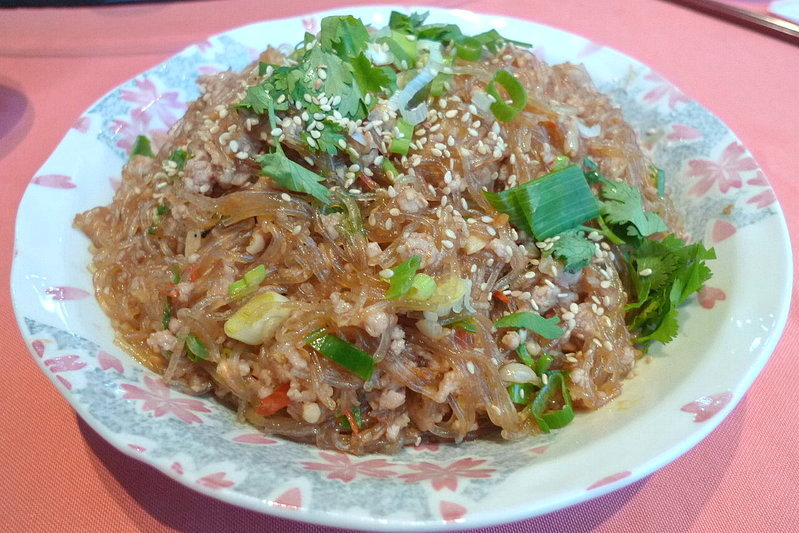
In addition to starch, the cooking method of glass noodles also hides disadvantages. Xu Jiajing said that rice noodles taste mild, but have the ability to absorb soup, fat and sauce. Whether it’s tree-climbing ants, fried glass noodles or dry-mixed glass noodles, a lot of oil and seasoning are added to enhance the flavor. Food that originally seemed fresh may end up being a dish rich in oil and sodium.
For some patients with kidney disease who need to limit protein intake, although winter noodles can be used as a source of low-protein starch, if combined with a large amount of soy sauce, minced meat or rich sauce, they may consume too much sodium and increase the burden of diet control. Adjustments should be made according to the stage of kidney disease and the advice of a nutritionist. Xu Jiajing emphasized that winter noodles can be eaten in small quantities by combining them with vegetables and high-quality proteins, and can reduce the intake of fat, sauces and thick soups.
Summary FAQ
-
Since the glass noodles will increase in size after absorbing water, the visual portion is larger but the calories are not higher. It is easy for people to think that it is more suitable for weight loss than white rice. However, even if you eat an entire bowl, carbohydrate intake does not go down.
-
Winter noodles provide mainly carbohydrates and less protein, dietary fiber and micronutrients. Compared to unrefined foods like sweet potatoes and brown rice, the overall nutrition is less complete and low in fiber.
-
Winter noodles are great at absorbing fat, soups and sauces. Stir-fried winter noodles, dry-mixed winter noodles or hot pot winter noodles can significantly increase the calorie and sodium content. If it is consumed in large quantities, blood sugar can also increase significantly.