
AI summary
Summary of article:
Shen Yuzhong said that in the face of the risk of cross-border repression, Taiwan will increase scrutiny of people with gang backgrounds or those who obtained Hong Kong status after being born in China, but it will not treat Hong Kong as equivalent to China’s management.
In response to the recent continuous cross-border crackdown, Shen Yuzhong, vice chairman of the Mainland Affairs Council, said today (10th) that the government may adopt stricter immigration checks on two categories of Hong Kong people, including those with gang backgrounds or criminal records and those who were originally born in China and later obtained.hong kong status person. However, he stressed that the government would not treat Hong Kong as completely managed in the same way as China, and “we will not apply one size fits all.”
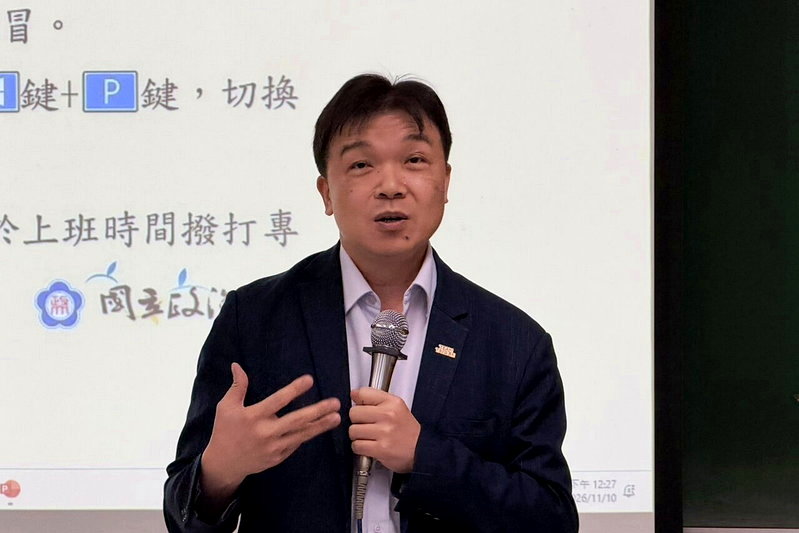
The East Asian Institute of the School of International Affairs of National Chengchi University held a lecture on “Cross-Strait Relations and Mainland Policy” at noon on the 10th, with Shen Yuzhong as the speaker. A Hong Kong student asked at the scene whether some recent cases of cross-border repression involving people with Hong Kong identity might affect the rights and interests of other Hong Kong people coming to Taiwan.
Shen Yuzhong responded that Hong Kong’s problems are more complex. After Hong Kong’s return to China in 1997, more and more people originally born in China have obtained Hong Kong status. He pointed out that Taiwan’s entry rules for Hong Kong people are quite lenient, but if someone originally had a specific political purpose, obtained Hong Kong status, and then went to other democratic countries to carry out the assigned tasks, “it would actually be easier to find shortcomings, and the management would be more difficult.”
Shen Yuzhong said that because there are more and more cases of cross-border repression, and some cases involve people coming from Hong Kong to Taiwan, the government may now impose stricter immigration inspections on the second category of Hong Kong people.
He further explained that the first category is for people who were born and raised in Hong Kong but have been involved in gang organizations in the past, who have gang backgrounds or criminal records. “We will not be as relaxed about their entry as ordinary Hong Kong people. We will make it a little stricter.” The second category is for people who were originally born in China, settled in Hong Kong for a period of time, obtained a Hong Kong passport and Hong Kong identity card, and then applied to come to Taiwan. The review may be more harsh than that of ordinary people in Hong Kong.
However, Shen Yuzhong stressed that the government will not treat Hong Kong completely like China, as this is very unfair to Hong Kong’s 7 million people. “We will not be one size fits all,” he said. We will not support Hong Kong tomorrow and will treat Hong Kong as China today. Instead, we will address the flaws in the current system through rolling adjustments.
Shen Yuzhong also mentioned that many countries are now observing the phenomenon of Chinese people obtaining Hong Kong status and moving to other countries to engage in specific operations, so they are gradually tightening their policies towards Hong Kong. He said that in the past, there has been a good foundation for exchanges between Taiwan and Hong Kong in economy, trade, tourism and other fields. The government still hopes to maintain bilateral relations, but it cannot completely ignore the risk of cross-border repression.
On how to prevent cross-border repression, Shen Yuzhong said that the government should first expose the cases. “We should tell people about it,” and by summarizing cases, high-risk groups can be more cautious. The second step is to take stock of relevant laws and regulations to reduce the chances of local affiliates becoming affiliates.
He said Taiwan is an open and democratic society and it is very difficult to completely prevent foreigners from entering and committing crimes. “But we use serious crimes to deter local allies.” In addition, the government will also cooperate with other countries and relevant security agencies to identify high-risk individuals who may enter the country to engage in subversive activities.
Shen Yuzhong stressed that for a democratic country, it is “impossible” to completely stop cross-border repression, but the government will strive to reduce the harm caused by cross-border repression to Taiwan through disclosure, legal amendments, and strengthening the entry management of high-risk individuals.
Summary FAQ
-
He said there are two main categories: first, those who are native-born but have gang backgrounds or criminal records; Second, people who were originally born in China later obtained Hong Kong passports and identification, and then applied to come to Taiwan.
-
This is because cases of cross-border repression have increased recently, and some cases also involve people coming to Taiwan from Hong Kong. Shen Yuzhong believes that if someone first obtains Hong Kong identity and then performs specific actions, the flaws in the system will be easily exposed.
-
Shen Yuzhong said the government would not directly compare Hong Kong with China, nor would it be one-size-fits-all. Instead, it will gradually close loopholes and minimize harm by highlighting cases, taking stock of regulations and cooperating with foreign and security agencies.