
AI summary
Summary of article:
If the US midterm elections weaken Trump’s influence, Congress may increase anti-China legislation; But Beijing has the rare earths and diplomatic bargaining chips, and Trump cannot directly escalate conflict with China.
Target on United States on 3rdmidterm elections South China Morning Post analysis, if Presidenttrump Entering the bad phase, lawmakers who are less beholden to it may push for more anti-China bills. Experts say Trump may find a scapegoat, but Beijing is doing the samerare earth Minerals, Trump may be pointing his finger elsewhere.
The report said Trump’s stance on China over the past year has been far more moderate than that of many in Congress and the Cabinet, a change that Beijing welcomes. But as Trump’s influence wanes, an autocratic Congress may begin to step back and toughen on Beijing.
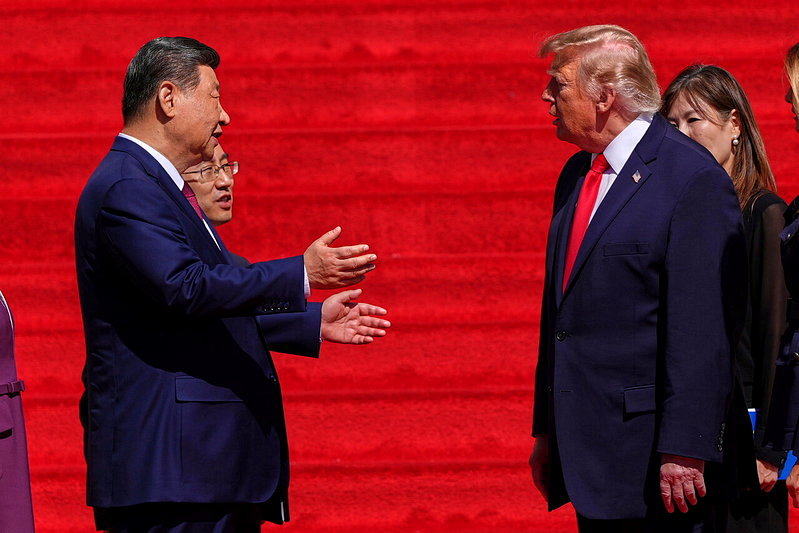
Since Trump and Chinese President Xi Jinping met in Busan, South Korea, last October, US-China relations have stabilized; But Trump has always failed, and Beijing may still become a target.
“Everyone is sure that the election results will make Trump feel bad about a lot of things and he may be looking for a scapegoat. Whether he will blame China for not giving him a big diplomatic victory to overturn the midterm elections is hard to say,” said Sun Yun, director of the China program at the Stimson Center, a Washington think tank.
Jeremy, Senior Analyst at Eurasia Group. Jeremy Chan believes that Beijing has the rare earth card and Trump will not provoke this conflict. “The bigger risk is in 2027, when Xi Jinping will focus on the 21st Congress of the Communist Party of China and there will be fewer opportunities for the two to meet in person.”
He said that Chinese sources have privately revealed that sooner or later the rift between the two sides will end. “Arms sales to Taiwan cannot be postponed indefinitely. Unless there is a way to ease pressure on both sides, inertia alone may worsen the situation.”
Analysts say that as Trump’s control over executive, legislative and judicial powers weakens, he could issue nearly unrestricted executive orders and focus more on foreign policy. The country can expect more turmoil from this America-first president.
However, analysts also say that transaction-oriented leaders, who rarely admit mistakes or make concessions, are more likely to make strategic retreats, even if they don’t admit them.
The White House quietly eased tariffs on Canadian goods late on October 30, extremely unpopular in Maine, as Collins, the state’s Republican senator, was locked in a bitter battle, which Collins ultimately lost. “Trump has always said that foreigners are paying for tariffs, but this time Republicans have almost agreed. Tariffs are hurting local economies instead of making America great again,” said Moon, head of consulting firm China Moon Strategies.
He said that Trump did not accept that the tariff policy had failed. “I don’t think he’ll change his philosophy publicly, but it would be like a wall falling down. This is just the first brick.”
Summary FAQ
-
The report pointed out that if Trump enters a bad phase, lawmakers with less control over him will have more room to push anti-China bills, and Congress’s rhetoric and policy stance against Beijing may also increase simultaneously, creating a new source of pressure.
-
Analysts believe Beijing has key resources, such as rare earths, that could be used as countermeasures. Therefore, if Trump wants to maintain a trading position, he cannot be the first to escalate the conflict; Real risk is more likely to occur when both parties interact less.
-
As his control over executive, legislative, and judicial powers weakens, Trump may rely more on executive orders and diplomatic operations. He may not necessarily approve of the changes on the surface, but may see a more strategic return to tariffs or foreign policy.