
AI summary
Summary of article:
A Chicago restaurant that has sparked controversy over its long-standing surcharges may be eliminated. Operators cited rising costs and wage pressures as defenses, but consumers believed the charges were opaque and the city government questioned the direct relationship between price increases and wage increases.
chicago Surcharge on restaurant bills has once again created controversy. Althoughpandemic This has long since ended, but many restaurants are still charging additional fees on top of menu prices, leading consumers to question why operators do not directly increase dish prices, but continue to retain these fees? Catering industry representatives reported that restaurant operating costs are expected to increase by 36% from 2019 to 2026. Business operators are concerned that direct price increases will lose customers, so they prefer to adopt cancelable surcharges.
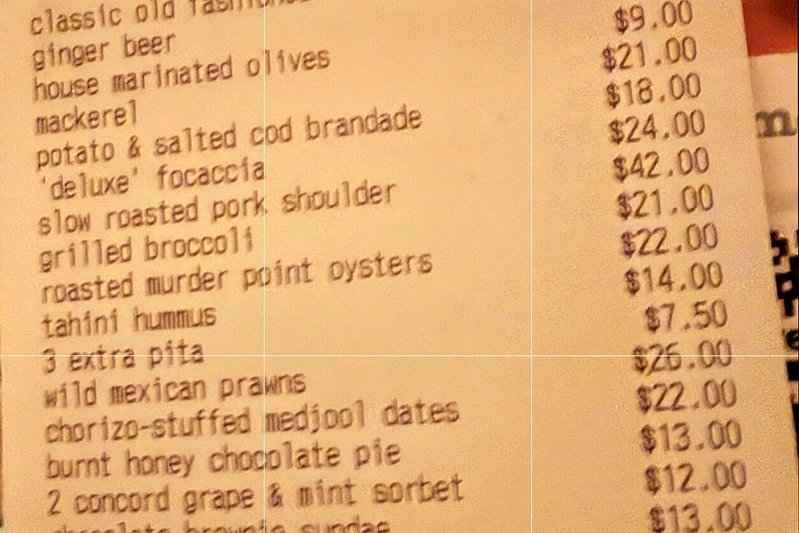
Alice, a Chinese consumer, told this newspaper that she had eaten at a restaurant in Chicago a few days ago. When she checked, she discovered that in addition to the 10.75% to 11.75% state tax, local tax, and food and beverage tax, the bill also included a 20% tip. Now a 3.5% “hospitality supplement” has been added to the bill. She admitted that she was reluctant to pay it when she saw the additional fee, but she was too embarrassed to publicly ask for cancellation, so she had no choice but to pay.
Axios Chicago reported that Chicago writer Kit Graham recently raised questions in his personal e-newsletter “I’ll Be Honest” about why restaurant surcharges that emerged during the pandemic have not yet been eliminated, sparking widespread discussion. Axios then asked six major Chicago restaurant groups, including Lettuce Entertain You, Boca, Dynamic, Hogsalt, One Off Hospitality and 4 Star, but the operators declined to comment.
Sam Toia, CEO of the Illinois Restaurant Association, said restaurants prefer surcharges because they believe consumers may be more receptive to additional charges than outright price increases that can be canceled upon request.
“If the price of vegetables increases by 3% to 5%, you may lose 3% to 5% of customers,” Toya said. “But if you add a surcharge that can be canceled and explain its purpose to consumers, such as providing employee medical insurance, consumers may be more willing to accept it.”
According to data provided by Toya, restaurant operating costs are expected to increase by a cumulative 36% from 2019 to 2026. Statistics from the National Restaurant Association also show that 42% of restaurants in the United States will not make a profit in 2025, indicating that the catering industry is generally facing cost pressures.
However, Toya’s statement is still unacceptable to some consumers. Alice said rising restaurant costs are a nationwide phenomenon. Why is surcharge at the top of the list?Chicheng This is extremely common and has become the focus of debate.
For example, menu prices at Lettuce Entertain You’s restaurants Aba in Chicago and Austin, Texas are nearly identical, but the Austin branch does not charge the surcharge charged by the Chicago restaurant.
Restaurant operators cite high local personnel costs as one reason for this. Illinois law allows restaurants to charge surcharges if they tip in advance, and the minimum hourly wage for tipped workers in Chicago has reached $12.96, significantly higher than the federal minimum cash wage of $2.13.
Toya pointed out that higher wages increase the burden on restaurant operations. Some industry players have noted that Mayor Johnson’s pressure to raise the minimum wage for workers has led restaurants to absorb costs through price increases or surcharges.
However, the mayor’s office countered that there is currently no evidence that increasing wages for salaried employees directly increases vegetable prices, and no restaurant group has publicly provided data to support this statement.
Summary FAQ
-
Because such fees have not been canceled following the pandemic, consumers often see additional taxes, tips and service charges only at checkout. They feel the information is not transparent, and they also question why the industry does not reflect it directly in Dish’s prices.
-
The Catering Association believes that if the price of vegetables is directly increased, some customers may be lost immediately; In comparison, cancelable surcharges are easier to accept, and operators can also specify the purpose, such as employee medical insurance.
-
Business owners argue that rising wages and operating costs, particularly the higher minimum hourly wage for salaried workers in Chicago, force restaurants to pass on the cost; But the mayor’s office counters that there is no evidence to prove that the wage increase directly increases vegetable prices.