
AI summary
Summary of article:
Sun Yat-sen’s niece Sun Yali said she was sad that many children in Taiwan did not know Sun Yat-sen. At the same time, there were clear differences between the two sides on Sun Yat-sen’s commemorative activities and historical status.
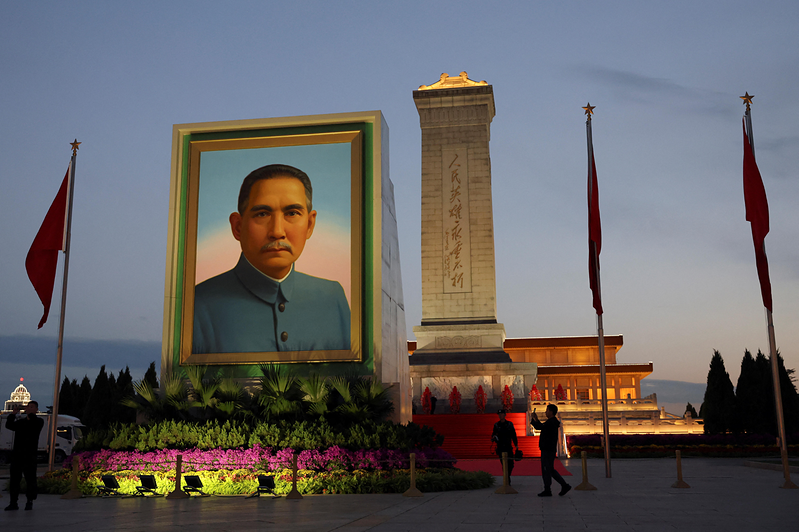
Communist Party of China A meeting to commemorate the 160th anniversary of Sun Yat-sen’s birth will be held today (12th) at the Great Hall of the People in Beijing. In an interview with China News Network, Sun Yat-sen, Sun Yat-sen’s niece and chairman of the Sun Yat-sen Cultural Foundation, said that many Taiwanese children no longer know Sun Yat-sen. He is also sad and angry at not learning Chinese history and having his cultural roots cut off by “the island” (referring to Taiwan).
Sun Yali said she has visited Taiwan eight times in a year because cross-Strait relations have sometimes been tense in recent years and the political situation in Taiwan has also troubled her greatly. Therefore, she hopes to use her position and the Sun Yat-sen Cultural Foundation to help.
According to public information on the Internet such as Baidu Encyclopedia, Sun Yali is the great-granddaughter of Sun Mei, Sun Yat-sen’s eldest brother. Sun Yali was born in Hong Kong, studied in Australia and the United States, and later worked in films in the United States, Australia, France, and China.
After Sun Yali returned to Zhongshan with her father Sun Man to worship her ancestors in 1989, she visited Sun Yat-sen’s former residence several times. In 2006, Sun Yali attended the celebration of the 140th anniversary of Sun Yat-sen’s birth. On the occasion of the 150th anniversary of Sun Yat-sen’s birth in 2016, Sun Yali established the Sun Yat-sen Cultural Foundation.
On March 12 this year, on the anniversary of Sun Yat-sen’s death, Kuomintang Chairman Cheng Lai-wen went to Sun Yat-sen Memorial Hall in Taipei to lay flowers at the Zhongshan Stele Forest in Sun Yat-sen Cultural Park. Sun Yali presented the seeds of the sour tree to Cheng Lai-wen at Sun Yat-sen’s former residence in Kuiheng Village, Guangdong, Sun Yat-sen’s hometown, hoping that the sour tree, symbolizing Sun Yat-sen’s spirit, could take root in Taiwan.
Zhang Han, spokesman for the Taiwan Affairs Office of the State Council, said at a regular press conference on the 11th that this year marks the 160th anniversary of Sun Yat-sen’s birth. In November, Beijing held a series of activities to commemorate the 160th anniversary of the liberation of Taiwan and Sun Yat-sen’s birth, including the “Sun Yat-sen and Taiwan Archives and Historical Materials Exhibition” and the Zhongshan Hall Pen Meeting of calligraphers from both sides of the Taiwan Strait to commemorate the 160th anniversary of Sun Yat-sen’s birth. In addition, the “Searching for Zhongshan Theme Exchange Event” will be held in Guangzhou from November 12 to 16.
Regarding China’s active preparations for various activities to commemorate Sun Yat-sen, Liang Wenjie, Vice Chairman of the Mainland Affairs Council, recently said that according to the official and historical calculations of the Republic of China, 2026 is the 161st anniversary of Sun Yat-sen’s birth, not the 160th anniversary as claimed by the CCP. The Republic of China celebrates Sun Yat-sen’s birthday since 1926, while the CCP began related activities only after the 1950s.
Liang Wenjie said that Sun Yat-sen founded the Republic of China, not the People’s Republic of China; Sun Yat-sen’s political philosophy is “constitutional democracy”, which is completely different from the CCP’s one-party dictatorship; The CCP’s current “hegemonicism” and the need to “listen to the Party and follow the Party” for weapons expansion are also contrary to the “imperialism” and “the world is for the common good” pursued by Sun Yat-sen.
Summary FAQ
-
When interviewed, Sun Yali said that many Taiwanese children no longer knew Sun Yat-sen, and he felt both sad and angry about this. He believed this reflected the island’s neglect of Chinese history and its cultural roots.
-
She told that she has gone to Taiwan eight times in a year. She felt that the tense cross-Strait relations and political situation in Taiwan had caused her great distress, so she hoped to use her identity and the Sun Yat-sen Cultural Foundation to contribute to the exchange.
-
The Communist Party of China hosted an event to commemorate the 160th anniversary of Sun Yat-sen’s birth. The Mainland Affairs Council believed that the calculated 161st anniversary of the Republic of China should be in 2026, and emphasized that Sun Yat-sen founded the Republic of China and held views different from the CCP.