
AI summary
Summary of article:
Due to the growing housing crisis and political conflict, Spain has postponed congressional elections to November 29. The main political parties have launched an intense 15-day campaign. Forming a cabinet after the elections may still require difficult negotiations.
The Spanish congressional elections have been pushed back to November 29. The election campaign officially began on the 13th with a 15-day campaign. All political parties held campaign launching ceremonies on the evening of the 12th, marking the beginning of the fierce election campaign.
As Spain’s housing crisis continues to worsen and demonstrations continue across the country, Prime Minister Pedro Sánchez announced that the next congressional election next year will be held before November 29, after Congress rejected a government-proposed housing reform bill in early October.
This election campaign officially started at 0:00 am on the 13th. The campaign period is from 13th to 27th. Elections will not be announced from 24th.voting The day before the election, the 28th, is designated as “Reflection Day”, and campaigning and pro-election activities are prohibited.
On the evening of the 12th, each party held election campaign opening ceremonies in different regions of Spain.
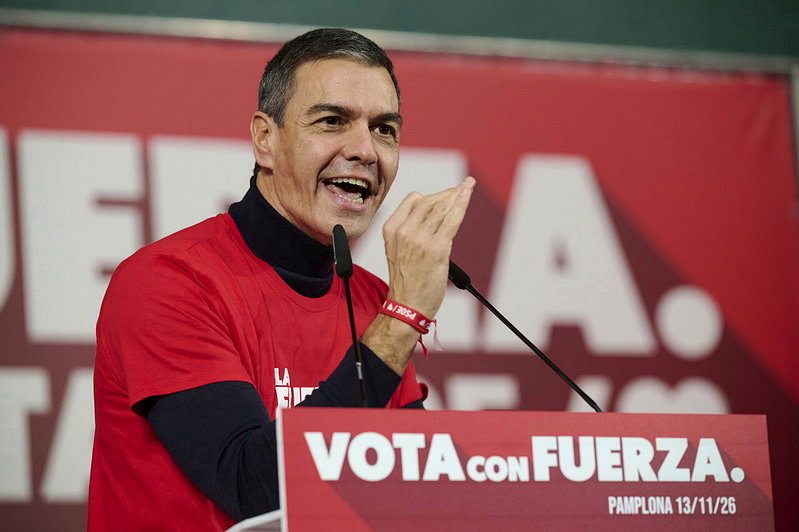
The long-established leftist Socialist Party (PSOE), led by Sanchez, decided to launch its election campaign in its home base of Seville, the capital of Andalusia. He defended the various measures implemented by the government and called for historic mobilization from supporters to achieve an “epic comeback”.
Although the current government has faced various crises such as railway accidents, immigration incidents and housing problems, and Sánchez’s family and cabinet members have been involved in corruption cases, the Socialist Labor Party, the largest party in the ruling coalition, still leads in the polls with 33.3% support, according to the Spanish Radio and Television Corporation (RTVE).
The conservative right-wing Popular Party (PP) launched its first campaign in the Catalonia autonomous region. In his speech, party leader Alberto Núñez Fizú advocated the establishment of an open, strong and prosperous Catalonia.
Fejo attacked the Sánchez government, saying that the national strike had failed, emphasizing that Spain’s territorial integrity cannot be compromised, that the country needs a government that can guarantee border security, and promising the people a government that is “not corrupt” and “tells the truth.”
Santiago Abascal, leader of the anti-immigration far-right Vox party, continues to focus on a “country first” political agenda, arguing that Spain’s public health care system has become “overwhelmed by immigrants.”
Abascal criticized Sánchez’s government as “abnormal” and that it was formed through an agreement with the separatist terrorist organization “ETA”, Catalan separatists and the Communist Party.
Frente Amplio, made up of the leftist coalition SUMAR and other parties, launched former Barcelona mayor Ada Colau as its candidate for prime minister. He cried out for “change”, called on Sánchez to be more courteous to the working class, and urged housing rights and regulation of rent prices.
Irene Monteiro, candidate for the leftist Podemos party, called for a strong leftist force in Congress that could counter far-right forces and promote measures to protect housing, peace and jobs.
350 Congress seats will be re-elected in this general election. The party or alliance that wins an absolute majority of 176 seats will have a chance to form a new government. However, under the current situation of polarization in Spanish society and the serious differences in public opinion between the left and the right, it is difficult for any political party to win the majority of seats. It will not be easy to negotiate with colleagues in similar positions to form the cabinet.
Summary FAQ
-
The main reason is that the housing crisis continues to spread, domestic protests continue, and Congress rejected the housing reform bill proposed by the government in early October. Prime Minister Sánchez therefore called early elections to seek a new political mandate.
-
The election campaign officially started at 0:00 am on the 13th and lasted for 15 days from the 13th to the 27th. Permission to release polls was not given from 24th. The 28th was “Reflection Day” and campaign support was prohibited. Voting will take place on 29 November.
-
The Socialist Labor Party focuses on government performance and mobilizing support, the People’s Party emphasizes anti-corruption, border security and national integrity, the Popular Voice Party focuses on anti-immigration and national primacy, and the Left Coalition seeks housing rights, rent control and curbing the extreme right.