
AI summary
Summary of article:
If the Social Security fund is not strengthened, benefits could be cut by about 22%. Among them, retirees in 10 states, including Connecticut and New Jersey, will face the largest monthly cuts due to higher average benefits.
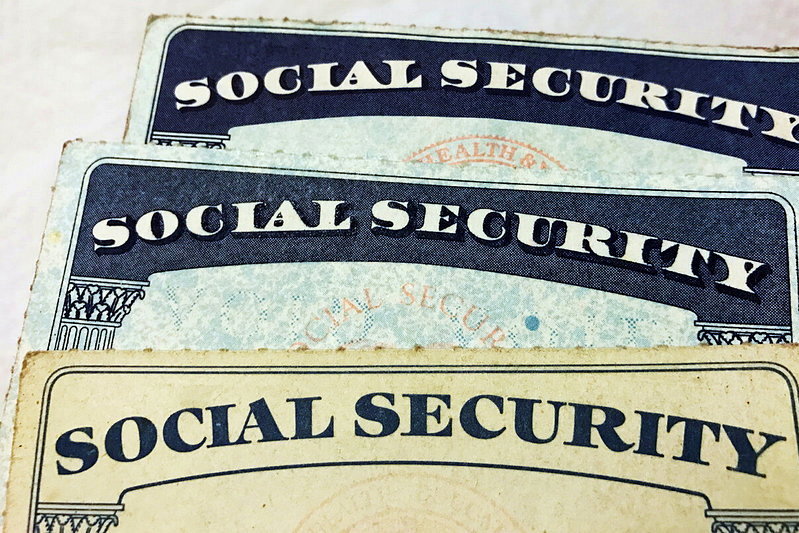
social Security There are fears that there will be severe cuts and some states will see greater cuts than others. If no measures are taken to strengthen protection in the future and the surplus is eliminated, the benefits received by beneficiaries will be reduced to about 78% of the amount they would have received, representing a cut of approximately 22%. Over the years, the proportion of expected cuts has fluctuated. The expected cut in a 2025 report released by the trustees of the Social Security and Medicare Trust Fund is 24%. If what the report predicts actually happens, retirees in 10 states, including Connecticut and New Jersey, would be hardest hit.
The Motley Fool reported that as people live longer and many retire earlier, the Social Security trust fund spends more than it earns, reducing the surplus.
The 22% cut would reduce Social Security benefits of $2,500 per month to $1,950, a loss of $550 per month. That’s the bad news, but the good news is that there are ways to save it if Congress is willing to act, and the newly elected Congress with a Democratic majority is likely to act.
The Committee on Accountability on the Federal Budget (CRFB) used forecast data from the 2025 report released by the Trustees of the Social Security and Medicare Trust Funds and projected a 24% cut across the 50 states. The study found that retirees in the following 10 states will be most affected.
If ranked by the amount of Social Security benefits reduced each month, these 10 states are as follows:connecticut ,new Jersey New Hampshire, Delaware, Maryland, Washington, Minnesota, Massachusetts, Michigan and Utah.
The average deduction was $556 in Connecticut, $554 in New Jersey, $553 in New Hampshire and Utah, in tenth place, was $523.
The size of the average cut varies because average Social Security benefits vary from state to state, and retirees in some states earn less than in others, so while the expected smaller cut may seem good, that’s only because Social Security benefits are lower to begin with.
The CRFB concluded the report by saying that as Social Security Fund bankruptcies occur during the next terms of elected senators and presidents, candidates and policymakers must decide how to protect this vitally important program for millions of Americans, beginning with proposing a plan because if the Social Security Fund goes bankrupt, no state will be spared.
This may sound worrisome, but keep in mind that for many retirees, Social Security will only provide a portion of their retirement income, and most people will save and invest to accumulate a pension that will support their lives in the future along with Social Security. After all, as of September this year, the average monthly social security pension was only 2,089 yuan, which is only about 25,000 yuan per year.
So it’s important to have a good retirement plan that outlines how much income you need and how you’ll get it. You may need to invest more and save more, or you may want to delay retirement by a few years. This led to Washington, D.C. It also helps to let U.S. lawmakers know that you don’t want Social Security to be cut.
Summary FAQ
-
According to the example in the article, if the monthly social security benefit is originally 2,500 yuan, after 22% deduction, the balance is about 1,950 yuan, which is equivalent to a monthly loss of 550 yuan; If the fund runs out, the shortfall could affect millions of beneficiaries.
-
After the CRFB simulated a 24% reduction based on 2025 Trustee Report data, the 10 most impacted states were Connecticut, New Jersey, New Hampshire, Delaware, Maryland, Washington, Minnesota, Massachusetts, Michigan, and Utah.
-
This is because average Social Security benefits vary from state to state. Even if the cutoff rates are similar in states with higher average Social Security benefits, the actual cutoff amount will be larger; Therefore, the difference between states reflects the basic benefit level rather than the difference in the deduction ratio.