
AI summary
Summary of article:
Lu Shaorui proposed the knee brace 333, believing that most degeneration of the knee resulted from medial friction. Symptoms can be delayed or even reversed through lifestyle adjustments, three exercises, and stepped treatment.
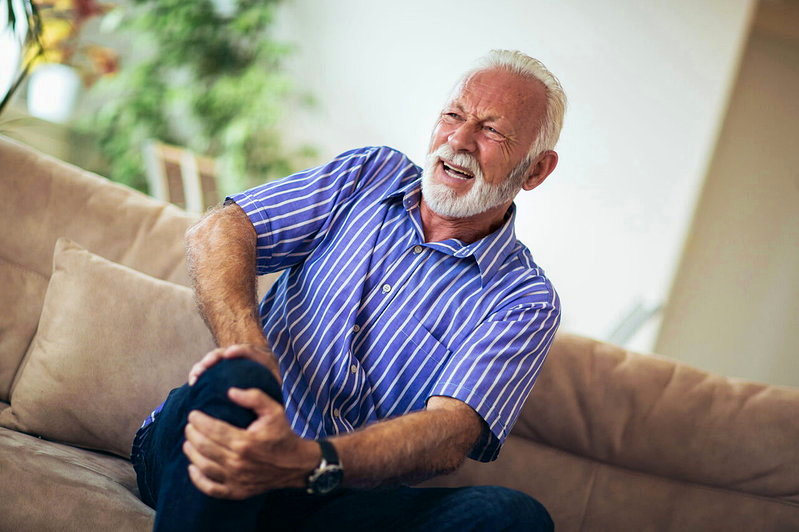
“This is not a deformity of the knee joint, it is just friction of the medial folds caused by the wear of the medial folds of the knee joint during daily activities.” Taiwan Dalin Tzu Chi HospitalBone Doctor Lu Shaorui is known as the hardest doctor to register in Taiwan. Lu Shaorui has long been seen discussing the findings of his long-term research in some medical programs. He said that up to 95% of degenerative knee arthritis is not caused by aging alone, but by “medial friction phenomena” caused by wear of the medial folds of the knee joint during daily activities. He is committed to promoting the “Knee Joint Health Promotion Program” (Knee Safety 333), which advocates the concept of knee safety to delay or avoid premature replacement of artificial joints.
He is committed to dispelling the myth that knee pain is just a matter of aging, and focusing on the hidden lesions in the knee joint – the “medial fold” and the “medial friction phenomenon” between the femur. As long as through the right adjustments in lifestyle, home exercises and precision medicine, most people’s knee cartilage has the opportunity to heal itself and even reverse the degenerative process, without the need to go to the final stage of artificial joint replacement.
The following is the core of Dr. Lu Shaorui’s “Knee Support 333” based on interviews with multiple programs.
●What is “Kneepad 333”?
•3 principles of life:
There is no need to take medicine or injections in the first to second stage (early stage) of knee osteoarthritis. As long as you implement the “3 Principles of Smart Knee Protection” into your daily routine, you can significantly reduce the physical friction and damage to cartilage caused by the medial folds:
1. Less bending: Try to reduce unnecessary frequent sitting, kneeling, climbing up and down stairs or climbing mountains in daily life.
2. Bend slowly: When walking, standing or sitting, move slowly to allow enough time for the synovial fluid to lubricate the joints and reduce sudden friction damage.
3. Don’t bend for too long: Avoid sitting for long periods of time, kneeling, crossing your legs or sitting on a low stool. If the angle of knee bend exceeds 60 degrees, physical damage to the joints will begin to increase.
• 3 knee bending exercises:
It promotes cartilage health primarily by exercising muscle strength. Cartilage has no blood vessels and must rely on the pumping effect when the joint is compressed and relaxed to absorb nutrients from the synovial fluid. Performing the following 3 knee support exercises regularly every day can exercise the quadriceps muscles of the thighs, stabilize the joints and promote cartilage repair:
1. Straight leg raise exercise: Sit on a chair, straighten and lift one leg, parallel to the ground, point the toes upward, hold for 10 seconds and then lower it alternately with both legs. This action can effectively strengthen the quadriceps muscles.
2. Knee-hug exercise: Sit on a chair, grab one knee with both hands and pull it toward the chest. The soles of the feet can be placed on a chair to keep stiffness within tolerable limits to help maintain joint mobility and flexibility.
3. Knee pressing exercise: Sit on a chair, put one foot straight with the heel on the ground (or place it on another small stool), bend your hands and gently press on the upper edge of the knee, so that the ligaments and muscles behind the knee joint are completely stretched.