
AI summary
Summary of article:
COP31 opened in Türkiye. Australia and Turkey have listed electrification as their key goal and hope to increase the proportion of electricity in global final energy consumption to 35% by 2035. It also highlights the urgency of climate finance and implementation actions.
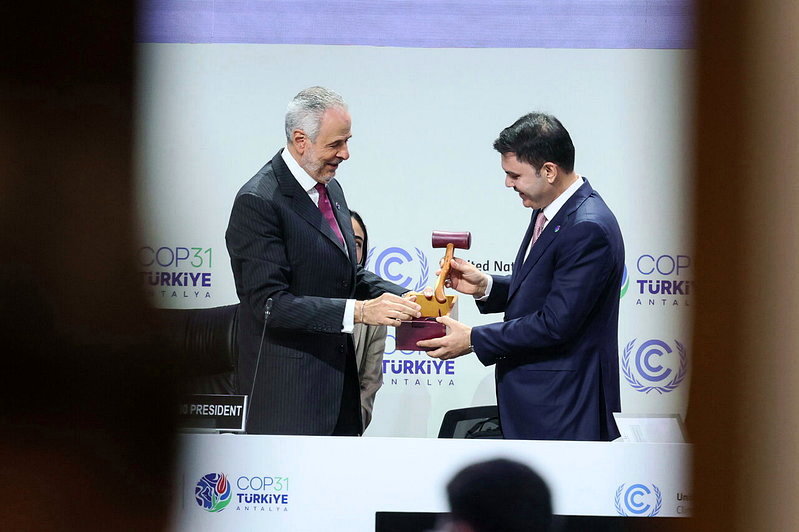
“One of the costliest bills for climate action is delay. Resilient investments delayed today could turn into disaster bills tomorrow.” Where was the 31st Conference of the Parties to the United Nations Framework Convention on Climate Change (COP31) held today (9th)?turkiye Opening in Antalya, co-chairs Australia and Turkey both proposed this year’s key negotiation goal “electrification” at the opening ceremony, urging countries to increase the proportion of electricity in global final energy consumption to 35% by 2035, making COP31 an “implementing COP”.
Nearly 200 countries and approximately 70,000 people are participating in this year’s summit. On the morning of the inauguration, there was a long queue of people outside the venue and it took a lot of time just to go through the security check. Negotiators from different countries come together with their respective country’s needs and issues to find solutions to the warming earth.
This year’s summit is a dual-chair system, with Turkiye serving as chair and Australia leading the negotiations. In his speech, COP31 President and Turkey’s Environment Minister Külen used a series of pictures to illustrate how the climate crisis is interconnected: a drought that starts in one place will impact dinner tables in another; Due to river flooding, the production schedules of factories thousands of kilometers away will be disrupted. He said that decisions should be taken on improving farmers’ fields, factory production lines and domestic electricity bills. “The real value of a decision will be revealed when it affects people’s lives.”
responsible for presiding over negotiationsClimate change Energy Minister Bowen said: “Climate change is not a forecast or prediction, but a reality experienced by billions of people.” He acknowledged that the latest science shows global warming will exceed 1.5 degrees Celsius, but as long as countries unite and accelerate action, there is still a chance to bring temperatures back down.
The main goal of this year’s presidency is electrification. Bowen pointed out that electricity currently accounts for about a fifth of global final energy consumption, with most of the rest coming from the burning of fossil fuels in transportation, manufacturing and industry. Therefore, the Chairman proposed a “35 by 35” target to increase the proportion of electricity to 35% by 2035 and use clean energy sources such as solar and wind power to supply electricity.
Bowen stressed that achieving the goals requires investment in renewable energy, modern power grids, energy storage and energy efficiency and that each country can choose its own path according to its national circumstances. He said electrification not only reduces emissions but also increases energy security and protects households from fluctuating energy prices. Cullen said he hopes to see results from climate talks in people’s daily lives and new job opportunities.
Funding remains the most sensitive issue. Bowen bluntly said that many countries have credible transition and adaptation plans but cannot get the money. “The countries that need climate finance the most receive the least.” Cullen also stressed that trust is in itself a type of climate infrastructure and that countries must see that commitments are met and funds are received on time.
Steele, the executive secretary of the United Nations Framework Convention on Climate Change (UNFCCC), described the Super Nino event as adding fuel to a “climate wildfire.” “But the solution is clear.” Global renewable energy saved nearly US$500 billion last year, and US$265 billion in the first half of this year alone. Adjustment also provides proven solutions. “The question is how can we disseminate these solutions more quickly to more people and more places at a time when there is tremendous pressure around the world.”
“We must face the world as it really is, not as we would like it to be.” Steele stressed that every COP has made progress in recent years and should do the same. Cullen said he hopes that when people think about Antalya years from now, they will remember not what was said here, but what work was started here.
Summary FAQ
-
The key goal of this year’s summit is to promote electrification, advocate increasing the proportion of electricity in global final energy consumption to 35% by 2035, and support the transition to renewable energy, power grids, energy storage and efficiency improvements.
-
Organizers believe that if we do not invest in resilience and carbon reduction today, it could cost people higher disaster losses, energy risks and livelihood bills in the future. Therefore delay is the most expensive bill.
-
The most complex issues are still money and trust. Organizers pointed out that although many countries have credible transition and adaptation plans, they do not receive adequate funding. As a result, the countries that need climate funds the most receive the least amount.