
AI summary
Summary of article:
Alto Technology was accused of mixing chips manufactured in the mainland and falsely labeling the place of origin in the military drone bid case. The person in charge admitted his fault and said that Taiwan cannot completely produce its own products. Prosecutors sought a conviction on the grounds of endangering national security.
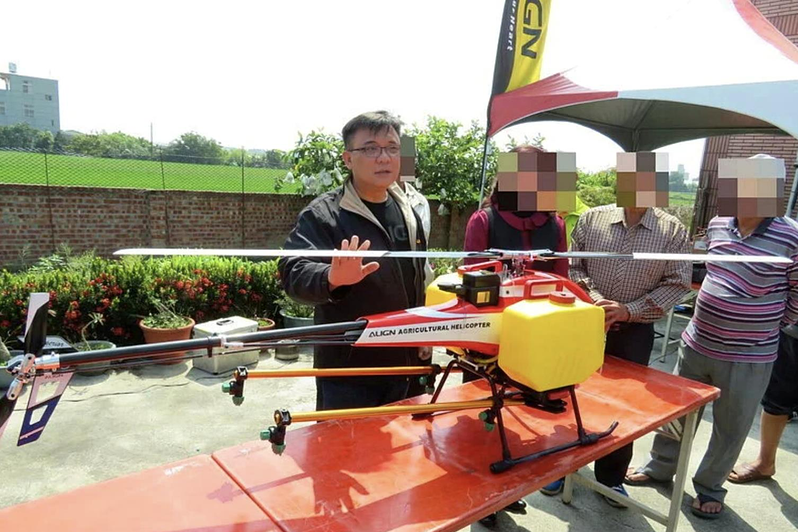
Known as the “King of Remote Control Helicopters”, Alto Technologies chief Omori and his wife Huang Wenli were involved in providing mainland-made chips to the military for bidding.Freelancer The procurement case affected the Army Academy, Logistics Command, Navy Left Branch and Youth Daily. The prosecutor criticized both men for exchanging personal gains at the expense of national security. Yesterday, he was prosecuted under the National Security Act and sought a prison sentence of not more than 5 years. Alto has participated in 4 military bidding projects, with a total winning bid amount of 16.064 million yuan.
Du Desen and Huang Wenli both pleaded guilty during the investigation. Du Nan acknowledged that “Taiwanese drones are currently unable to achieve complete self-control.” Huang Wenli also said that drone magnets are rare and passive components have no transmission and positioning functions. She complained that “the non-red policy is too strict.” The two men in custody were transferred to court yesterday and the judge ruled to suspend their detention. According to the investigation, Du Desen is the president of Alto, Zhengzhi Precision and Suyuan Company, and Huang Wenli is the vice president of Alto. Alto bid for the drone procurement case of the army’s 10th Army Corps, and was suspended from prosecution by the prosecutor for violating the government procurement law. In the announcement it was listed as a disapproved manufacturer and suspended from July 2025 to July 2028.
Du Desen and Huang Wenli changed their bids to the names Zhengzheng and Suyuan and were then produced by Alex. Last year, he won the purchase of a drone for NT$394,000 (same amount below) for training at the Army Officer School. However, they sent 10 drones to the military with T31 series image processor chips of the Chinese brand “Beijing Ingenic” and chips labeled “CHN”. The place of origin was incorrectly labeled as “Taiwan”.
In addition, the Army Logistics Command purchased 32 bomb-delivery drones at a cost of NT$8.8 million for training. In May this year the army inspected and destroyed 4 of them. He was surprised to see that the receiver motherboard was equipped with a “PUYA” chip (Pu Ran) and the lens module was marked “CHINA”. It was disqualified on the spot and a letter was sent to the Taichung District Prosecutors Office for investigation by prosecutor Yang Kaiting. Prosecutors found that the Navy Zuoying Logistics Support Command spent 6 million yuan to purchase remote-controlled unmanned helicopters, multi-rotor drones and remote controls. Among them, the A18 remote control circuit board came from Quanzhou Yunzhuo Company, and the mainland chip writing was scratched. In addition, the Youth Daily of the Ministry of National Defense purchased 15 aerial photography drones for 870,000 yuan, which also used Yunzhuo’s remote controls and circuit boards.
During the prosecutor’s interrogation, Du Desen confessed to using a mix of parts manufactured in the mainland and bluntly stated that “Taiwan is short of specialized chips for drones. Mainland China has a large and abundant supply of chips for open molds.” He also claimed that the drones provided to the army were only training machines for certification and had no signal transmission or state secret information. The prosecutor believes that as the winning bidders of the national defense bid, Du Desen and Huang Wenli were very aware of the regulations and information security restrictions, but they still knowingly and deliberately used mainland-made parts to undermine the national defense and information defense systems, for fear of leaking national military secrets and battlefield investigation data. They both requested a prison sentence of no more than five years.
Summary FAQ
-
Alto was accused in the military drone bid case of shipping chips and parts made in mainland China, such as Beijing Junzheng and Puran, and mislabeled as originating from Taiwan, allegedly deceiving the military and violating national security rules.
-
Du Dessen admitted that at present it is difficult for Taiwan’s drones to be completely domesticated, he believes that the mainland’s chips are larger in volume and easier to open the mold; Huang Wenli complained that the non-red policy was too strict, and pointed out that some parts did not have transmission and positioning functions.
-
The prosecutor believed that the two men knew that they were the winning bidders of the national defense bid, but they still knowingly used mainland-made parts, which could lead to the leakage of military secrets and investigation data and weaken the national defense and information security system. Therefore, he was prosecuted according to the National Security Act and requested to serve a prison sentence of no more than five years.