
AI summary
Summary of article:
China has tightened export controls on a number of technologies in the past month, aiming to strengthen its geopolitical influence and prepare for a long-term conflict with the West. However, this strategy could also accelerate other countries’ search for alternative supply chains.
new York Times According to the analysis, China in the past month has begun controlling the export of dozens of technologies, including drones, artificial intelligence models and agents, as well as some advanced pharmaceutical developments.solar panel Manufacturing processes and tunneling machines are also subject to export controls. The move is intended to make it more difficult for other countries to get rid of their dependence on Chinese manufacturing, thereby strengthening geopolitical bargaining chips, sending a message to adversaries that “you need the products we make,” and calling internally to prepare for a long-term conflict with the West. This strategy is inspired by the President of the United Statestrump The practice of using economic weapons to exert pressure once defeated the Trump administration and forced a trade ceasefire.
The New York Times reported that various countries are trying to reduce their dependence on China. The United States is promoting the revival of rare earth mining and processing, Europe, Japan and other places are trying to restore the production capacity of antibiotics and active pharmaceutical ingredients, and India is also calling on companies to build their own tunnel boring machines. But Beijing is stepping up its efforts to make Chinese factories an essential part of the world.
Behind this is Xi Jinping’s decision on the long-term conflict between China and the West. After the COVID-19 pandemic exposed China’s reliance on foreign advanced equipment and components, he proposed developing “killer” technologies such as high-speed rail, renewable energy and telecommunications to achieve self-reliance and prevent foreign countries from cutting off supplies. At the same time, the CCP has repeatedly repeated the history of the Long March to define recent industrial and technological development as a fight for survival. The People’s Daily published an editorial commemorating the 90th anniversary of the Long March, calling for breakthroughs in “stuck” key key technologies and preparedness for the “great struggle”.
Sun Chenghao, an international relations expert at Tsinghua University, said: “China is beginning to think more systematically about what technologies and equipment can be exported, who should be sold to them and what they will ultimately be used for.”
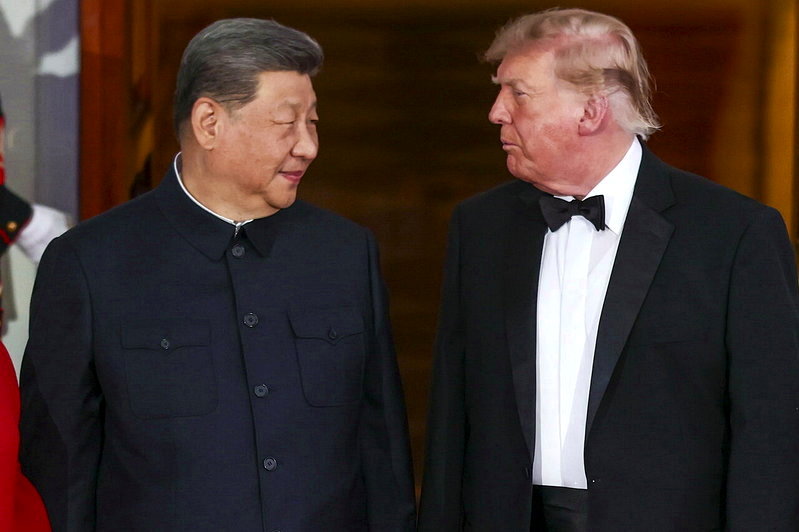
Trump and Xi Jinping are expected to meet at the APEC summit in Shenzhen from November 18 to 19 and the G20 summit in Miami in December.
Some analysts say US sanctions and sanctions on China have taught Beijing that great powers need economic weapons just as they need aircraft carriers and long-range missiles. The United States first restricted Huawei and ZTE’s access to American chips and software, and then expanded its restrictions on the export of advanced chips. Beijing restricted exports of rare earths to the United States in a trade war with the second Trump administration, pressuring Washington to call a ceasefire. However, the United States and its allies have also stepped up their search for alternative sources, prompting China to install new pressure chips.
Zhao Minghao, a scholar at Fudan University, said: “China is worried that it may lose its ‘rare earth card’.” Beijing is focusing on what other cards it has and how to effectively counter US sanctions or tariffs.
However, this strategy also comes at a cost. American think tank scholar Scott Kennedy warned that the obsession with technology development and security has led to misallocation of resources, slowed growth and increased debt, and that doing business based on threats is unsustainable. Sun Chenghao acknowledged that uncertainty is high and customers may look for alternatives. India has been forced to look for other suppliers due to China’s delay in exporting tunnel boring machines.
Summary FAQ
-
The New York Times reported that Beijing last month expanded controls on the export of dozens of technologies, including areas such as drones, artificial intelligence models and agents, some advanced drug developments, solar panel manufacturing processes and tunnel boring machines.
-
The main objective is to make it more difficult for other countries to get rid of their dependence on Chinese manufacturing, thereby strengthening geopolitical bargaining chips, sending a message to adversaries that China is indispensable, and at the same time mobilizing society internally to prepare for a long-term conflict with the West.
-
Experts warn that excessive reliance on technological security and threat-based business operations could lead to misallocation of resources, slower growth and increased debt; While increased uncertainty will also lead customers to switch to alternative suppliers, weakening China’s bargaining power.