
AI summary
Summary of article:
The WSJ reported that the United States, China and Russia had planned to hold trilateral talks during APEC, but Beijing’s request to finalize the agenda and statement was rejected by the United States, revealing that the three countries still have deep differences on issues such as nuclear weapons and the war with Ukraine.
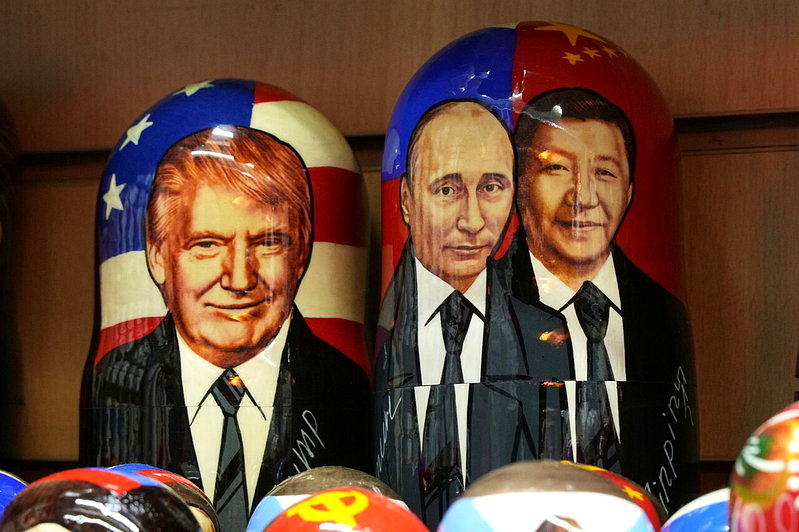
The United States, China and Russia are discussing the possibility of holding a meeting at the Asia-Pacific Economic Cooperation Conference (APEC), The Wall Street Journal reported, citing people familiar with the matter.APEC ) The three heads of state spoke during the summit, but Beijing already needed consensus on determining the agenda and outcomes of the talks, and each of the three read a prepared statement, leaving little room for discussion. The United States rejected the proposal and hoped to maintain greater flexibility in the exchange. The two sides disagreed on the format and agenda of the talks, leading to changes in the trilateral talks.
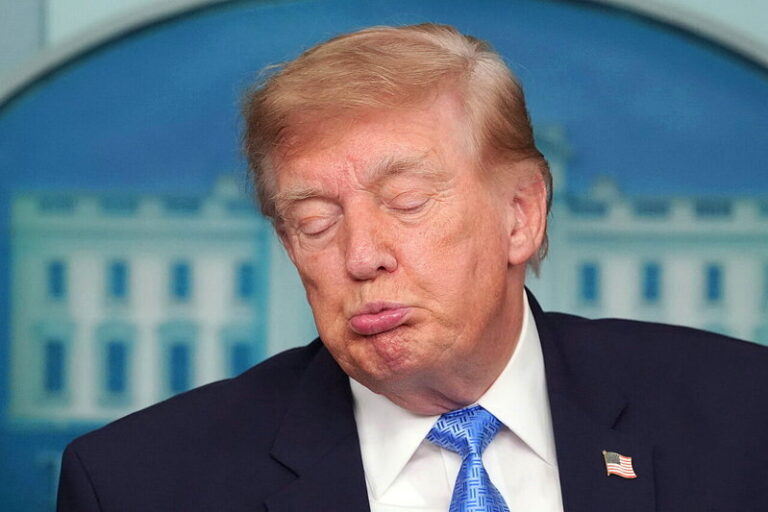
The APEC summit will be held in Shenzhen, China from 18th to 19th. The United States, China, and Russia initially expressed openness to the concept of trilateral talks. However, the President of the United Statestrump It has made clear it wants to discuss nuclear arms control, touching on an issue on which Beijing has long been unwilling to negotiate.
A Chinese official bluntly said that Beijing would not agree to participate in trilateral nuclear arms control talks. Although China’s nuclear arsenal is much smaller than that of the United States and Russia, it is expanding rapidly. Reports indicate that Beijing is concerned that participating in trilateral arms control talks could put China at a nuclear disadvantage.
The last major nuclear weapons treaty between the United States and Russia, the New Strategic Arms Reduction Treaty (New START), expired in February and has not been replaced by a new agreement. For the first time in decades, the world’s two largest nuclear arsenals are not bound by any agreement. The Trump administration says a follow-up agreement should include China because China’s nuclear arsenal is growing faster than that of the United States and Russia.
Putin’s proposal for three-way talks appears to be aimed at taking advantage of Trump’s increasingly friendly attitude toward the Kremlin and prodding China to achieve a favorable outcome.Russia Terms of ending the war in Ukraine and ousting Ukrainian President Volodymyr Zelensky.
Chinese officials revealed that Beijing is willing to host trilateral talks and discuss Ukraine and other major issues on the basis that the agenda and outcome are decided in advance; If these preparations are not completed, China prefers to hold separate bilateral talks.
A senior Trump administration official said Xi Jinping appeared to be suddenly unwilling to hold talks with the other two heads of state, and Beijing’s demands for the format of the talks raised questions about whether China is ready for direct talks.
People close to Beijing’s decision-making circles said Xi Jinping hopes to reap the benefits of photos, statements and publicity from the historic trilateral summit, but is unwilling to risk unpredictable negotiations.
Kurt Campbell, a former deputy secretary of state in the Biden administration and now chairman of the Washington Asia Group, said the talks were “highly risky and extremely unpredictable” for Xi Jinping. He believes Beijing prefers to handle its relations with Washington and Moscow differently and get what they want in return.
The Wall Street Journal reported that reading prepared remarks out of sequence is a common practice in Chinese diplomacy. In Xi Jinping’s meetings with foreign heads of state, even the minute-by-minute process is usually arranged in advance, and the talking points are examined in advance, leaving little room for improvisation.
Xi Jinping is currently preparing for major high-level personnel adjustments for the 21st National Congress of the Communist Party of China, to be held in late 2027, and is expected to appoint a new generation of close associates to key positions. People close to Beijing’s decision-making circles say the unscheduled talks with Trump and Putin are exactly the kind of unexpected changes Xi Jinping’s system is trying to avoid as he deals with purge, personnel and succession issues.
Summary FAQ
-
The report reported that the three sides originally discussed holding the heads-of-state talks during the APEC summit in Shenzhen, China from the 18th to the 19th; The United States, China, and Russia initially expressed openness to the idea.
-
China expects that the agenda, outcomes and content of the statement will be negotiated first and the three leaders need only read prepared remarks so as to reduce the uncertainty of the sudden exchange and facilitate the presentation of the desired diplomatic effect.
-
The main differences are in the nature of nuclear weapons control and negotiations. Trump wants to talk about involving China’s denuclearization issues, but Beijing is unwilling to engage in three-party talks; At the same time, the United States’ refusal to advance the process predetermined by China has increased uncertainty over the prospects for negotiations.