
AI summary
Summary of article:
The New York Times reported that Huang Le, a Chinese businesswoman with close ties to Huang Renxun, was identified by the United States as working for China’s Ministry of State Security, and that their related networks involved the layout of AI chips and data centers.
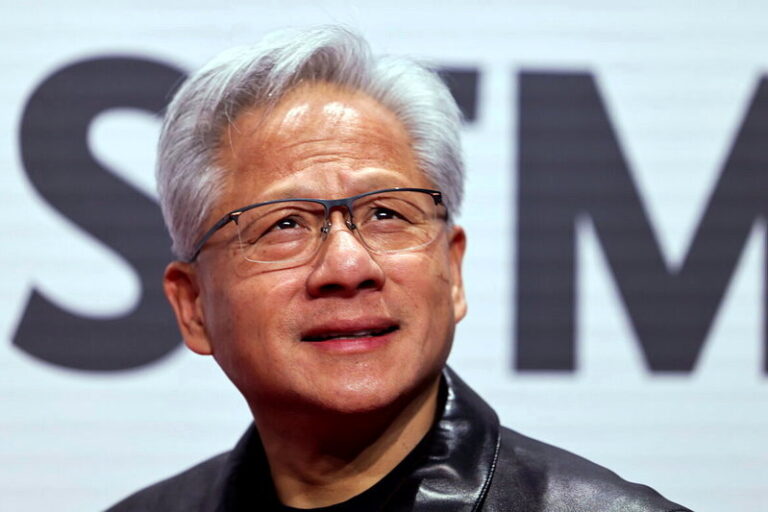
The New York Times reported on the 6th that people who were briefed on US surveillance operations revealed that one of the most important artificial intelligence (AI) companies in the United StatesHuida (Nvidia) CEOJen-Hsun Huang Alice Huang, a well-connected Chinese businesswoman, is a spy for the Ministry of State Security, China’s top intelligence agency.
Huida’s advanced chips are in demand around the world, and the company’s growth has become an important force driving stock market growth in the past few years. Jen-Hsun Huang is the President of the United Statestrump An influential ally and a key figure in the battle for global AI dominance. The New York Times reported last week that Huang was the target of a Chinese intelligence operation and that US intelligence agencies had monitored Huang electronically for at least a year. Trump was briefed about the relationship between the two in 2025 but chose to take no action.
U.S. officials assessed that Huang Le worked directly for China’s Ministry of State Security, a level of intelligence that had not been previously disclosed. People familiar with the matter said that the Ministry of National Security had recruited Huang Le to gather intelligence on Huang Renxun to learn more about US AI chips, and may try to influence Huida to induce the company to supply the most advanced chips to China.
Why China is interested in Huang and what exactly Beijing wants to achieve by establishing close ties with him through its intelligence operatives has long been a matter of concern to US intelligence agencies and now Congress. The Republican leaders of three important committees of the House of Representatives asked Jen-Hsun Huang to attend a closed-door briefing on the 5th of this month to explain his conversation with Huang Le.
➤➤➤ Packaging/A Chinese female spy suddenly appeared next to Huang Renxun? New York Times reveals intelligence doubts
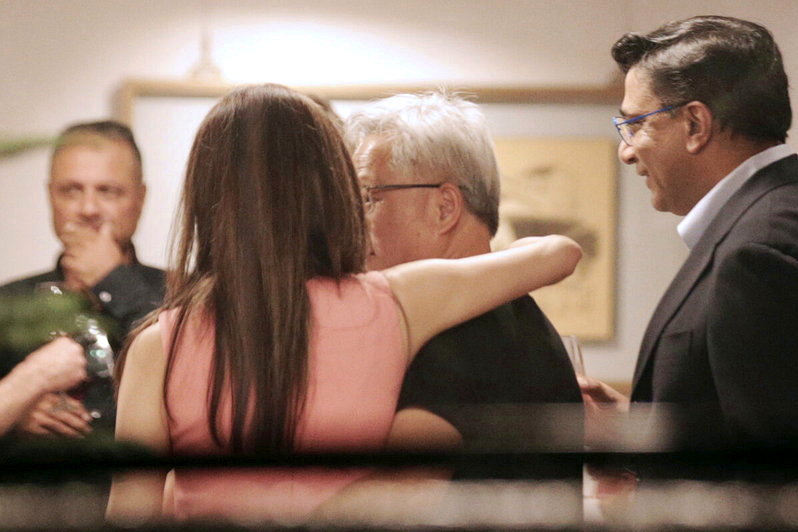
People who have met Huang Le said she is fluent in English and maintains contacts with senior executives in the AI chip industry, including Huang Renxun and executives at Gigabyte, one of the main assemblers of the Huida supercomputer. He has also attended industry conferences and private dinners with corporate executives. It is unclear when Huang Le met Huang. However, the two were photographed together in a bar in Taipei in 2024, at the same time Huang Le’s company MegaSpeed began purchasing advanced AI chips on a large scale, amounting to billions of dollars.
The report said Huang Le belonged to a network of companies and investors centered in Shanghai and Zhejiang province. The network leveraged its connections with local authorities in Shanghai to aggressively branch out from the mobile gaming business into data centers providing AI computing power, and established financial ties with the Chinese military through an investment in the cybersecurity subsidiary of China Electronics Technology Group, one of China’s largest military technology manufacturers.
In addition, MegaSpeed, which is well-funded, suddenly took a big step forward in the field of AI, which surprised many people in the industry. The United States prohibits direct sales of Huida’s advanced chips to China, but MegaSpeed is building data centers in Southeast Asia and leasing computing power to Chinese Internet giant Alibaba, allowing China to access Huida’s advanced chips through indirect channels.
Huida spokesman John Rizzo has consistently stated that Huang’s interaction with Huang Le was “not unusual” and was consistent with the way he typically met many of Huida’s clients. Rizzo said Huida would not share confidential information with customers, nor would customers ask Huida to pressure the US government to change its policy on selling chips to China. He said the Chinese government is “promoting local alternatives like Huawei in China and severely restricting imports of our data center products.”
China’s Ministry of State Security used to be ignored, but after President Xi Jinping came to power in 2012, it began devoting resources to it. Today, the Department of Homeland Security is several times larger than the CIA. It is also responsible for gathering intelligence on personnel, intercepting electronic communications, and conducting counter-intelligence operations.
Chinese embassy spokesman Liu Chang said the New York Times report was “baseless” and “completely defaming China”. The reporter tried to contact Huang Le several times in the past few days for comment, but received no response. White House and CIA spokespeople declined to comment.
Summary FAQ
-
The United States assessed that Huang Le worked directly for China’s Ministry of State Security and was recruited to gather intelligence on Huang Renxun and Huida to understand trends in American AI chips, which could also affect Huida’s supply strategy to China.
-
The report said he is connected to a network of companies and investors in Shanghai and Zhejiang. The network reaches from mobile games to AI data centers and has established financial connections through investments in military-related companies.
-
Huida said there was nothing unusual in the conversation between Huang Renxun and Huang Le, and it would not share secrets or pressure customers. The Chinese Embassy denied the report, saying the allegations were baseless and defaming China.