
AI summary
Summary of article:
Lee Jae-myung pushed forward the largest budget in South Korea’s history, significantly increasing investments in AI, semiconductors, and defense, and using the Future Response Fund to support national development and fiscal stability.
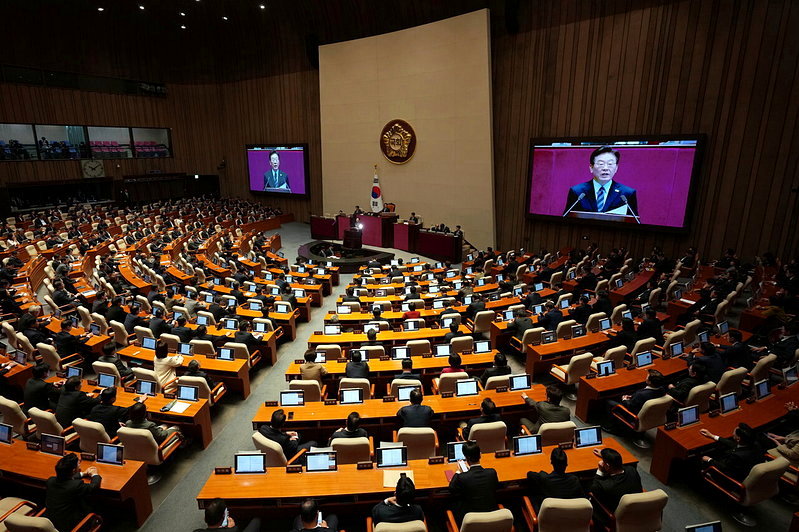
south korea chairmanli zaiming On Monday, Congress passed the biggest budget in history. Annual spending in 2027 will increase by 12.8% to 820.9 trillion won, of which 21.3 trillion won will be invested in three major projects: AI and semiconductors, physical AI and AI data centers, almost double this year’s amount, which is expected to accelerate growth in the future.
The South Korean government proposed this budget in September in hopes of strengthening its technological advantage in the rapidly growing global AI competition. The government will invest $4.7 trillion to develop a sovereign AI model, which Lee Jae-myung said has “the highest performance in the world.”
In his policy speech at the National Assembly, Lee Jae-myung emphasized that the full-year export target of US$1 trillion is very close, but the development results are not evenly distributed. He said: “We must move from ‘development of the few’, where opportunities and outcomes are concentrated in specific sectors, classes and a few companies, to ‘development of all’.”
The budget includes a 162.3 trillion won “Future Response Fund”, financed primarily by increased tax revenues from the semiconductor boom. It is used to support growth industries, youth, local development and education, and also secure a buffer against future tax revenue shortfalls.
Lee Jae-myung said that South Korea’s financial foundation is gradually strengthening. The ratio of fiscal deficit to gross domestic product (GDP) will decline to 0.1% next year from 3.9% this year, the lowest in 20 years; The government debt-to-GDP ratio will fall from 51.6% to 48.3%.
He said that the increase in spending would lead to “little or no increase in net government debt” and that newly issued bonds would be used to repay existing debt. International organizations and major credit rating agencies also gave “very positive comments” on fiscal reform and the role of the future response fund.
City economist Kim Jin-wook (transliteration) said in a report on Monday that it is estimated that the cumulative money available for the future response fund from 2026 to 2027 will be up to 215 trillion won, which will help boost the potential economic growth rate and maintain fiscal health.
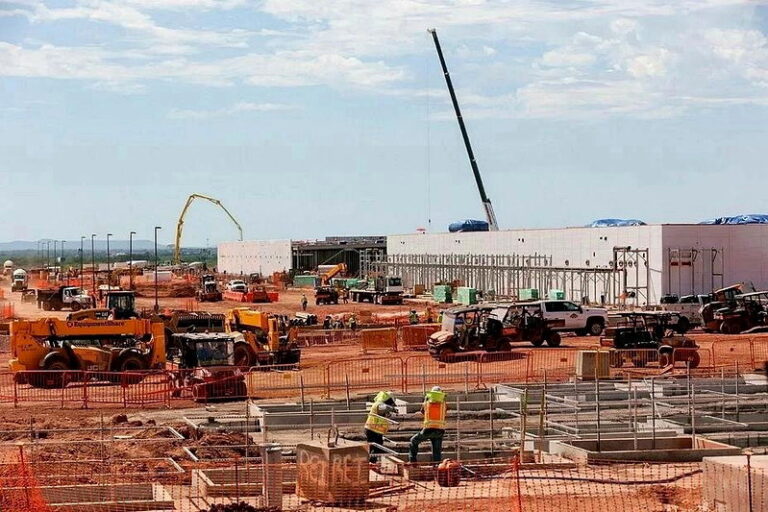
South Korea is also promoting large-scale national projects focusing on semiconductors, physical AI and data centers, including private semiconductor manufacturing with an investment of 800 trillion won in the southwest led by Samsung and SK Hynix.
The government will develop 2,000 professional talents, promote semiconductor design and the development of the local semiconductor industry, and expand AI education to students, job seekers and working workers.
South Korea University has established a “special industry-academic cooperation class” that cooperates with enterprises. Enterprises participate in curriculum design, provide funding, and recruit qualified graduates, so that students have the opportunity to work in companies such as Samsung and SK Hynix before they graduate.
Youth social security and defense spending are also increased in the budget, of which defense spending will increase by 8.2% to 73.3 trillion won.
Li Ziming said: “We will build a system for coordinated operation of manned and unmanned equipment based on AI, robots and drones, and quickly build a smart, specialized and powerful army.”
Summary FAQ
-
Annual expenditure will reach 820.9 trillion won in 2027, an increase of 12.8% from this year. Among them, 21.3 trillion won was invested in AI, semiconductor, physical AI and AI data centers, almost double this year’s scale, indicating that the government will use technology investment to drive the next stage of development.
-
He pointed out that South Korea’s exports are close to US$1 trillion, but development results are concentrated in specific sectors, categories and a small number of companies. Therefore, it is necessary to expand AI, education, youth and local spending to allow the semiconductor and technology boom to benefit people more broadly.
-
The budget includes a Future Response Fund of 162.3 trillion won, which mainly comes from taxes generated from the semiconductor boom, and will be used for growth industries, youth, local areas, and education; Additionally, defense spending increased to 73.3 trillion won to strengthen AI, robots and drones.