
AI summary
Summary of article:
On the eve of the third meeting between Trump and Xi, China handed over the remains of American military personnel found along the Hump Route to the United States in Chengdu, creating a bilateral atmosphere and emphasizing the continuation of the World War II spirit of cooperation and humanity.
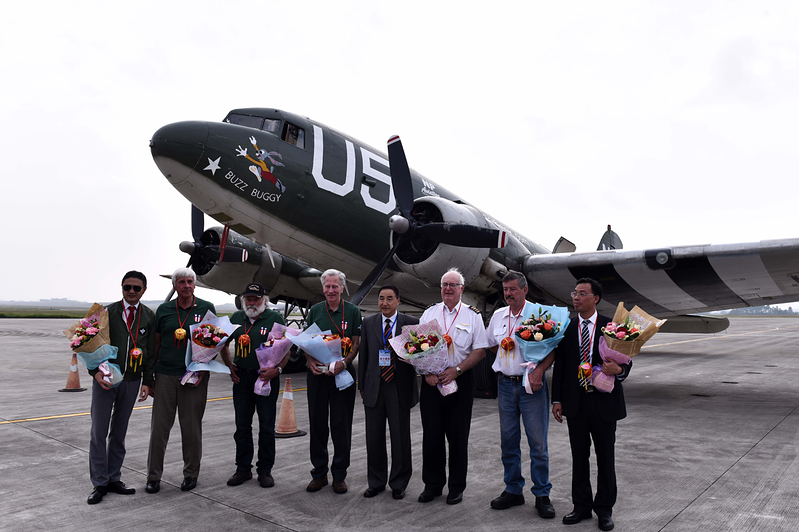
Ahead of the upcoming “Three Sichuan-Xi Meetings”, Beijing is actively creating a good environment for bilateral relations. Following the previous day’s announcement that it would continue to suspend a series of economic and trade countermeasures against the United States, CCTV News reported that on November 10, Chinese and US militaries held a handover ceremony for the remains of US military personnel in Chengdu, Sichuan. China handed over to the United States a batch of remains of American military pilots who assisted China in the fight against Japan and were discovered along the “Hump Route”.
According to reports, the cooperation in the search for the remains of missing US military personnel in China is a vivid reflection of the history of China and the United States fighting side by side and jointly fighting against Japanese fascism during World War II. Over the years, China has always assisted the United States in discovering the whereabouts of relevant remains in a humanitarian spirit. China is willing to continue practical cooperation with the United States in this area and add positive factors to the building of a constructive strategic and stable relationship between China and the United States.
According to an old paper in the “Air Force Academic Bimonthly” published by the Air Force Command, during the Anti-Japanese War, the Burma Highway was cut off by the Japanese army, and China’s external pipelines were completely blocked by the Japanese army. The opening of the Hump Passage undoubtedly relieved China’s supply transportation dilemma.
The Hump Route begins in Assam in India in the west and crosses northern Myanmar in the east to Yunnan province in southwest China. Along the way, it passes through the Himalayas, the Gaoligong Mountains, the Hengduan Mountains, the Nu River, the Lancang River, and the Jinsha River. The total length of the route is approximately 800 kilometers. The average altitude of the area ranges from 4,500 m to 5,500 m, with the highest altitude reaching 7,000 m. Since the mountains surrounding the route are undulating like the back of a camel’s hump, the route is called the Camel’s Hump Route.
This paper states that in modern military history, Operation Hump can be said to be the first continuous, long-range, full-time, and all-weather military airlift mission conducted by mankind. From 1942 to 1945, the United States transported a total of 740,000 tons of war materials via the Hump Route to China, which was in desperate need of foreign aid. It was possibly the most dangerous and expensive air transport mission in human military history.
During the entire mission, 509 US military aircraft crashed, 81 aircraft disappeared, and a total of 1,659 pilots died or went missing. This number far exceeds the total number of Chinese air force personnel who sacrificed their lives for the country during the Anti-Japanese War.
Summary FAQ
-
What China handed over were the remains of American military pilots who had assisted China in the Anti-Japanese War on the Hump Route. They belonged to American military personnel who were missing or martyred near China during World War II.
-
China views this as a reflection of the history of China and the United States fighting together in World War II, the report said. It also stressed that it has assisted the United States in humanitarian searches for remains over the years and stands ready to continue practical cooperation.
-
The Hump Route is an important air transportation route for the United States to deliver supplies from India to southwest China. From 1942 to 1945, it delivered a total of 740,000 tons of supplies, but it also caused 509 aircraft crashes and 1,659 pilots killed and missing.