
AI summary
Summary of article:
Tokyo police arrested a Chinese man, accused of using fake base stations to interfere with mobile phone communications in Ginza and other places, and suspected of sending phishing text messages to defraud money. This case may have affected 18 victims.
Japan A Chinese man suspected of operating a mobile phone base station without permission and emitting powerful interference waves was arrested for violating the Radio Wave Act in Tokyo’s Ginza business district, the Security Division of the Tokyo Metropolitan Police Department said today. The suspect denied committing the crime.
NHK and Jiji news agency reported that the man arrested was Yu Hai, a 31-year-old unemployed Chinese man living in Kamiya, Kita-ku, Tokyo.
The Tokyo Metropolitan Police Department reported that Yu Hai was suspected of using the radio equipment in his car to emit powerful radio waves without permission in Ginza on the 7th, causing difficulty in communication with nearby smartphones. Police seized a device called “IMSI Catcher” from the car. Due to its radio waves, mobile phones within a radius of about 500 meters started displaying “No Service” at the same time.
After losing the signal, the mobile phone will search for the base station again, and will be forced to connect to the second generation mobile communications (2G) signal sent by the fake base station. The authentication mechanisms of 2G are more delicate than those currently used in 4G and 5G. Police believe the suspect intended to use it to send text messages containing phishing scams to mobile phones.
The text message is believed to have been written in Chinese. The main message is that due to the risk of overseas fraud, the credit card payment function has been temporarily disabled, and recipients have been instructed to log in to the website to enter personal information such as credit card information.
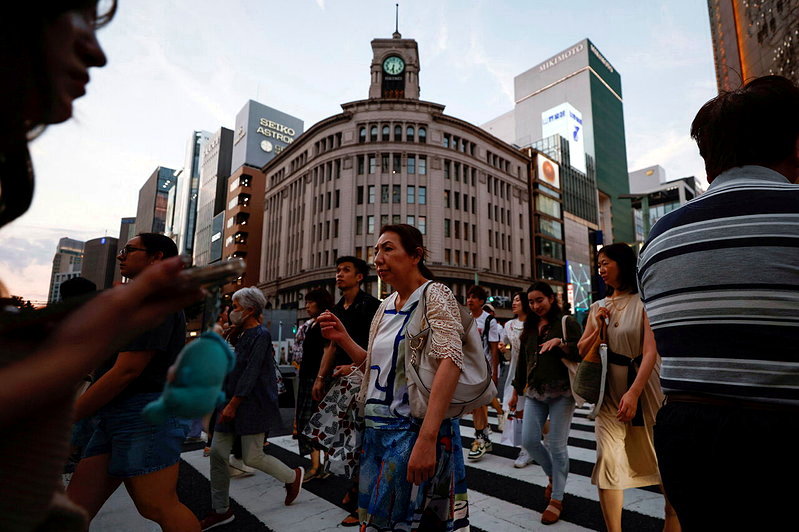
Police found the suspect’s vehicle operating suspiciously in Ginza, Shinjuku, Shibuya and other busy areas where foreign tourists gather. The signals of about 10,000 mobile phones were switched off every day due to interference with radio waves. Even during the investigation there was “no service” on police mobile phones.
Police suspect that 18 Chinese tourists and international students have been victims since January 2025, and the total amount defrauded was approximately 4 million yen (about NT$829,000).
The same day, the Tokyo Metropolitan Police Department also transferred the case to foreign prosecutors on suspicion of interfering with NTT DoCoMo’s communications, under the charge of “major wireless communications interference”. Jiji News reported that this is the first time that Japan has investigated and prosecuted for interfering with mobile phone communications. Police will further clarify the circumstances of the case, including whether organized crime is involved.
Yu Hai confessed during interrogation: “I have never used radio equipment, and it is not installed in my car.”
Summary FAQ
-
Police alleged that he operated car radio equipment without permission in the Ginza business district, emitting powerful interference waves that caused nearby mobile phone signals to disappear. He was also suspected of using a fake base station to commit communications fraud.
-
This type of device will cause the mobile phone to first lose its original signal, and then be forced to connect to the 2G signal of the fake base station, making it easier to intercept or push phishing text messages and guide the victim to enter personal information.
-
Police suspect that 18 Chinese tourists and international students have been victimized since January 2025, causing a loss of approximately 4 million yen; A follow-up investigation will be conducted to determine if there are further organized crime associates.