
AI summary
Summary of article:
A Chinese in the United States shared a lazy method of making compost from a neighbor’s fallen leaves and a friend’s chicken manure. He emphasized that this may be labor-saving but takes more than a year, and reminded that when handling compost and fallen leaves, attention should be paid to decomposition and stacking methods.
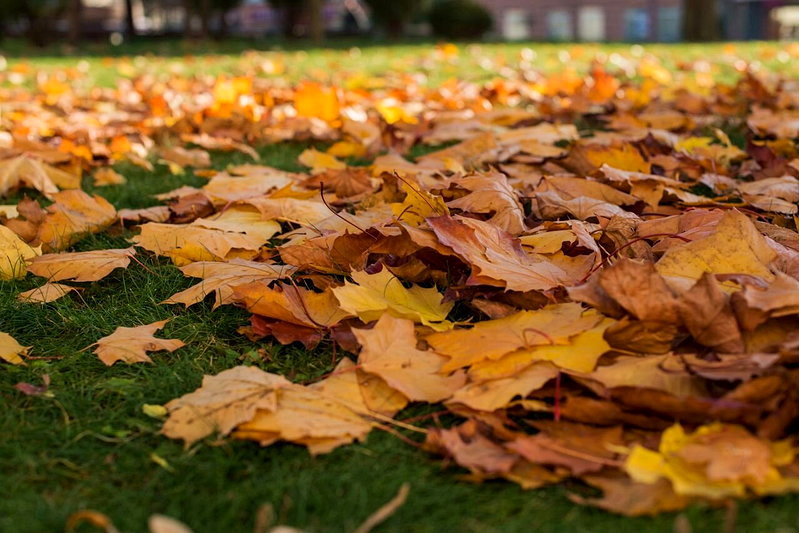
Lots of leaves fall in the fall and winter, and many people are busy bagging and throwing them away, but for vegetable growers, they can be free soil material. A netizen living in the United States recently posted a “smiling while smiling”little red book Sharing the “lazy man’s rotten leaf soil recipe”, mix fallen leaves collected by neighbors with chicken manure provided by friends and pile them up. Turn them frequently and wait for them to rot naturally. He said that although this method is hassle-free, it is quite slow and it will take at least a year before you see black humus at the bottom of the compost.
The house of “Smiling Smiling” has a simple fence to collect a large number of fallen leaves. Some leaves have been shredded by the neighbor’s lawn mower and then mixed with chicken manure. She originally had a vermicomposting bucket that came with the vegetable bed, and recently she tried it. However, after actual use, she found that the container was too heavy and taking up space, and the contents had to be taken out in the spring, so she began using it as a normal compost bucket.
Some netizens asked whether compost could be made by just adding leaves, not chicken manure or kitchen waste. “Smilingly” replied that pure fallen leaves will also decompose slowly and can improve the soil, but it will take more time. If the lawn is left covered with thick fallen leaves, the ground beneath may be affected by lack of sunlight and air. Therefore, it is better to first collect them in a pile, or move them to a corner where turf is not needed.
The message area also shares a variety of simplification methods. Some people put fallen leaves in ordinary garbage bags, cover them with a layer of soil, water them, and put them away. When they are dug up again the following year, the leaves have turned into dark humus; Others simply dig holes and bury fallen leaves into the soil, and they will decompose organically after winter. Other netizens suggested that thick branches should be used as the base, and then piled up with fallen leaves, soil and a small amount of peels, keeping them moderately moist and covered, to prevent the fallen leaves from scattering around.
Whether the leaves are shredded or not will also affect the speed of decomposition. Netizens with planting experience pointed out that you can first use a lawn mower or pruning tool to break up the fallen leaves to increase the contact area, and then cover them with a thin layer of soil; Decomposition is usually rapid in hot climates, but in cold regions it may take half a year to more than a year. “Smiley Smiley” also said that most of the blades sent by neighbors have been cut by lawn mowers, so they are easy to stack.
However, when using animal manure, such as chicken manure, you should wait until it has completely decomposed before adding it to the vegetable garden, and avoid direct contact with the crop’s roots or edible parts. Different tree species of leaves, local climate, humidity and stacking methods will also cause differences in completion time. You cannot decide whether it is suitable for use or not based on color alone.
Summary FAQ
-
He piled up fallen leaves collected by his neighbors and mixed them with chicken manure provided by his friends. He tried to avoid turning them frequently and relied on natural decomposition to generate humus. This method is problem-free, but slow and usually takes more than a year.
-
Can do. He said pure leaf litter would also decompose slowly and still improve the soil, but would take longer. If the lawn is directly covered with thick turf, it may affect the light transmission and ventilation of the turf. It would be better to focus on the treatment of piles first.
-
The most important thing is to wait until it has completely decomposed before using it and avoid direct contact with the roots or edible parts of the crop. Different tree species, climate, humidity and stacking methods will all affect the speed of decomposition. You can’t guess just by looking at the color.