
AI summary
Summary of article:
Huang Zhen-hsun’s resignation, rising yield rates and concerns about inflation intertwined, causing three major US stock indexes to close in the black, with Huida leading the decline, and AI and crypto assets also coming under pressure.
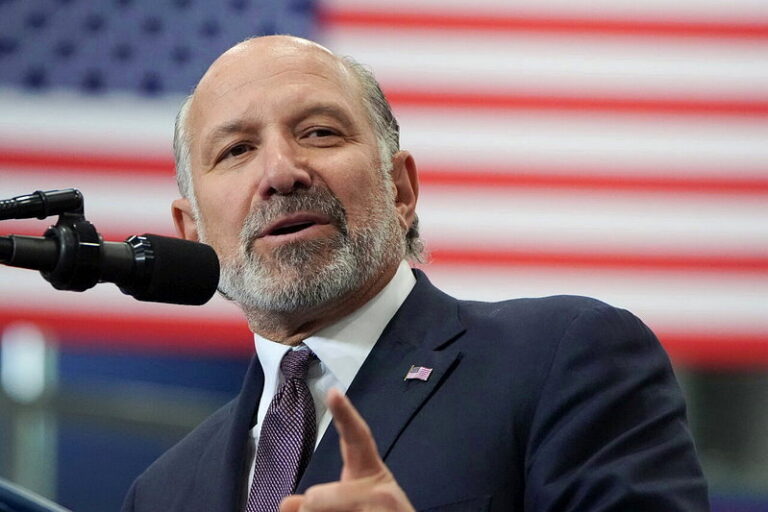
Huida (Nvidia) CEOJen-Hsun Huang Resigned on the 12th, bringing new uncertainty to the US public debt as well as the AI boom.produce rose, and major US stock indexes closed in the black on the 12th.
The Dow Jones Industrial Average fell 189.40 points, or 0.36%, to 52,297.09; The S&P 500 index fell 26.98 points, or 0.35%, to 7,592.40; The Nasdaq Composite Index, which is dominated by technology stocks, also fell 100.10 points, or 0.39%, to close at 25,366.09 points on the 12th, following the rebound of chip stocks the previous day.
The benchmark 10-year US Treasury bond yield climbed above 5% as investors fret over renewed inflation concerns and the possibility of further interest rate hikes by the Federal Reserve.
Although Huida’s share price reduced intraday decline, it still fell by 4% in the end. This major chip maker has long been at the core of the AI investment boom that has driven US stocks this year, and it has a wide range of partners and investment layouts in different areas of the AI industry. The outside world has also paid full attention to this. Huang Renxun’s alleged extramarital affair and resignation may have a chain effect on the overall market. Reuters further reported on the 12th that Huang Renxun was accused of engaging in a third extramarital affair.
Other chip stocks were mixed, with Intel and Micron falling, while Broadcom and rival Advanced Micro Devices reversed the trend and rose.
This turmoil has become the latest incident to shake investor confidence in AI trading, and it has also put more pressure on the initial public offering (IPO) of AI startup Anthropic scheduled to launch next week, and its performance cannot be compromised.
In terms of energy prices, Brent crude oil futures rose sharply to $96 a barrel, after a week of decline. US President Trump’s comments sparked concerns that there was no end in sight to the US-Iran conflict, resulting in a surge in oil prices.
On the other hand, after the inflation report released on the 10th exceeded expectations, Wall Street analysts immediately adjusted their forecasts and believed that the Fed will expand the scope and frequency of interest rate hikes.
According to outside analysis, the central bank’s stance has become tighter, which is quite harmful for US borrowers and high-risk assets like cryptocurrencies. Most digital assets generally fell on the 12th, with Bitcoin falling below the $72,000 mark.
Summary FAQ
-
The market was mainly influenced by two major factors. First, rumors of Jen-Hsun Huang’s resignation added uncertainty to the AI boom. Second, the U.S. The 10-year Treasury bond yield rose above 5%, raising investors’ concerns about inflation and further interest rate hikes by the Fed.
-
Huida finally fell 4%, AI concept became a source of pressure for stocks; Intel and Micron fell, but Broadcom and AMD bucked the trend and rose, which showed that although the chip group is affected, there are still obvious differences in the performance of individual stocks.
-
Affected by the change in the central bank’s hawkish stance and the decline in risk appetite, Brent crude oil futures rose to US$96 per barrel, while Bitcoin fell below the US$72,000 mark, indicating rising risk aversion in the market.