
AI summary
Summary of article:
The Zhen-Hsun Huang scandal has raised doubts about Huida’s governance, and the short-term impact is mostly focused on the company itself. However, if the leadership change leads to a reduction in investment or a loss of market share, Taiwan’s AI supply chain and the stock markets of Taiwan and South Korea could be affected.
Jen-Hsun Huang Stopping or quitting affects nvidiaHuida (also known as NVIDIA), also examines Taiwan’s AI supply chain. Analysts pointed out that the current impact is still focused on Huida, but if financial support for partners is reduced after the change of managers, or competitors take advantage of the situation to seize market share, the impact may extend to Taiwan’s orders and investments, and even change the strength and weakness of Taiwan and South Korea’s stock markets.
Huang Renxun’s extramarital affairs have been exposed one after another, and the board of directors has launched an investigation.wall Street He also began to adjust his assessment of Huida. However, analysts’ concerns vary, with some worried about succession and corporate governance, others worried about export controls, and others who believe the stock price could bounce back while long-term competitive advantages face a test.
1. Why should Taiwan be particularly concerned?
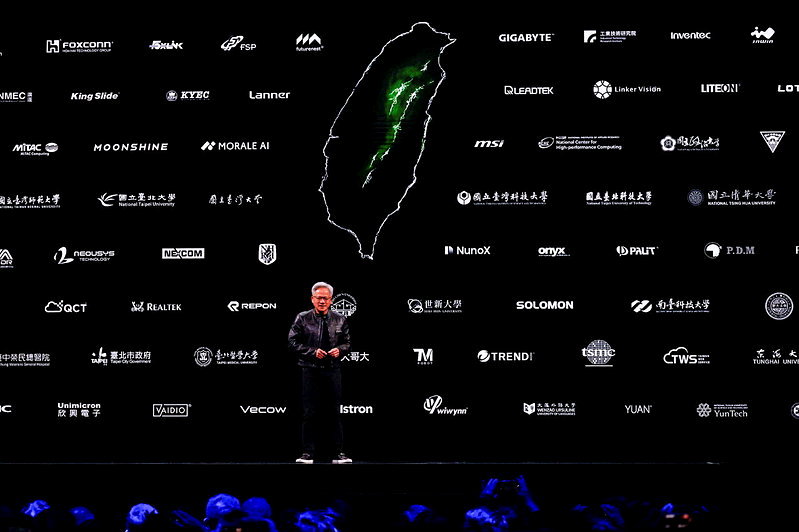
Huang Jen-hsun is popular in Taiwan not only because he was born in Taiwan, but also because he led Huida, giving Taiwanese industry players the opportunity to take part in the AI craze. TSMC (2330) makes the most advanced chips for Huida, and Taiwanese companies are also involved in supplying packaging, servers and related equipment.
Taiwanese stocks were relatively stable during the first wave of the Huang Jen-hsun incident. HUIDA’s close cooperation with TSMC and advanced packaging companies was a contributing factor. However, if Huang Jen-hsun is replaced, Taiwan stocks may face greater challenges. Five of Huida’s top ten suppliers are based in Taiwan, and more than ten other companies supply servers, racks, cooling and power systems to provide accessories for Huida’s high-end products. These companies have benefited from the AI boom and MSCI also included several Taiwanese companies in its November index adjustment.
Huang Renxun said in May this year that Huida’s annual expenditure in Taiwan has reached nearly US$100 billion and is heading towards US$150 billion. This includes supply chain purchases and other expenses. Large-scale Taiwanese industry players pay special attention to HUIDA’s follow-up arrangements.
HUIDA’s Taipei headquarters plan is another focus of observation. Taipei Mayor Chiang Wannan said in an exclusive interview with Taiwan TV on Tuesday that there is smooth communication between the city government and Huida and they will continue to cooperate according to the established plan.
2. How does personal disturbance spread through the supply chain?
Joachim Clement, investment strategist at Panmure Liberum, believes the current impact is still limited to Huida. However, if Huang Renxun’s position is not preserved, Huida may reduce its support for other companies in Asia or the United States, and the impact may spread to other semiconductor stocks.
Bank of America pointed out that Huida’s investment covers the AI industry. If HUIDA becomes more conservative in its investments in new projects, it could impact demand for memory, networking equipment and semiconductor manufacturing equipment.
However, Bank of America stressed that this is still a possible scenario and there are no announced policy adjustments at present. Other funds can fill the gap, and HUDA’s investment activities are less exposed, which does not mean less support for the industry.
Although CoreWeave’s strong financial report has eased the market’s doubts about the sustainability of AI demand, Taiwan’s supply chain still needs to see whose chips customers adopt. If Broadcom, Intel or Advanced Micro Devices (AMD) have the opportunity to steal Huida’s market share, the division of labor in the supply chain may also be readjusted, and domestic US companies may benefit as a result.
For Taiwanese suppliers, the next thing to watch is whether there are real changes in customer procurement, project construction progress and funding arrangements. The stock price fell first, but not enough to judge that orders had decreased.
3. What are brokers worried about when they downgrade their ratings?
Baird cut Huida’s rating to “neutral” citing reasons including difficulty controlling data center spending in 2027, the possibility of demand weakening after years of rapid growth in AI investment and whether Huang Jensen can continue to lead Huida.