
AI summary
Summary of article:
The WSJ editorial said the Jen-Hsun Huang scandal is not just a matter of personal morality, but a national security warning sign that China has penetrated US companies and acquired HUDA chips and US export control loopholes, and called on Washington to remain vigilant against China.
The Wall Street Journal (WSJ) editorial board wrote in an editorial published on the 10th that artificial intelligence (AI) chip giant Nvidia (Huida also translated as Nvidia) CEOJen-Hsun Huang (Jensen Huang) and Chinese womendetective Extramarital affairs are related to national security interests. This incident is a serious warning that China is doing everything possible to infiltrate the top management of American companies in an attempt to achieve dominance in the field of artificial intelligence.
The editorial, titled “China uses honey trap to teach Huida a lesson”, noted that Huida’s allies in Washington ridiculed the news that Huang Renxun had an affair with a Chinese female spy, and said that although the affair was regrettable, it was just a mistake that all men in the world would make. However, things are not that simple.
Huida’s share price fell 4.3% on the 9th. Investors are worried that in addition to causing embarrassment, the scandal could also trigger government intervention to restrict Huida’s chip sales.
Republican congressmen have asked Huang to attend a closed-door hearing this month. HUIDA’s board of directors also announced an independent investigation into Huang becoming “the target of foreign intelligence activities”.
The editorial said HUIDA’s board of directors did what it was supposed to do, but it cannot replace a government investigation because the incident involves national security interests and affects far more than any individual or company.
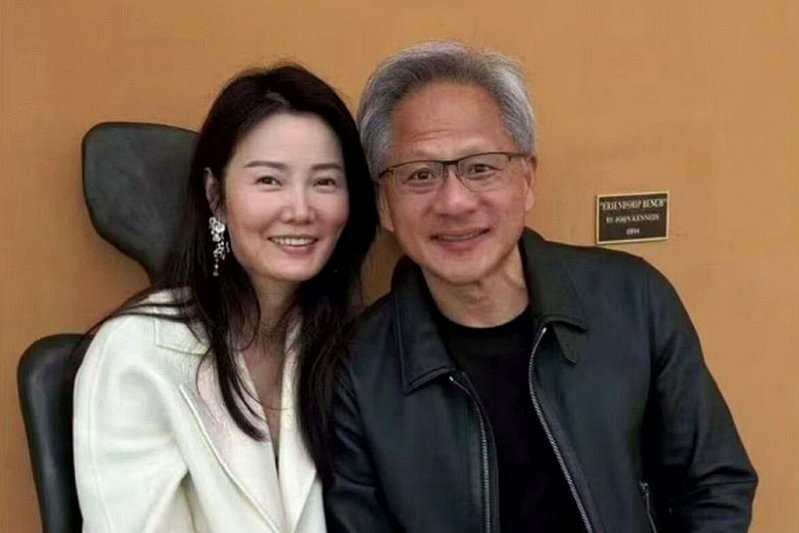
Jen-Hsun Huang’s affair with Alice Huang, a top executive at Singapore data center company MegaSpeed, has been reported since last autumn, when US national security officials warned about the relationship in an internal memo.
MegaSpeed was spun off from Chinese video game developer 7Road Holdings shortly after the Biden administration banned chip sales to China. It is interesting to wonder whether this was entirely a coincidence. In November 2023, MegaSpeed was sold to a shell company headquartered in Singapore, and Huida named MegaSpeed as a “cloud partner” with priority access to advanced chips.
MegaSpeed buys billions of Huida chips, stores them in data centers in the Asia-Pacific region outside China, and then leases this computing power to Chinese companies including Alibaba. This means that Chinese AI companies still have a ways to go to obtain Huida’s high-performance chips.
The editorial reported that Huida said allowing more chip exports would make Chinese AI developers more dependent on American technology, but it ignored the fact that China’s use of AI is not just for commercial purposes. Huida’s high-end chips will also be used to advance Beijing’s military plans and anti-US goals; There is no evidence that Huang is a traitor, but he has a naive idea that China is only an economic rival, not a geopolitical rival. This view is also quite common among some of Trump’s internal staff.
The editorial said President Trump should remain skeptical about China’s commitments when he meets Chinese leader Xi Jinping next week. Beijing’s top priority is to relax export controls on Huida’s Rubin and Blackwell chips. Using HUDA’s chips as a bargaining chip in exchange for a promise to buy more soybeans would be a serious strategic mistake. The Jen-Hsun Huang scandal exposed China’s plans for American chips and flaws in the US export control system. How to close loopholes is a rare but highly valuable area of bipartisan cooperation.
Summary FAQ
-
The editorial believes that this incident may reflect China’s deliberate contact with senior executives of US companies to influence the supply of AI chips and policy decisions; If foreign intelligence activities are involved, it is not just a personal scandal, but a national security issue.
-
The article said that MegaSpeed has obtained the status of Huida’s preferred cloud partner in Singapore, purchased a large number of Huida chips, and then leased computing power to Chinese companies, which means that Chinese AI companies can still obtain high-performance chips indirectly.
-
The editorial warned that the United States should not use Huida’s Rubin and Blackwell chip export rebates as a bargaining chip in exchange for soybean purchases from China; This could weaken export controls and give China an advantage in AI and military.