
AI summary
Summary of article:
Number 70 Morris Street in Chinatown was rebuilt in 2020 after being damaged by fire. It will be converted into an eight-storey community cultural center at a cost of 184 million yuan. It is expected to be completed in 2030 and five institutions will be transferred.
A groundbreaking ceremony for the reconstruction of 70 Mulberry St. in Manhattan’s Chinatown was held on the 9th. The century-old building was severely damaged by a five-alarm fire in 2020, forcing the evacuation of the five community agencies within it. The reconstruction project will transform the original five-storey building into an eight-storey community cultural centre. The public space will be expanded by approximately 30% compared to the original space. The project is expected to be completed in 2030, with an allocation of NT$184 million.
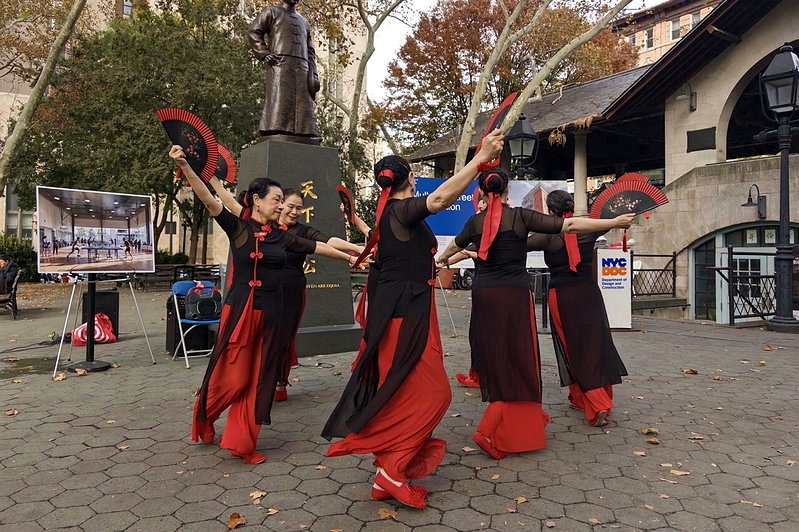
Number 70 Maubilly Street was built in 1892 and was originally the 23rd public school. After closing in the mid-1970s, it became the Chinatown Senior Center, United East Athletic Association, Chen Dance Center, United States.Sugar Home of the Museum of Art (MOCA) and the Chinatown Manpower Project.
On January 23, 2020, Lunar New Year’s Eve, a five-alarm fire broke out in the building and forced five agencies to evacuate. Some organizations later resumed services at temporary sites, but on a smaller scale than before.
Yume Kitasei, director of the Municipal Administrative Services Bureau, recalled the scene of residents coming here in the past to take language classes, learn dance, and have lunch with friends at the senior citizen center. She said that the fire caused Chinatown to lose an important meeting place; a few months laterpandemic Shutting down the city makes it harder for residents to live together.
The new building will retain the original two-story exterior walls and historic staircase, and will add a community room and a dedicated kitchen for the senior center. Paul A., director of the city’s Department of Design and Construction. Ochoa said the sixth-floor multipurpose hall will overlook Columbus Park and be connected to an outdoor terrace that will seat 475 people. The building will be designed to be completely barrier-free, and solar panels mounted on the roof and exterior walls are expected to supply up to 30% of the entire building’s electricity consumption.
The building will also feature artist Jennifer Wayne Ma’s public art work “The Wings of Change.” The main part is a hanging sculpture approximately 33 feet long, incorporating objects salvaged from the scene of the fire, and a glass ball used as a time capsule to preserve stories related to the building.
City Councilor Christopher Marte, State Senator Brian Kavanaugh and other civic representatives attended and gave speeches. Beiqingmeng thanked successive delegates for their support for reconstruction, and noted that former Mayor Bill de Blasio and then-City Councilor Margaret Chin had promised to invest 170 million yuan in 2021, and the city government later sought additional funds with Ma Tai.
Mayor Zohran Mamdani issued a statement saying that for years, it has been a place where the community gathers, elders make friends and cultural groups continue Chinatown traditions. After the fire, these groups and the residents who depended on their services had to find somewhere else to go. “Now, we’re getting them home.”
Summary FAQ
-
The original five-storey building will be converted into an eight-storey community cultural centre. The public space will be expanded by approximately 30% compared to the original space. It will also have a community activity room, a senior center kitchen and a multi-purpose hall that can accommodate 475 people.
-
A total of five institutions were affected, including the Chinatown Senior Center, the United East Athletic Association, the Chan Dance Center, the Museum of Chinese in America, and the Chinatown Manpower Center. After the fire they were forced to evacuate and dispersed to temporary locations.
-
The reconstruction project will retain the original two-story exterior wall and historic staircase, and add barrier-free design, solar panels on the roof and exterior wall. This is expected to supply up to 30% of the electricity for the entire building. Public artworks will also be installed to preserve the memory of the fire.