
AI summary
Summary of article:
The French government announced that the basic wage will be raised to 1,502 euros after tax starting in December, in a bid to ease price pressures. However, the union believes the increase is not enough and protests will continue.
The French government announced today that it will raise the basic salary after tax to 1,502 euros (about US$1,683) a month, effective from December 1 this year, hoping to calm some public discontent. However, the union was not satisfied and called on the public to take to the streets to demonstrate again on the 17th of this month.
The current monthly basic salary after tax is 1,477.93 euros with an adjusted increase of 1.6%.
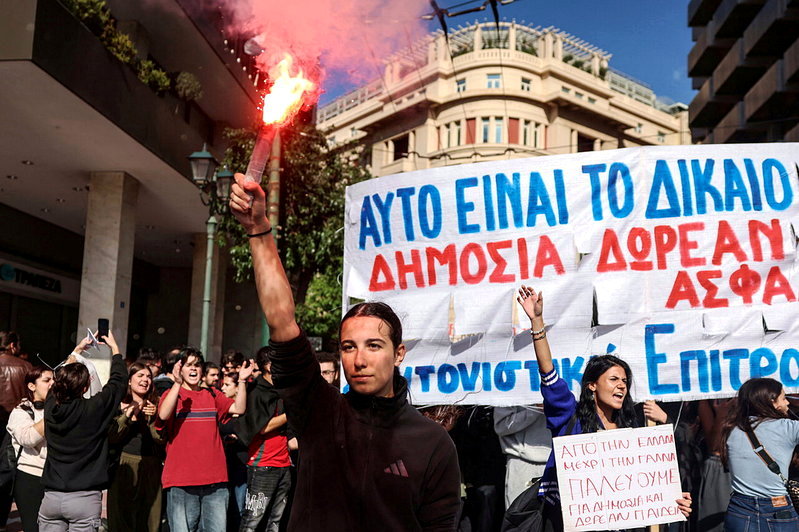
Major trade unions have been calling for unification for weeksstrike And took to the streets to demonstrate against the rising cost of living and declining purchasing power. Some union members told CNA reporters during the march,inflation And rising prices, forcing them to cut back on clothing and diet. When the temperature has recently dropped below 10 degrees Celsius, they do not even dare to turn on the heater in the severe cold.
Prime Minister Sébastien Lecornu announced the increase in basic pay from next month after calling a morning meeting with officials, unions and employer representatives. Lequenu acknowledged in the press conference after the meeting that social tensions have increased, but that this wage increase is the second largest in 20 years, and the government will ensure that this measure will not lead to unemployment.
Labor Minister Jean-Pierre Ferrando said the basic salary will be increased by 5.3% this year to about 75 euros, in addition to the increase at the beginning of the year. He hopes the move will encourage companies to review the lowest levels of pay scales and set up a pay oversight committee.
Additionally, Economy and Finance Minister Roland Lescure said the government has proposed amending the 2027 social security budget next year to maintain the upper limit of the fuel subsidy at 1,000 euros, which is a tax-free subsidy that employers can pay to employees.
Small and Medium Enterprises and Trade Minister Serge Papin said the government would also propose increasing the income tax exemption for overtime pay from 7,500 euros to 10,000 euros a year.
According to data from the French National Institute of Statistics and Economic Research (Insi), the inflation rate rose to 3.4% in October this year. Marielise Lyon, secretary general of the French Federation of Democratic Trade Unions (CFDT), recently requested that the basic salary be increased by 100 euros per month. Today he bluntly said that the increase of 1.6% is not enough.
After the government announced its decision, Sophie Binet, general secretary of the French General Trade Union (CGT), called on workers, retirees and youth to take to the streets again on the 17th. He said that unless real wages increase, the mobilization will continue.
On the other hand, business leaders warned last month that another significant increase in base pay would have adverse consequences, and that the decision would ultimately harm more people than benefit.
For decades, much of France’s working population has been receiving the minimum wage or slightly above the minimum wage for a long time, a phenomenon known as “smikardization”.
According to Le Figaro’s analysis, over the past 10 years, the basic salary has grown much faster than the average salary, from 1,467 euros before tax (about 1,142 euros after tax) in 2016 to 1,925 euros (about 1,502 euros after tax) effective in December, an increase of about 31%.
Meanwhile, the average wage has stagnated. Inci data shows that from 2016 to 2024, the average salary after tax increased from only 2,129 euros to 2,190 euros.
The report explains that this is because the basic salary is set by the government and automatically adjusted according to the inflation rate. As far as average wages are concerned, Olivier Redoulles, research director at the Research Center for Enterprise Development and Economic Expansion (Rexcode), explained that “in France, as in other countries, the overall wage level depends on productivity.” In recent years, France’s productivity growth has been very low or stagnant.
Summary FAQ
-
The government announced that the basic salary after tax will be increased to 1,502 euros a month starting on December 1 this year, an increase of 1.6% from the current 1,477.93 euros, hoping to respond to public complaints and ease social tensions.
-
The union believes the 1.6% increase is not enough to tackle inflation and price rises, and cannot improve real wages. Therefore, it still calls on workers, retirees and youth to take to the streets to demonstrate again on the 17th.
-
The government also proposed maintaining the upper limit of fuel subsidies at 1,000 euros and increasing the overtime tax exemption to 10,000 euros; However, the business community warned that large wage increases could hurt enterprises, and create more victims than beneficiaries.