
AI summary
Summary of article:
Japan is concerned that Sanae Takaichi will receive a warm welcome from Xi Jinping when she attends APEC in Shenzhen, and has asked China to extend the same courtesy; However, amid strained China-Japan relations, the chances of a formal meeting between the two sides are slim.
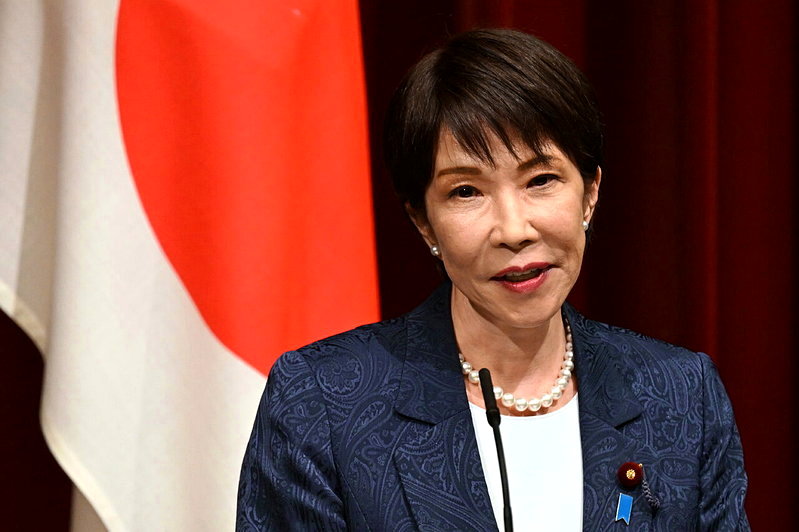
APEC(APEC ) The meeting of economic leaders will be held in Shenzhen, China from 18 to 19 November.Japan takaichi sanae During the meeting, he was warmly welcomed by Chinese President Xi Jinping. People familiar with the matter revealed that Japan has sought assurances from China and hopes Xi Jinping will extend Gao Xi the same courtesy as leaders of other countries. If there are any unusual arrangements at the meeting, Japan will protest.
Bloomberg reported on the 9th that Japanese officials expected Xi Jinping, as host, to at least shake hands with Takaichi Sane as usual. However, in the past year, Sino-Japanese relations have fallen to their lowest level since the two countries normalized diplomatic relations in 1972, and there is uncertainty over whether Xi Jinping would extend such a courtesy to Gao Xi.
According to reports, when China last hosted the APEC economic leaders meeting in 2014, China-Japan relations were equally tense, and Xi Jinping even shook hands with then Japanese Prime Minister Shinzo Abe. But what is different from now is that both sides had laid the foundation for easing relations several months ago.
Jeremy Chan, a senior analyst at Eurasia Group and a former US diplomat, said that in the past year, Beijing’s rhetorical attacks on Japan have become more personal, with many focused on the higher market. This raises the possibility that China could use the APEC opportunity to embarrass the high market by undermining high market behavior or criticizing Japan.
China-Japan relations have been on the rise since last November, when China said that if China used force against Taiwan, it could lead to a “crisis situation” in which Japan could exercise its right of collective self-defense. Bloomberg reported that Beijing subsequently restricted exports of rare earths to Japan, took measures such as restricting seafood imports and calling on Chinese people to avoid traveling to Japan. Gao Xi has so far refused to retract his Taiwan-related comments and continues to promote security policies that displease Beijing.
According to people familiar with the meeting arrangements, it is unlikely that Gao Xi and Xi Jinping will hold a formal meeting during APEC. Contacts between the two sides are likely to be limited to regular talks on a formal agenda, such as the leaders’ dinner, when Xi Jinping is expected to meet and exchange greetings with each leader.
In addition, US President Trump and Russian President Vladimir Putin are also planning to hold a trilateral meeting with Xi Jinping during APEC. Bloomberg analyzed that this could increase the risk that Washington will view the market as isolated. The higher market will see the opportunity to meet Trump in Manila during the ASEAN summit before APEC to send a message to Beijing.
Masaaki Taniguchi, a professor of political science at the University of Tokyo, said that in the face of the upcoming APEC meeting, the market only needs to respond calmly and steadily, and there is no need to provoke China unprovoked. On the other hand, Japan has no reason to bow to China.
Summary FAQ
-
As Sino-Japanese relations have deteriorated rapidly in recent years, Beijing’s criticism of Gao Xi and Japan’s policies has become more targeted. Japan is worried that Xi Jinping will lower reception standards at domestic venues and embarrass Gao Xi.
-
Japan has asked China to ensure that Takaichi will be treated with the same courtesy as other leaders. If any unusual arrangement occurs, Japan will file a protest to prevent the Prime Minister from being deliberately ignored in the international arena.
-
People familiar with the matter believe that a formal meeting is unlikely. The two are likely to exchange only brief greetings during formal agenda items such as the leaders’ dinner, a routine contact rather than a substantive bilateral meeting.