
AI summary
Summary of article:
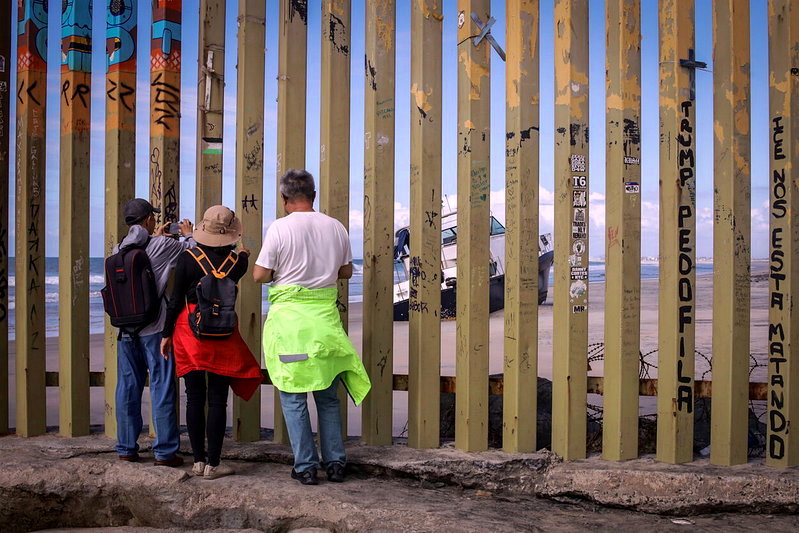
After the US midterm elections, some immigrants from Central and South America who were deported by the Trump administration regained hope of going to the United States due to the Democratic Party’s victory and returned to the border one after another despite the US warning that immigration policies had not changed.
The midterm elections have just ended, and Central and South America were expelled by the Trump administrationmigrant Lookrepublican party After losing their majority in both houses of Congress, they regained hope and jumped on the “Blue Wave”, planning to return to the border and pursue the American dream.
According to CNN,democratic party Two days after the Republicans’ landslide defeat in the midterm elections, the US Embassy in El Salvador issued a warning in Spanish on social media: “US immigration laws remain in effect and the midterm election results do not mean a change in current immigration policies.”
The Democratic Party gained control of both houses of Congress in one fell swoop, significantly increasing the willingness of immigrants to enter the United States. Beatriz, her husband and their two children from El Salvador, along with dozens of other compatriots, left the bus terminal west of San Salvador and took a bus to the Guatemalan border city of Tecun. Uman), despite the dangers of the journey, Beatrice still holds out hope: “This is our hope, I hope we can reach our destination.” In addition, a bus company employee who requested anonymity also told CNN: “This wave of passenger flow is by no means normal.”
Since Trump 2.0 took power, he has tightened controls at the U.S.-Mexico border and initiated mass deportations. Now the Democratic Party, which has lax immigration policies, has won a landslide victory, giving new hope to Santiago, a Honduran man who has been deported twice: “We hope that as the situation changes, our situation will improve.”
Juan, a Honduran man who had lived in the United States for 26 years, was deported on September 15 this year. When he learned that groups of compatriots were headed to the US border, he took the initiative to join them: “I plan to try again to see if I can enter the United States, because my wife and two children are there.”
For many Central and South American immigrants, the risk of deportation is negligible in comparison, given the difficulty of life and being forced to be separated from their relatives in the United States. Carlos, a Salvadoran man, said candidly: “My family is there, there are no jobs here, and I have been unemployed for four months.” “So I decided to embark on the journey.” Mauricio, a young farmer, also hopes to improve his and his family’s lives: “Although there are jobs here, the money we earn is not enough to live.” He also stressed: “Life in the United States is not easy, but we still want to try our luck.”
However, Aníbal, a Guatemalan man, believes that no matter which political party is in power, illegal immigrants will still be deported: “Democrats and Republicans are the same. Even if we are caught tomorrow, we will try to go to the United States again.” He added, “Let’s see who gets tired first, them or us.”
Summary FAQ
-
Because the Democratic Party gained control of both houses of Congress after the midterm elections, many immigrants from Central and South America who were deported or stranded believed that immigration policies could be more relaxed, and thus rekindled their hopes of reunification and a life in the United States.
-
The embassy reminded in Spanish that US immigration laws are still in effect and the midterm election results do not mean that current immigration policy has changed. This is a clear message to immigrants not to mistakenly think that a change in the political situation will make it easier to enter the country.
-
Many people face pressures such as unemployment, inadequate income and separation from their families in their native places. In comparison, the risk of deportation appears small; They hope to return to the United States to reunite with their families and strive for better livelihoods.