
AI summary
Summary of article:
A man in Linfen, Shanxi province was suddenly injured while peeling apples in the passenger seat. The fruit knife penetrated his chest and injured his right ventricle. He was out of danger after multidisciplinary emergency surgery at the hospital.
A man was peeling apples while sitting in the passenger seat of a car in Linfen, Shanxi, when the vehicle suddenly came to an emergency stop. The fruit cutting knife in his hand went straight into his chest due to inertia, rupturing several arteries and even perforating the right ventricle. The injury was very serious. After emergency rescue by the multidisciplinary team of the hospital, the operation took about two hours to complete. The patient is now out of danger and has been shifted to the general ward. Doctors reported that the mortality rate from cardiac arrest is more than 80%. Timely first aid measures taken by patients and their families save precious time.
According to the Southern Metropolis Daily, Linfen Municipal People’s Hospital announced on the 6th that on the day of the incident, the patient made an emergency stop due to an unexpected situation while riding in the vehicle. He was peeling an apple in the passenger seat at the time, and the fruit knife in his hand was driven into his chest by inertia. When he was sent to the hospital via 120 ambulance, the patient was pale, confused, his blood pressure was extremely low, and was in hemorrhagic shock.
The hospital immediately activated the trauma emergency green channel. After bedside ultrasound and chest CT examination, it was found that the patient had hemorrhage and hemopericardium on the left side of the chest. Emergency surgery was immediately arranged when heart injury was suspected. Thoracoscopy revealed that approximately 2,000 ml of blood had accumulated in the patient’s chest, but no obvious bleeding points were found. The medical team suspected that the source of the bleeding was in the mediastinum or pericardium.
At this time, the patient’s blood pressure is constantly falling, and vasoactive drugs must be used to barely maintain vital signs. After receiving the notice, cardiac and vascular surgeons immediately interrupted the original surgical arrangements and rushed to the scene to handle the rescue operations.
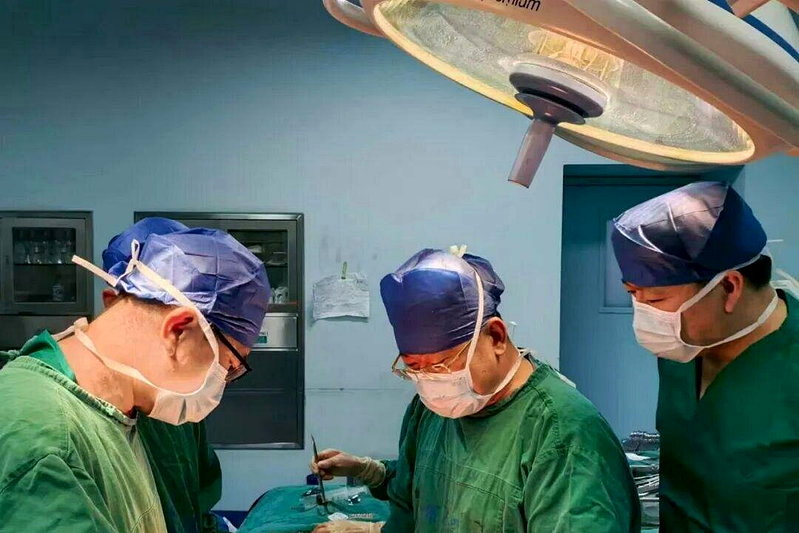
The doctor immediately opened the chest and found a large hematoma in the mediastinum. Cardiac tamponade can cause cardiac arrest at any time, so they immediately opened the pericardium and pumped out the accumulated blood, and the patient’s blood pressure improved slightly. After further exploration, it was found that the left internal mammary artery and intercostal artery had been cut with a fruit knife. Blood gushed out from all four ends of the two blood vessels at the same time. The medical team immediately bandaged them one by one to stop the bleeding.
According to reports, Wang Zhendong, director of the Department of Cardiac and Vascular Surgery, who thought the condition had been stabilized, was found to have a one-centimeter tear in the pericardium when he was further clearing the hematoma. When he searched downwards along the incision, he found a six-millimeter tear on the surface of the right ventricle, which was still bleeding. The doctor then placed precise stitches while the heart continued to beat. The entire operation took about two hours to complete. It takes only 40 minutes from patient admission to surgery.
After surgery, the patient was sent to the intensive care unit. After treatment and care, his vital signs gradually stabilized and he has been shifted to the general ward.
Wang Zhendong said that cardiac trauma is an extremely dangerous surgical emergency, with a mortality rate of more than 80%. Especially when the ventricle ruptures, bleeding occurs rapidly, and the patient may lose vital signs before being sent to the hospital. This time, the patient and his family members immediately applied compression to stop the bleeding, and the cardiac tamponade exerted a certain compression and hemostasis effect on the right ventricle, giving the medical team time to rescue.
Doctors remind you not to hold sharp objects such as knives and scissors while riding in a car to avoid serious injury during sudden braking or collision. If there is a deep chest injury, do not remove the foreign body yourself. Immediately call 120, keep the patient lying down, take appropriate hemostasis measures under safe conditions and send the patient to a hospital with treatment capabilities as soon as possible.
Summary FAQ
-
The man was peeling apples while sitting in the passenger seat, when the vehicle suddenly stopped due to an unexpected situation in front of him. The fruit cutting knife in his hand went straight into his chest due to inertia, rupturing several blood vessels and puncturing the right ventricle. At one time the situation was very serious.
-
When the patient arrived at the hospital, he was pale, confused and his blood pressure was extremely low. He was in hemorrhagic shock. The hospital immediately activated the trauma green channel, arranged for ultrasound and chest CT, and then performed an emergency thoracotomy, opened the pericardium, and stopped the bleeding one by one.
-
The mortality rate from cardiac shock exceeds 80%, especially ventricular rupture, which often results in loss of vital signs before being sent to the hospital. This patient survived because timely compression was used to stop the bleeding and pericardial tamponade was used to save time. People should avoid holding knives when riding in cars, and should not remove foreign objects themselves after being injured.