
AI summary
Summary of article:
The recovery of AI and chip stocks led the US stock technology index to close higher, but the Dow Jones fell; While the market waited to see the midterm elections, it also evaluated the war in Iran, rising yields and the financial performance of many companies.
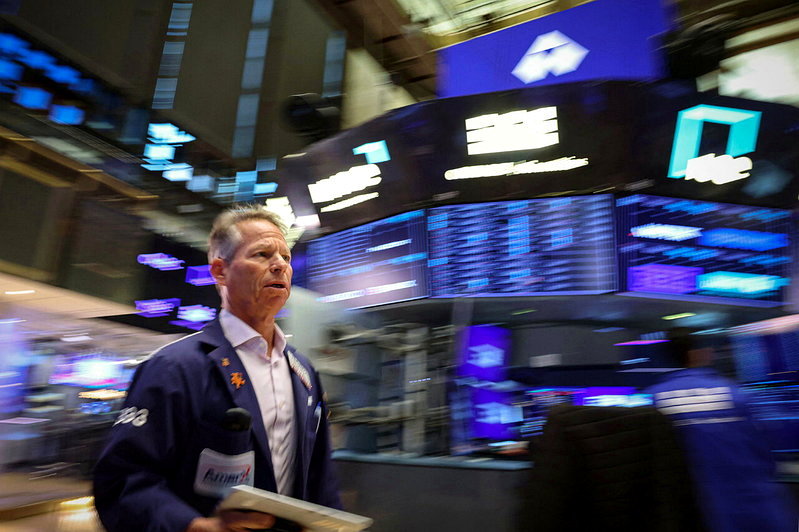
The S&P 500 and Nasdaq closed higher on Tuesday, led by a surge in artificial intelligence (AI)-related stocks.Dow Jones Then falls. Investors are waiting for Americamidterm elections As a result, there are also doubts whether the war in Iran can end in the near future.
The Dow Jones Industrial Average fell 197.26 points, or 0.4%, to 51,786.72; The S&P 500 index rose 27.52 points to 7,568.92, or 0.4%; The Nasdaq Composite Index rose 207.65 points to 25,372.01, or 0.8%.
Chip stocks stopped falling and rallied, with the Philadelphia Semiconductor Index rising 2.6% and all component stocks closing higher. NVIDIA rose 2.3%, ending four consecutive trading days of decline; Micron rose 2.6%, and Advanced Micro Devices (AMD) rose 3.7%. TSMC ADR rose 1.6%.
Sandisk rose 4.8%, while Intel, Coherent and Supermicro also closed with gains. Super Microcomputer and Super Microcomputer announced strong prospects after the bell.
Semiconductors rose 3.6%. Its third-quarter profit and revenue beat analysts’ expectations. Revenue from products sold to AI data centers increased by 175% compared to the same period last year. Marvell Technology rose 0.3%. Shares fell 13% on Monday after the company announced the $115 billion acquisition of Lumentum in an all-stock transaction; Lumentum fell 0.6% on Tuesday.
Microsoft and Amazon both rose more than 2%, and Oracle rose 5.8% to close at $126.19. Apple fell 1.9% to $331.90. Although its financial report last quarter beat Wall Street expectations, its outlook fell short of investors’ expectations. The company warned that memory chip costs will continue to rise, reducing gross profit margins heading into the year-end holiday season.
Palantir fell 1.7%, failing to boost its stock price despite better-than-expected third-quarter results and fourth-quarter revenue forecasts. Six of the 11 major categories of stocks in the S&P 500 index declined, with consumer stocks down 1.8% and raw materials stocks down 1.8%. The weakest performing component was stocks. Most of the component stocks also closed with losses.
Jay Hatfield, CEO of Infrastructure Capital Management, said funds are shifting from more stable technology stocks like Apple to riskier technology stocks like chip makers, and investors are taking advantage of the decline in the Nasdaq market.
Wall Street has a mixed outlook on the market outlook. Elliott Investment Management warned in a letter to investors in October that warning signs of a major bearish market were almost universal, and compared the AI speculative boom to the inflated stock market in the 1920s. UBS Global Wealth Management believes that demand for AI infrastructure equipment remains strong, and the recent selling pressure on technology stocks is likely to be a short-term setback.
Edward Jones analyst Brian Therrien said the recent rotation of funds is largely due to investors reevaluating the price they are willing to pay for the potential of AI. Companies with strong demand for AI, growing related revenues and the ability to finance new investments from their own funds still enjoy high valuations.
Apollo Global Management plans to adopt a more defensive strategy for AI-related investments. President Jim Zelter said that society will need more computing power in the future, demand for chips will remain strong, and AI capabilities are also rapidly improving, but it is still difficult to determine how prices and profit models will evolve.
In connection with the midterm elections, investors are assessing the impact of changes in Congress’ power on finance, regulation, taxation and government spending. Edward Jones strategist Angelo Kourkafas said the election results will hopefully remove some doubts, but AI and geopolitics will still dominate the market in the final two months of the year.
Mark Hackett, chief market strategist at Nationwide, expects political controversies related to AI to continue. He said the market appears to have reflected the shift in political winds, and AI and data centers may be subject to tighter scrutiny; Although slow growth may lower related stock prices in the short term, it may increase investor confidence in the industry’s continued growth in the long term.