
AI summary
Summary of article:
An older couple in Shanghai wanted to cash out their real estate and donate it to sick children, but the tax burden on the sale after the transfer was too high, highlighting the institutional and practical barriers in the tax system to testamentary donation.
A house worth 6.5 million yuan (RMB, approximately US$976,000) is given in cash to help people in need, but the taxes and fees paid are about 4 million to 4.5 million yuan?
In Shanghai, an old couple who lived a frugal life made a will before their death in which they intended to donate all their life savings and real estate to help children suffering from congenital heart disease. However, when the Trust Foundation tried to cash in the bequeathed assets, it faced the practical problem of “first transferring and then selling it”, which meant the company would face higher taxes and fees. This made it difficult to run the old man’s charity smoothly.
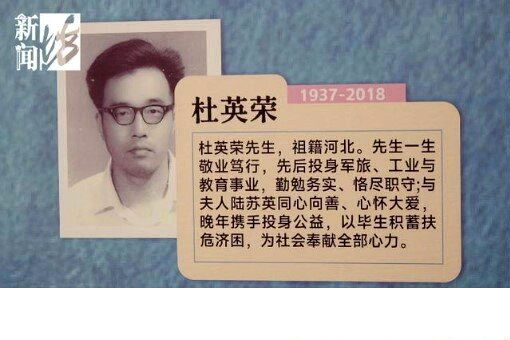
This elderly couple is Du Yingrong and Lu Suying who live in Changqiao Street, Juhui District. Both were extremely frugal during their lifetime, and their cumulative donations have reached more than 5 million yuan. In 2018, he made a notarized will and signed a “power of attorney effective after death”, appointing the Shanghai Overseas Chinese Development Foundation as trustee. He hopes that after his death his remaining savings and a property of more than 40 square meters with a market value of about 3 million yuan will be used to help children with congenital heart disease from needy families. Since the two elders passed away in 2018 and 2025, more than one million yuan in deposits have been successfully withdrawn, but the disposal of real estate has stalled.
The obstacle lies in the current property rights confirmation and taxation mechanisms. Xuhui District Natural Resource Rights Registration Center said that according to relevant regulations, the change of property rights must be registered in the name of the trust foundation before the house can be sold. However, once the property is transferred to the Foundation, the subsequent sale will be treated as a corporate disposal of the property, and it will not be able to enjoy the tax benefits of the sale of an individual house. It will have to bear higher taxes including land value added tax, corporate income tax etc. The comprehensive tax burden can be as high as 60 to 70% of the total price of the house.
This is not the first such dilemma. As early as 2014, when the Minhang District Representative Office of the Shanghai Charity Foundation disposed of 6.5 million yuan of bequeathed property, it faced the dilemma of paying a high tax of 4.5 million yuan. In the end, he had no choice but to rent out the house and invest the rent in a charity fund. Faced with higher taxes and fees, the Overseas Chinese Enterprise Development Foundation has also been unable to make up its mind to force cash.
In response to this problem, legal experts have put forward various viewpoints. Li Bei, associate professor of civil and commercial law at Shanghai Jiao Tong University Kaiyuan School of Law, explained that the old man’s original intention was to authorize the foundation to “sell the house on his behalf” and donate the proceeds, rather than directly naming the foundation as the inheritor of the property. If the notarized power of attorney clearly states that the execution of scheduled matters will not be terminated due to the death of the client, the power of attorney must be legally compliant to remain effective after death, and there may be scope for discussion if the transfer is handled directly.
legacy Donation is an important source of social charity. How to prevent the sincere goodwill of the elderly from being destroyed by complex and high taxes has become an urgent institutional issue that needs to be resolved. Many legal professionals called on relevant departments to pay attention to the practical obstacles in the disposal of charitable donations, issue specific operation rules and tax exemption mechanisms as soon as possible, and open a green channel for the realization of bequest assets, so that every heavy love can be fully expressed.
Summary FAQ
-
Du Yingrong and Lu Suying created a will and a power of attorney that became effective after their deaths, and they designated a foundation to endow their deposits and an estate that would be used to help children with congenital heart disease from needy families.
-
As per current rules, before a house can be sold it must be transferred to a trust foundation. However, once it becomes a basic asset, it may be considered a corporate disposal asset and face higher taxes such as land value added tax and corporate income tax.
-
Experts believe that if the power of attorney clearly stipulates that it will remain valid after death, the foundation can sell the house on its own behalf in accordance with the authority, and it is not necessary to transfer the inheritance first; They also call on the competent authorities to establish clear operating rules and tax exemptions.