
AI summary
Summary of article:
After the Fifth Plenary Session of the Central Committee of the Communist Party of China carried out a mass purge of officials and generals, scholars speculated from Xi Jinping’s logic of appointing and protecting personnel that Cai Qi, who is closely related to him, may become the next target of the purge. At the same time, personnel changes in the army before the 21st National Congress are also seen as a form of power layout.
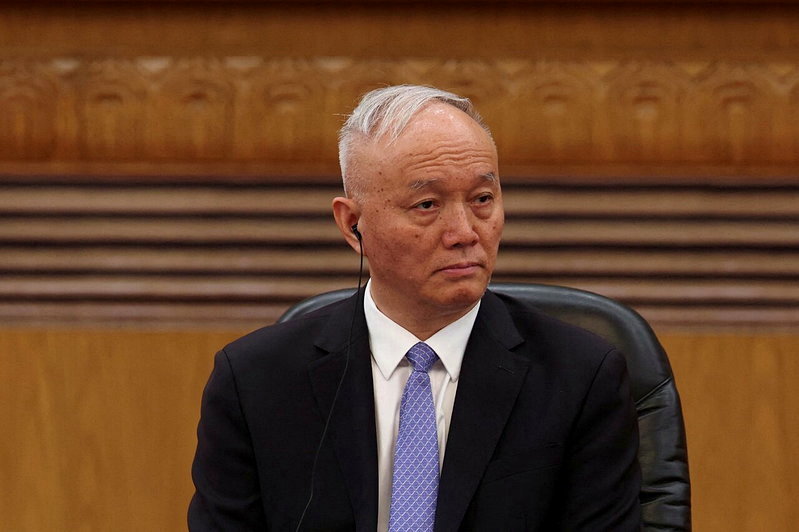
Communist Party of China The Fifth Plenary Session of the 20th Central Committee of the Communist Party of China carried out a large-scale purge of officials and generals. The number of people expelled from the party was the highest since the Cultural Revolution, and the number of people attending the plenary session was the lowest since the 14th National Congress in 1992. Scholars analyze the related personnel purge and believe that on the basis of General Secretary of the Communist Party of ChinaXi Jinping The characteristic of a “narcissistic personality” is that “he will ask you for help when he needs it, but once your ability or reputation exceeds his, he will begin to defend you.” It is speculated that the next high-level target of the purge may be Cai Qi, a member of the Standing Committee of the Political Bureau of the Communist Party of China and director of the Central Office.
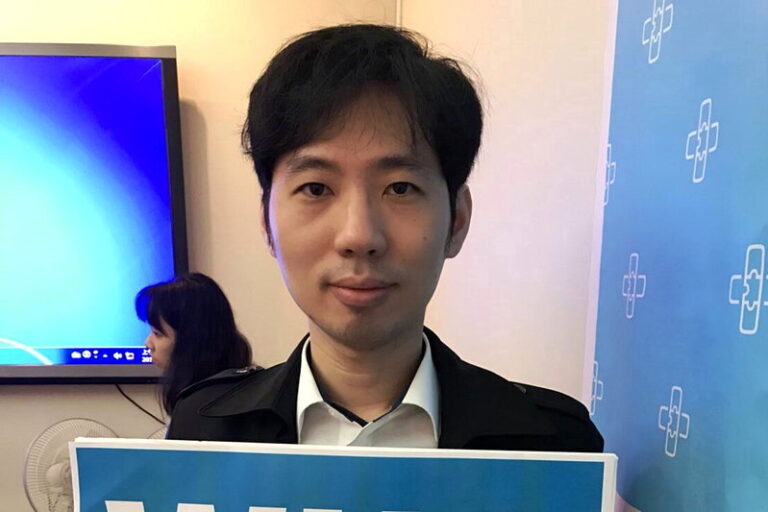
On the afternoon of the 31st, the Institute for Safe Taiwan held a symposium on “An Overview of the Situation after the Fifth Plenary Session of the 20th Central Committee of the Communist Party of China” at the Zhang Rongfa Foundation. Cai Wenxuan, a researcher at the Institute of Political Science of Academia Sinica, made the above judgment and prediction when analyzing the Fifth Plenary Session of the Central Committee and the purge of cadres.
Cai Wenxuan used the examples of Wang Qishan, former secretary of the Central Commission for Discipline Inspection, and Chen Xi, former minister of the Central Committee of the Communist Party of China, who lost power. He described Xi Jinping as a “typical narcissistic personality”. His specialty is that he thinks that he will always be in the limelight. They feel that the country cannot run without them. He is also very jealous of the talents of others. So, there is an interesting pattern. “Many people who worked for Xi Jinping and were very helpful to him later fell out of power.” He believes that this narcissistic personality is characterized by “he will ask you for help when he needs it, but once your ability or reputation exceeds his, he will begin to defend you.” As for the next question? He clearly said that it was probably Cai Qi.
The main reason is that Cai Qi is also “very capable and has done a lot for him (Xi Jinping) in recent years.” Therefore, after the 21st Party Congress, many observers mentioned whether Cai Qi would be removed. “Theoretically, it’s not impossible.” He used the Mexican proverb “Mexico is far from God, but very close to the United States” as a metaphor, and said that “Cai Qi is far from God, but very close to Xi Jinping.” It can be purified after the 21st.
In response to the “Decision on Several Major Issues Related to Constantly Promoting the Comprehensive and Strict Governance of the Party” passed by the Fifth Plenary Session of the Central Committee of the Communist Party of China, Cai Wenxuan analyzed the nature of the “Decision”. It is “related to intra-party rules in the broad sense, but not to intra-party rules in the narrow sense.” Therefore, it should be transformed into certain provisions before it is implemented. In short, the Fifth Plenary Session of the Central Committee of the Communist Party of China will clear all obstacles to Xi Jinping’s re-election before the 21st Party Congress.
As for Xi Jinping’s elimination within the CCP, Cai Wenxuan believes that it can be explained not by the instability of Xi’s power, but by another governance logic of authoritarian rule, that is, “you must constantly look for enemies in the regime to strengthen your (Xi Jinping’s) need for survival” and always tell everyone that “this Party allows some enemies to exist.” Regarding the statement that “the more anti-corruption, the more corruption,” he believes the more accurate way to say it is that “he (Xi Jinping) never wants the anti-corruption movement to end. He needs these corrupt officials to prove the legitimacy and validity of his long-term reign.”
Ma Zhenkun, a professor at the Institute of Chinese Communist Military Affairs in the School of Political Operations at the National Defense University, believes that among the 16 generals of the Communist Army who were expelled from the Party and announced at the Fifth Plenary Session of the Communist Party Central Committee, 7 of them had the background of commanding actual army units of the Communist Army. In addition, there are currently only 6 generals left, including Vice Chairman of the Central Military Commission Zhang Shengmin, Defense Minister Dong Jun, Commander of the Eastern Theater Command Yang Zhibin, Commander of the Central Theater Command Han Shengyan, Secretary of the Military Discipline Inspection Commission Zhang Shuguang, and Air Force Commander Wang Gang. If we take a closer look at these 6 remaining generals of the communist army, “none of them have military power over the actual soldiers of the army.”
He interpreted this to mean that as a result of Xi Jinping’s widespread liquidation of senior generals of the Communist army, the Communist army “lost its traditional ability and strength to intervene in the development of the political situation.”
However, Chen Shimin, associate professor in the Department of Political Science at National Taiwan University, believes that even if Xi Jinping appoints a successor today, or whoever wins the successor, he must have the support of the military. He said he believed the Communist army would play a very important role in the succession of power in the future. Even though the Communist Army currently has no “significant numbers” in the entire Central Committee and Politburo, he believed that whoever wanted to take power as the supreme leader of the CCP in the future would definitely need the support of the Communist Army.
Ji Zhong, an associate researcher assigned to the Institute of Defense Strategy and Resources of the National Defense and Security Institute, believes that Zhang Shengmin’s entry into the Politburo “does not mean that Xi Jinping is completely confident in him.” Because after He Weidong and Zhang Youxia were removed, the military’s position in the Politburo was reduced to zero. This time, Zhang Shengmin’s promotion to the Politburo should be to some extent to appease the Communist military, because if the military does not have a seat in the Politburo, for the military it means that its power within the Communist Party structure is significantly reduced.
As for the fact that the Military Commission did not include Zhang Shuguang this time, Ji Zhong analyzed that Zhang Shuguang is a long-term subordinate of Xi Jinping and has a very close relationship. The reason why he did not compensate is that the Central Military Commission is now nominally composed of Xi Jinping and Zhang Shengmin, but Xi Jinping is very busy, so usually only Zhang Shengmin is in charge. If Zhang Shuguang joins, it will only free Zhang Shengmin to increase his influence. “If we look at it from Xi Jinping’s perspective, we may not be able to make up for it this time.” Anyway, only one year is left. According to their statistics, when the 21st Congress was held, at least 18 active lieutenant generals had served for two years. By then, there will be more flexibility in terms of personnel and more options. If I make a move now, “I’m afraid they will all be Zhang Shengmin’s good friends.” Zhang Shengmin’s influence was originally in the discipline inspection commission system, but now it has begun to penetrate into the political and administrative systems of various military services. “I think Xi Jinping will not be satisfied.”
He emphasized that in the future, key personnel of the 21st Military Commission will be the directors of the Political Work Department, and Xi will avoid Zhang Shengmin’s system. He believes that Chen Damin (currently deputy director of the Political Work Department of the Central Military Commission, a lieutenant general in the Communist army) is more likely to be appointed. If it is aimed at balancing the services, the Navy’s Li Dongyu (currently director of the Political Work Department of the Northern Theater Command, a lieutenant general in the Communist Army) could also be another candidate. As for another vice chairman of the Central Military Commission, he believes that Communist generals Han Shengyan and Yang Zhibin are more likely.