
AI summary
Summary of article:
Rare ancient cave paintings on Indonesia’s Sulawesi island are rapidly deteriorating due to heat and smoke from the worst wildfires in more than a decade, prompting researchers to call for urgent disaster mitigation measures.
The researchers said thatIndonesia The world’s oldest known cave paintings on the island of Sulawesi are under serious threat. Indonesia is in the grip of its worst wildfires in more than a decade. The high temperatures and dense smoke they bring could accelerate the deterioration and damage of these artefacts, which are more than 67,000 years old.
Reuters reported that Indonesia is facing its worst wildfires since 2015. The strong El Nino phenomenon is causing temperatures to rise and rainfall to decrease, making the country’s forests and peatlands more susceptible to fires.
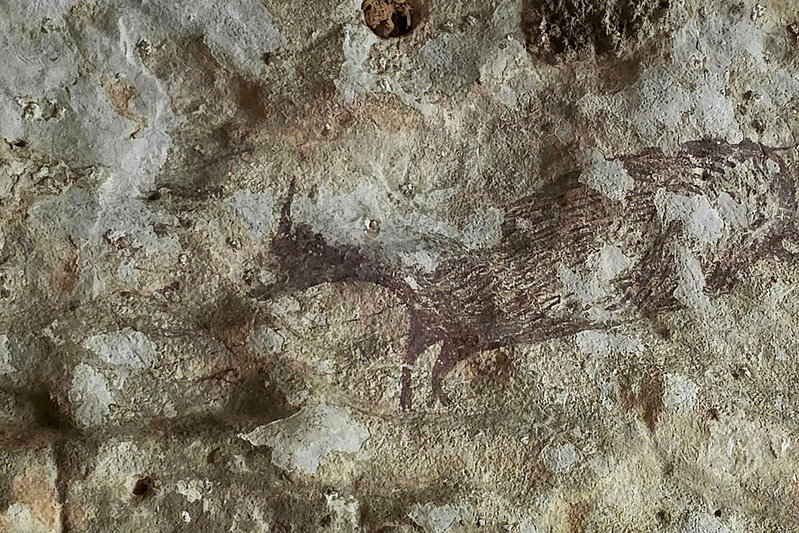
In a cave in Maros-Pangkep, South Sulawesi,Australia Researchers at Griffith University have identified a fresco depicting a human figure interacting with a wild boar, confirming it is at least 51,200 years old. In the caves of Muna Island, adjacent to Sulawesi, outline graffiti with a red handprint dates back at least 67,000 years.
Firefighters worked to extinguish the blaze near the Maros Pankapu Cave, which has thick smoke blanketing the majestic karst terrain surrounding the Caves National Park and UNESCO Global Geopark.
Firefighter Muhammad Ikfar said a fire burned near the site for more than a week earlier this month, and at one point reached less than 2,625 feet from the cave.
Iqfal said that between September 30 and October 18, more than 667 acres of land of the national park came under fire. Griffith University archaeologist Basran Burhan said: “The first and most damaging effect is high temperature. Even if there is no open flame in direct contact with the frescoes, high temperatures will cause damage because it will change the temperature around the frescoes and accelerate deterioration and peeling.”
Dense smoke also produces soot.
“Smoke and dust will cover the top of the graffiti, making the pattern blurry and difficult to identify,” Ikfal said. “Firefighters are still working hard to extinguish fires in other areas of the park, given that the current local weather is quite dry and there has been no rainfall.”
Burhan said seriously, “If we do not act quickly and do not take effective disaster mitigation measures to respond to this disaster, we will lose one of the most amazing witnesses of human history in Maros Pankap. This will be a great regret.”
Summary FAQ
-
Because the high temperatures brought by the fire would change the environment around the cave and accelerate the deterioration and peeling of the frescoes; Dense smoke and dust can obscure the paintings, making the patterns blurry and difficult to distinguish, further damaging the state of conservation.
-
Murals of humanoid figures and wild boars in the Maros Pankapu Cave in South Sulawesi are at least 51,200 years old; The outline of a red handprint in Muna Island Cave can be traced back at least 67,000 years.
-
Researchers believe that if effective disaster prevention measures are not taken quickly, one of the most precious witnesses to human history may be lost in Maros Pankap; Firefighters are working to extinguish the fire, but it is still difficult to completely control the fire due to local dryness and lack of rain.