
AI summary
Summary of article:
As the threat of conflict between the United States and Iran grows, Vance wrote to Iranian hardliner Rezai in hopes of promoting the nuclear issue and armistice talks through personal conversation. The White House believes the diplomatic window is rapidly shrinking.
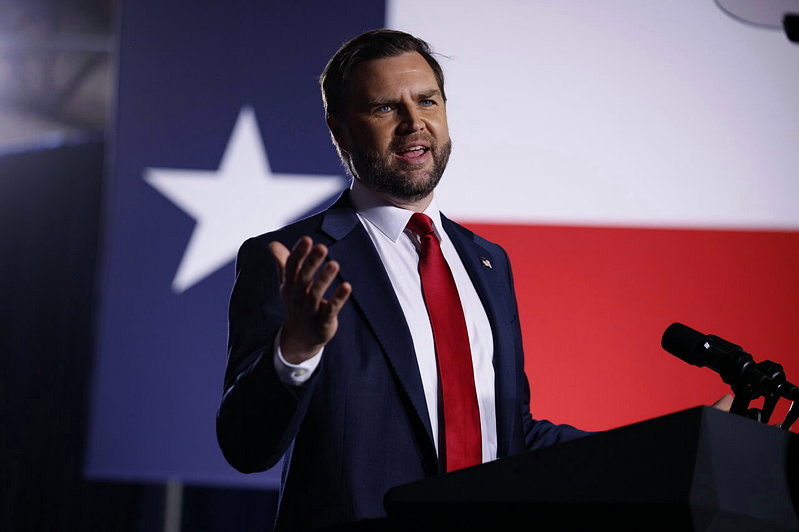
Washington Post foreign affairs columnist David Ignatius wrote on the 29th thatmei yi The White House has moved to move Tehran’s hardline leaders as the risk of renewed conflict grows.iran Mohsin Rezai, Secretary General of the Supreme National Security Council, sees this as the best hope for peace. Vice President of the United Statesvanes Rezai expressed his desire to meet in person to discuss ending the war through negotiations.
A US official familiar with the matter told Ignatius that Vance’s letter “focuses on re-establishing the priority of national interests in the negotiations, including the respective national interests of the United States and Iran.” Vance emphasized that the United States’ main interest is “ensuring that Iran cannot acquire nuclear weapons”, while Iran’s interests are “to rebuild an economy that has been badly hit by war and sanctions, and to protect national sovereignty.” He also asked Iran to send representatives with authority to discuss nuclear issues.
The article reports that the Trump administration believes Rezai is the key figure in communications with Tehran and the only person who can build consensus and promote an agreement to halt the nuclear program. American intelligence officials believe Rezai and Mojtaba to be Iran’s supreme leader. Mojtaba Khamenei is in regular contact and the two were in touch for the past few days after Vance’s letter was sent.
The US official said that if the two sides hold talks, the most likely locations are Istanbul, Türkiye or Doha, the capital of Qatar. The White House believes the window of opportunity for negotiations to avoid a return to war may be closing. Israeli Prime Minister Benjamin Netanyahu is pushing for regime change in Iran, arguing that it is the only way to “end this threat once and for all.” US President Trump has also said that he hopes to “complete the unfinished business” in Iran.
However, the article believes that Trump and Vance are more willing to reach a peace agreement than restart the war. Tehran has always been slow to make decisions, but Iranian leaders may be short on time. It is said that American intelligence agencies have identified Rezai as the center of power of the Iranian regime. A former commander of the Revolutionary Guards and respected by his former colleagues, he further consolidated power by installing his cronies to reorganize the Supreme National Security Council and worked closely with officials in charge of Iran’s economy. US officials believe Rezai “understands how serious the situation is.”
US officials involved in the talks believe the US-Iran conflict is reaching a turning point and hope they will show hard-liners in Tehran that Vance is serious about this diplomatic contact. Iranian leaders are said to have viewed Fanes’ personal letter as a sign of respect, but there is currently no indication that he has softened his stance on the nuclear issue.
The article notes that Rezai’s political career has always been based on his steadfast opposition to the United States and Israel. He has the power to strike a deal with the United States, but doing so would represent a shocking and significant change in his stance.
Ignatius concluded by writing that this diplomatic gambit with Iran showed that Van was playing an increasingly important role in foreign policy and gave him the opportunity to air his doubts about this unpopular war. It is noteworthy that this peace initiative was proposed on the eve of midterm elections in which the Republican Party may face a heavy defeat. But no matter how much political benefit it may bring to the White House, this initiative is better than fighting another war.
Summary FAQ
-
The report reported that the White House believed Rezai was a key figure who could communicate with hardliners in Tehran, so Vance personally sent a letter, hoping to re-establish negotiating priorities through dialogue and avoid the United States and Iran falling into war again.
-
The United States insists that its main interest is to prevent Iran from acquiring nuclear weapons; Iran has been accused of caring about rebuilding an economy badly hit by the war and sanctions and protecting national sovereignty as a common starting point for negotiations.
-
Officials familiar with the matter said the most likely locations were Istanbul or Kadadoha, Turkiye. The White House is worried that the diplomatic window is closing. If the talks fail, the conflict between the United States and Iran could resurface or even escalate.