
AI summary
Summary of article:
Multi-ethnic people in Hayward protested against Wahab, a member of the 14th Congressional District, for advocating contact with the Taliban regime and criticizing it for ignoring the human rights suffering of Afghan and Iranian women and exiles.
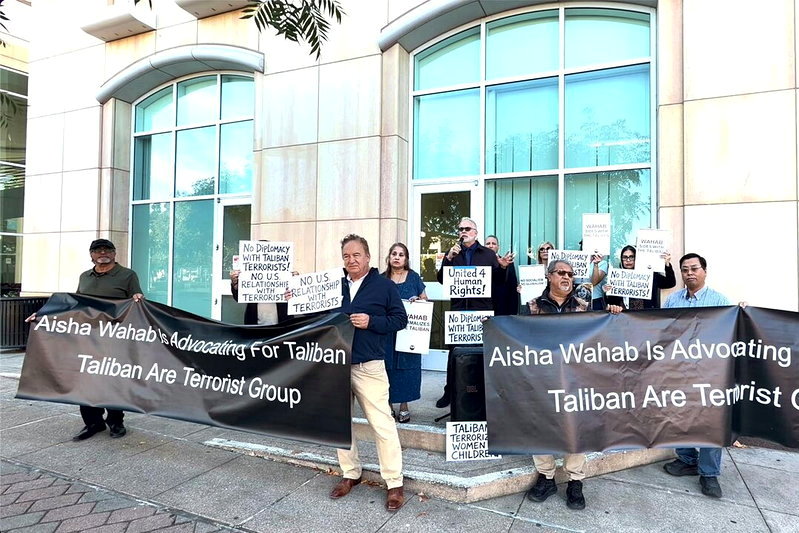
afghanistan descendants,iran American and Indian community members held a press conference in Hayward on the 28th to protest against Ayesha Wahab, a member of the 14th Congressional District, who advocated diplomatic contact between the United States and Afghanistan, where the Taliban is in power. He believed the move ignored human rights abuses of local women and people and called on voters to pay attention to its foreign policy stances.
The press conference was hosted by Edward Escobar, founder of the Coalition for Community Engagement. He pointed out that the Afghan people were forced to leave their homeland due to Taliban oppression and that the United States should not ignore the voices of exiles and victims.
Afghan community member Steve Faryabi attended the event wearing black to express his support for Afghanistan’s approximately 22 million women. She said that after the Taliban returned to power, women were deprived of their rights to education, work and participation in society and were effectively imprisoned in their homes. Approximately 2.4 million girls are unable to obtain secondary education, and women’s loss of job opportunities has also increased family poverty.
Farabi criticized the Taliban’s harassment of journalists and former government personnel, and believed that Wahhab’s diplomatic proposals ignored the suffering of the Afghan people and the sacrifices made by American troops and soldiers fighting the Taliban. He said clearly: “The Taliban were terrorists yesterday, they are today and they will be tomorrow.”
Iranian community leader Sofia Rahimi said she lived in Iran from the ages of 7 to 15 and experienced authoritarian rule firsthand. He questioned Wahhab’s advocacy of diplomatic engagement with the Taliban but his opposition to military action against the Islamic Republic of Iran, arguing that his foreign policy standards were inconsistent. Another Iranian community leader, Narges Kashani, called on all ethnic groups to unite and pay attention to the plight of women’s human rights in Afghanistan and Iran.
Sunita Lodha, a member of the Indian community who lived in Indonesia from 1974 to 1999, is deeply concerned about religious extremism. He criticized the Taliban, which was not democratically elected, but which has long oppressed women and children, and expressed his disapproval of Wahhab.
Hayward mayoral candidate Tom Wong said an Afghan friend once worked as a translator for U.S. Army Special Forces. His family was persecuted by the Taliban and later moved to the Gulf region. One brother is still missing. Joseph A. Rube, candidate for State Representative in California’s 16th District, called on people to vote to express their opinions.
“Democracy Now!” In a previous interview, Wahab said he was deeply disappointed by the Taliban’s restrictions on women’s and children’s education, but believed the United States should explore improving human rights and women’s rights in Afghanistan through diplomatic contacts, and did not express support for the Taliban’s rule.
During the candidate debate on October 7, opponent Melissa Hernandez once mentioned that Wahab had “connections” with the Taliban, and later said that she was referring to his diplomatic overtures and that she believed it could legitimize the Taliban; Wahab criticized the relevant comments as racially charged. Both will face each other again in the elections to be held on November 3.
Summary FAQ
-
Afghans, Iranians and Indians attending the meeting mainly opposed Wahab’s call for diplomatic contact between the United States and Afghanistan, where the Taliban is in power, believing the move would ignore the human rights abuses endured by local women, people and exiles.
-
She said that after the Taliban returned to power, women were deprived of their rights to education, work and participation in society. About 24 lakh girls were unable to obtain secondary education. Many women lost their source of income and family poverty increased.
-
Wahab said she was deeply disappointed by the Taliban’s restrictions on women’s and children’s education, but believed the United States should still explore the possibility of improving human rights and women’s rights in Afghanistan through diplomatic contacts, and did not express support for the Taliban’s rule.