
AI summary
Summary of article:
WSJ reported that although the trilateral summit between the United States, China and Russia could put Xi Jinping at the center, Beijing has not officially invited the three parties to talks because of the high stakes on issues such as nuclear arms control, Ukraine and Taiwan.
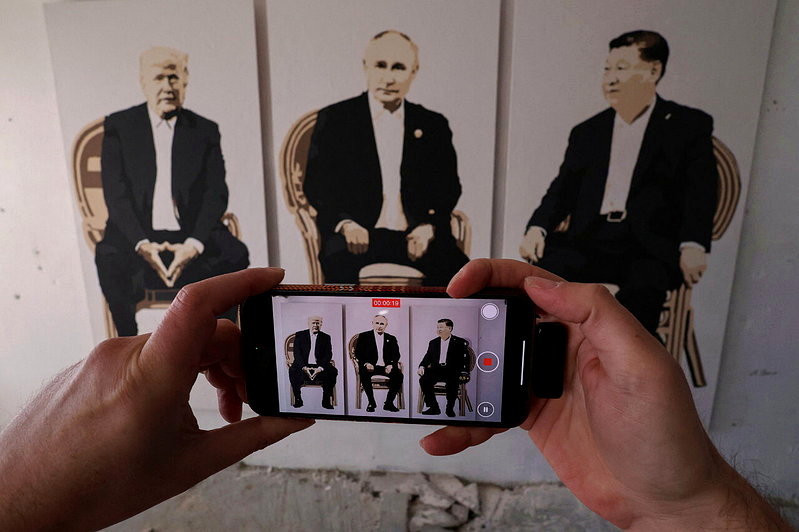
Wall Street Journal reporter Lingling Wei published an article on the 27th stating that less than a month ago, China hosted the Asia-Pacific Economic Cooperation (APEC) summit in Shenzhen, Russian PresidentPutin Put forward unprecedented ideas in hopes of meeting the President of the United Statestrump and Chinese PresidentXi Jinping Holding three-way talks could put Xi Jinping at the center of diplomatic efforts to mediate the war in Ukraine.
For Xi Jinping, the trilateral summit between China, the United States and Russia is both attractive and risky. If the leaders of the three countries hold a summit in China, it will be able to demonstrate that China has emerged as a superpower equal to the United States, and it will also allow Xi Jinping to sit at the core of the negotiating table, which is much more meaningful than any position paper proposal. Trump is ready for the summit, but people familiar with the matter revealed that China has not yet sent an invitation because there are fundamental differences between the leaders of the three countries on the topics of the talks.
China has long desired to play the role of mediator but has been unable to do so, partly because Beijing’s close ties with Moscow have undermined its credibility as a neutral mediator. Beijing proposed a peace plan for Ukraine in 2023, but it did not require Russia to withdraw its troops from the occupied territories. In the end, no progress was made. Now, Putin wants the summit to focus on Ukraine, while Trump has proposed instead talking about nuclear arms control, an issue that Beijing has long been reluctant to discuss with the United States and Russia.
China’s nuclear weapons capabilities lag far behind those of the United States and Russia. The United States and Russia each have thousands of nuclear weapons, and China has only a fraction of that number. From Beijing’s perspective, engaging in arms control talks now would essentially correct China’s nuclear disadvantages. If the leaders of the United States, China and Russia hold nuclear arms control talks, it would set a historic precedent for a US president to participate in such trilateral talks. However, no Chinese leader is willing to accept such an arrangement, especially Xi Jinping, who has experienced the largest expansion of China’s nuclear arsenal in history during his tenure.
Xi Jinping’s visit to the United States in September highlighted differences between the two sides on nuclear arms control issues. Although the minutes of the September 24 Trump–Xi meeting released by the White House mentioned arms control, it was only an issue promoted by the United States and not something the two sides had agreed to include on the agenda or jointly commit to. The official description of the talks released by Beijing made no mention of nuclear arms control.
Sun Yun, director of the China program at the Stimson Center, believes Beijing may resist making nuclear arms control the main focus of the summit and wait and see whether Washington insists. If Trump insists on discussing nuclear weapons as a condition of holding the summit, the meeting could stall before it even begins.
However, Sun Yun pointed out that if a ceasefire is reached between Russia and Ukraine in the next few weeks, or a framework for ending the war begins to emerge, related progress “could become the topic of the summit.” He said Beijing wants the summit to be “the most important event in the history of world politics since the end of World War II.” But Wei Lingling pointed out that ironically, the factors that make the trilateral summit attractive to Xi Jinping are actually the risks involved.
Many European leaders have long believed that Beijing would welcome a protracted war that would erode Western power and deepen Russia’s dependence on China. A trilateral summit discussing Ukraine’s fate but excluding Ukraine would confirm European leaders’ deep misunderstanding. Just as Beijing is trying to avoid a trade war with the EU, the summit could accelerate the deterioration in China-EU relations.
Apart from this there is also the issue of Taiwan. If the three major powers come together to discuss the fate of Ukraine, Taipei might wonder: Will we be next? But paradoxically, the summit may also harm Beijing’s own interests. Beijing has long insisted that the Taiwan issue is entirely an internal matter and no outside interference is allowed. However, the trilateral summit between China, the United States and Russia could lead to interference by outside powers in the Taiwan issue which Xi Jinping is trying to prevent.
Wei Lingling pointed out that Xi Jinping might not believe he was so lucky, but good fortune does not come without a price. The question is whether he thinks the price is worth paying.
Summary FAQ
-
If the summit is held in China, Xi Jinping can show that China is already a major country on par with the United States and will sit at the center of the negotiations; This symbolic importance goes beyond simply issuing a policy statement.
-
Since China has far fewer nuclear weapons than the United States and Russia, participating in arms control negotiations would be tantamount to undoing its nuclear disadvantages. Therefore, Beijing has long opposed this issue, and Xi Jinping is unwilling to accept it.
-
If we only talk about Ukraine but leave out Ukrainian parties, it will deepen European suspicions and worsen China-EU relations; At the same time, it may also make Taiwan worried that Taiwan will be the next country to be interfered with by outside forces.