
AI summary
Summary of article:
Chinese anti-fraud blogger “Hui Jian” was suspected of being retaliated against by foreign forces for exposing Telegram fraud and dubious stories. First he was taken away by fake policemen and then tortured and released. The police immediately solved the case and sentenced the main suspect.
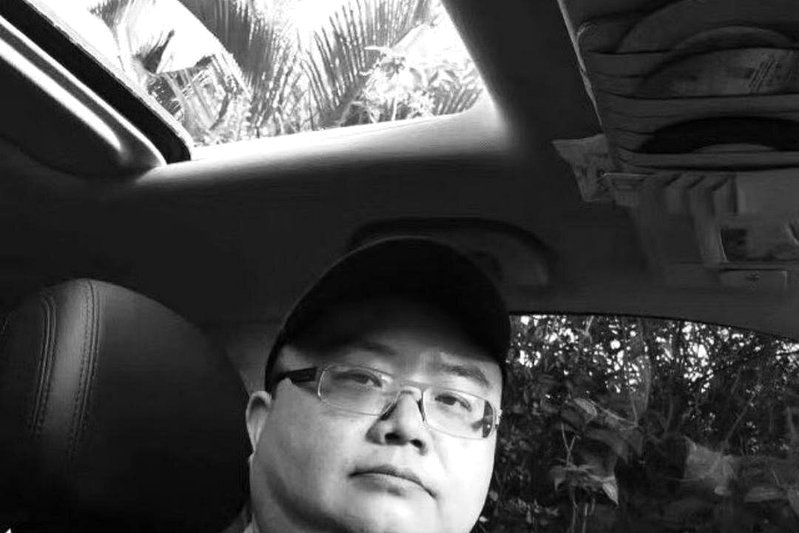
China’s well-known anti-fraud blogger “Huijian” (real name Wu Kai) suddenly disappeared in 2024. Recently, the well-known blogger Mr. Hua reported on the X platform that “Huijian” was kidnapped and murdered by an overseas Chinese businessman who spent 1 million yuan to hire a killer. Board as soon as news comes outweibo Hot search.
Wu Kai’sWeChat Public accounts have long highlighted northern Myanmar,cambodia Insider on electronic fraud, with hundreds of thousands of followers.
In August 2024, Wu Kai published a public document accusing Liu Ren, a key member of the Cambodian Prince Group and chairman of the Anhui Chamber of Commerce in Cambodia, of predatory lending in a casino, beating a decoration owner to death, collecting shop security fees, operating an electronic fraud park, and armed international crimes. This is the first time Liu Ren has been reported publicly.
A few days later, Liu Ren issued a serious statement in the name of the Anhui Chamber of Commerce in Cambodia, denying each item and calling the revelations “malicious rumors and baseless slander.”
Court documents obtained by Jimian News show that a person surnamed “Major” posted a reward on Telegram and provided Wu Kai’s address, photo and license plate. On November 10, 2024, Wu Kai was taken away by fake police in Huizhou, Guangdong and forced to delete his articles. During this, he was beaten and his nails were pulled out. On the 11th, he was knocked unconscious and left on a mountain in Dingnan County, Jiangxi. Villagers found his body two days later.
The identification opinion revealed that Wu Kai died due to subarachnoid hemorrhage and subdural hemorrhage caused by head and facial trauma.
After the incident, someone deliberately transferred 11,000 yuan to Wu Kai’s account and spread false news on the Internet that he was “taken away by the police.” Lao An (pseudonym), a friend who has known Wu Kai for many years, said that Wu Kai has hundreds of thousands of fans. If his account remains suspended for a long time, someone will inevitably ask questions, and he will package his victim as “caught” to confuse the public.
The police have arrested more than ten people involved in this case within ten days. In the first instance, the Huizhou Intermediate Court sentenced the main suspect Zhao Bing to a suspended death sentence for intentionally causing injury, and the remaining accomplices were sentenced to 1 year, 3 months to 8 years in prison. The Guangdong High Court held that crimes against anti-fraud people should be punished severely, and the sentence would not be reduced because of compensation and apology, and all appeals were rejected.
However, the identity of the “chief” who financed the assassination has not been made public. China’s Ministry of Public Security announced in June this year that Liu Ren was suspected of telecommunications fraud, intentional injury and other crimes and was taken back to China.
Summary FAQ
-
He has long exposed the inside story of electronic fraud in northern Myanmar and Cambodia on his WeChat public account, and publicly accused members of the Cambodian Chamber of Commerce of being involved in predatory lending, electronic fraud and international crimes. There is a possibility of taking revenge for this.
-
The document alleges that the suspect first offered a reward on Telegram and obtained her address and license plate, then pretended to be a police officer and took her to Huizhou, forced her to delete articles and tortured her, and finally left her to die in a mountainous area in Jiangxi.
-
The police have arrested more than ten people involved in this case within 10 days. The Huizhou Intermediate People’s Court sentenced the main suspect Zhao Bing to a suspended death sentence for intentionally causing injury, and the remaining accomplices received sentences ranging from 1 year and 3 months to 8 years. The Guangdong High Court also rejected the appeal.