AI summary
Summary of article:
Lula defeated Flavio in the second round of voting in the Brazilian presidential election. Bolsonaro won his re-election, but disputes over bus dispatches and heavy rain led to prolonged voting hours across the country, leading to electoral chaos and subsequent legal doubt.
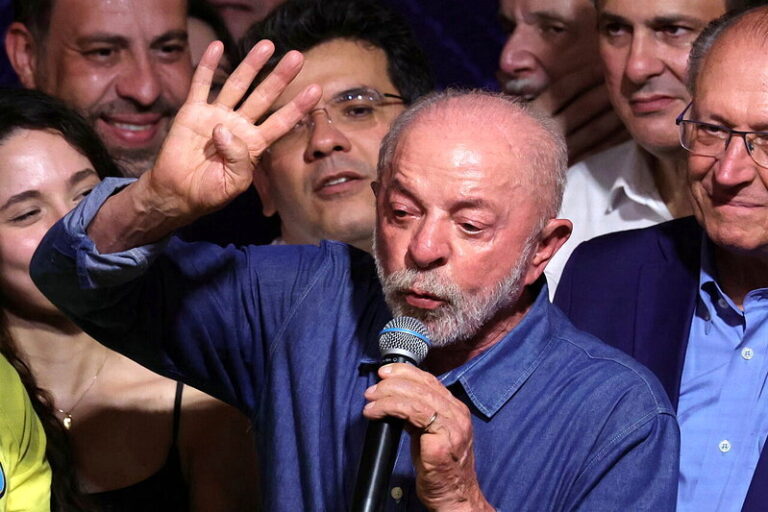
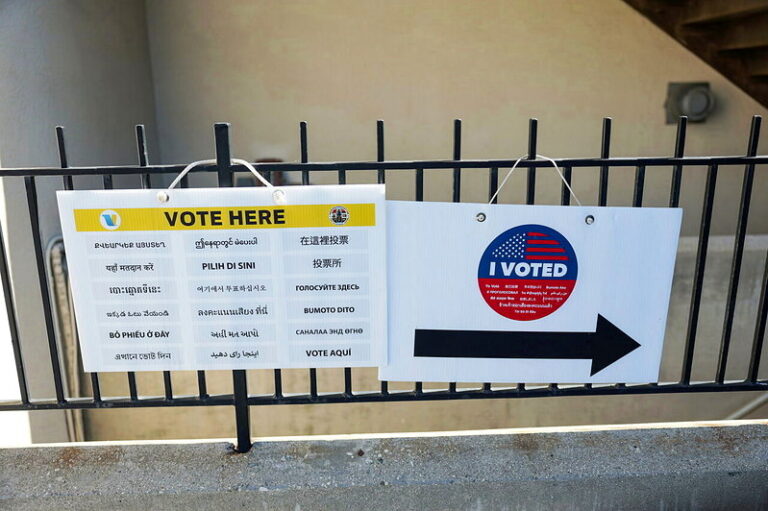
according tobrazil The High Electoral Court announced the counting results on the evening of the 25th. Incumbent President Luiz Inácio Lula da Silva won the second round of the 2026 Brazilian presidential election.vote Win, win re-election.
The Guardian reported that Brazil held a meeting on the 25thpresidential election In the second round of voting, Brazil’s electoral court announced that leftist President Lula had defeated far-right Senator Flavio. Flavio Bolsonaro was successfully elected as the President of Brazil and will begin his fourth consecutive term. Lula became the first candidate in the history of Brazilian democracy to win an upset in the second round of a presidential election after losing the first round.
As current President Lula’s camp accused some cities of inadequate bus frequency, his rival Flávio. The Bolsonaro camp said voting was affected by heavy rain in the south and both parties requested that voting be extended. For the first time, a Supreme Court judge ordered nationwide voting to be extended to 7 pm, two hours later than the originally scheduled polling time. local time. As a result, some voters were still able to vote, but others were prohibited from voting.
The general election pitted Luiz Inácio Lula da Silva against former President Bolsonaro’s son and senator Flavio, The Guardian reported. Flavio Bolsonaro.
The dispute stemmed from traffic problems on the day of voting. Lula’s camp reported that in cities such as São Paulo and Salvador, which support Lula, operational abnormalities were observed on buses responsible for transporting voters to polling stations. Among them, at least 75 buses in Salvador, the capital of Bahia state, were blocked from leaving municipal parking lots on the 25th. The local election court judge also ordered the arrest of Pablo Souza, the city’s transportation director.
Flavio, on the other hand. The Bolsonaro camp also requested an extension of the voting period on the grounds that heavy rains in southern Brazil, where he enjoys strong support, and flooding in some areas could prevent voters from going to polling stations. Hence both the camps requested for extension of polling time citing bus transport problems and bad weather respectively.
As polling stations were about to close, Brazilian Supreme Court Justice Cristiano Zanin issued a ruling three minutes before the polls were scheduled to close at 5 p.m., ordering polling stations across the country to remain open for two hours until 7 p.m. However, the order was not communicated until minutes after the scheduled polling time, and many polling stations were already closed.
There was chaos among election officials everywhere as some voting machines stopped and could not be restarted. Employees of a polling station in the capital, Brasília, also handed over vote counting information to election officials and then left. There were also polling stations in Rio de Janeiro where voting could not resume because the machines were down. Zanin later clarified that the order to extend voting only applied to polling stations that had not yet closed, resulting in some voters being unable to vote at 5 pm, while others were able to vote until 7 pm, and the announcement of election results was suspended until the end of extended voting. The counting started again.
This unprecedented decision may also give rise to legal disputes after the elections. Edinho Silva, president of Lula’s Labor Party, said he was studying legal action against “interference in the electoral process”. Bolsonaro’s camp has yet to formally respond, but his ally Nicolas Ferreira raised questions about whether Lula’s former lawyer Zanin had ordered the extension of the vote in an effort to build grounds for Bolsonaro to potentially challenge the election results.
In the first round of voting earlier this month, Bolsonaro won 47.03% of the vote, leaving Lula with 45.16%. None of them got more than half, so they entered the second round of runoff.
Bolsonaro is an ally of US President Trump and advocates reaching a more favorable trade and rare minerals cooperation agreement with Washington; Lula has criticized the Trump administration’s imposition of high tariffs on Brazilian goods and warned about the risks of US interference in Brazilian elections. Trump said on the 25th that he was paying close attention to the Brazilian election, but he refused to endorse any candidate.
Summary FAQ
-
According to vote counting results announced by Brazil’s High Electoral Court, Lula won the second round of voting in the 2026 presidential election and was successfully re-elected. He will begin his fourth consecutive term and become the first person in the history of Brazilian democracy to be re-elected after being defeated in the first round.
-
Because Lula’s camp alleged the lack of public buses in some cities affected voters’ ability to go to the polls; Flavio. Bolsonaro’s camp said voting was disrupted by heavy rains and flooding in the south and both parties asked for an extension. Therefore, the Supreme Court ordered a two-hour extension across the country.
-
Many polling stations were closed when the order was given and some voting machines could not be restarted. As a result, some people were able to vote by 7 pm, while others were rejected earlier, and the election became chaotic at once. This has led the Labor Party to even consider filing a lawsuit, which could lead to a legal dispute after the election.