
AI focus
Summary of article:
- Main point one:Middle seat passengers can usually share the armrest on either side to avoid collision.
- Point 2:Experts recommend using equipment and posture adjustments to improve flight comfort.
- Key point three:If you want to avoid the middle seat, you can take advantage of the airline’s seat selection monitoring function.
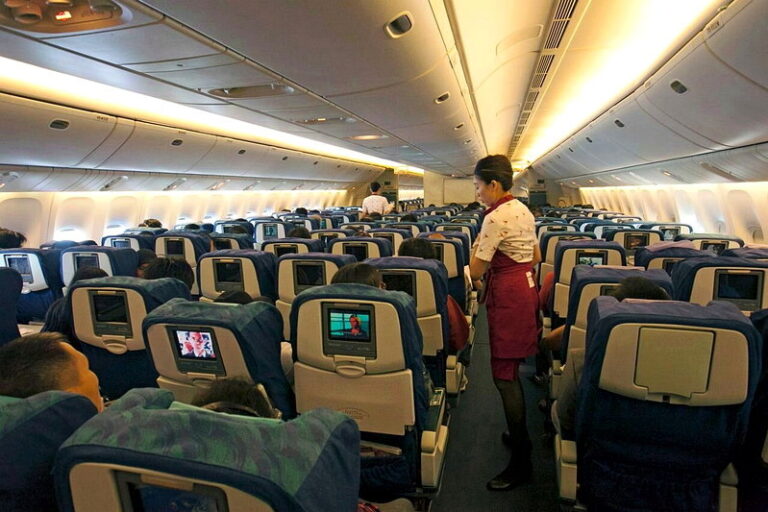
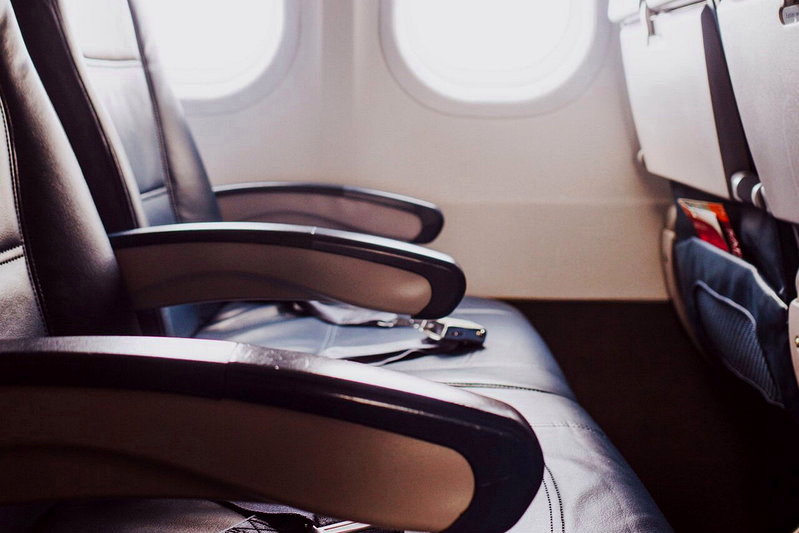
For many passengers, being assigned the middle seat on a flight is merely a “physical confrontation.” Who has the seat armrest and who can use it can easily become a source of conflict, which also makes the middle seat the most dangerous conflict zone on the plane. Some people may also fight over the armrest. However, these conflicts can be avoided. Making good use of “armrest diplomacy” or body-flexing skills makes sitting in the middle seat less difficult.
USA Today reported that Alex Gervasch, an experienced commercial airline captain, said the middle seat triggers a psychological mechanism called “perceived loss of control.” When you can see the aisle or window, your nervous system is calm, but if you sit in the middle and the view of the aisle and window is blocked by other people, your brain will interpret this as confinement, and your fight or flight response will remain in a low-activation state throughout the flight.
But you don’t have to go through this process, as frequent fliers and experts share ways to make that much-coveted middle seat more comfortable.
The first is guardrail diplomacy. Etiquette expert Adiodata Kazinka said that the two middle armrests belong to the middle seat passengers. Passengers in the window have a view of the window and the plane wall, and aisle passengers can enter and exit freely. Of course, the middle passengers can have armrests on either side.
Jodi RR Smith of an etiquette consultancy company also agrees with this statement and says that propriety should be adjusted with consideration for others. If you’re slim but the passenger next to you is tall and you have to squeeze yourself into the seat, there’s no harm in sharing an armrest. After all, people are not only regional, but also empathetic.
Stephanie Ward, who often sits in the middle seat, said that when flying, the first thing she would do was explain the armrest rule to the passengers next to her and tell a joke, that is, to make sure they wouldn’t have to go to the toilet every half hour, which always made the passengers next to her laugh.
If armrest diplomacy is an offensive strategy, the tool is a defensive measure. Katharine Nohr, an attorney who lives and travels a lot in Hawaii, developed a middle-seat survival kit and continues to adapt its contents.
Noel’s equipment includes two inflatable lumbar pillows, one for his back and one for his legs, an inflatable neck pillow, a pair of eye masks, a hood to cover his face, a pair of special slippers in a small box, a scarf that can be used as a blanket, and a mountaineering pocket that hangs in the front. A water bottle on the back of the seat, a pair of noise-canceling headphones. The pair, a jacket with pockets, and a small bag with essential supplies were all packed into one small luggage. The backpack, which was then stuffed into a large carry-on; Noel laughed and said that she was “the most comfortable passenger in the middle seat.”
Jackets are also great equipment. When flying in autumn and winter, heavy coats not only make the seats more crowded, but also make them difficult to fold neatly and place in the overhead bin.
Hip and knee surgeon Christopher Jimenez said he would wrap his jacket tightly and place it on his belt as a pillow to avoid back pain during flights.
Physical therapist Lou Ezrick said he sees the side effects of the holidays every January, and he warns travelers not to do “isometric shrugs.” He said that in cold weather, the most common posture mistake made by middle passengers is to subconsciously shrug their shoulders towards the seatmate, which will definitely cause upper back pain. He recommends consciously relaxing the shoulders and back every 20 minutes and setting a timer on your phone if necessary.
Orthopedic surgeon Thomas Jenneby’s principles for sitting in the middle are to keep your spine neutral, your elbows in, and your pelvis stable. He says your forearms should be vertical, not extended, and your feet should be flat. Don’t twist your hips trying to create space that doesn’t exist.
If you find the armrest cumbersome and takes up space while carrying equipment, the best option is to avoid the middle seat. American Airlines recently added a new feature to its app that allows passengers to monitor seat charts. After booking a seat, they can tell the app what type of seat they want to sit in. The app will proactively notify them if a seat that meets their requirements is released. However, you must be an AAdvantage member, travel alone, and have an assigned seat to use this service. Additionally, monitoring will be turned off 24 hours before departure.
Summary FAQ
-
Because when sitting in the middle, the view of the aisle and window is blocked by others, the brain will have a limited feeling of losing control, which will continue to activate the fight or flight response at a low level, making it easy to feel anxious and uncomfortable.
-
Etiquette experts believe that in principle, the two armrests of the middle seat belong to the middle passenger, because the window and aisle passengers each have a positional advantage. However, sharing can also be done flexibly depending on the body size of the person sitting next to you and the level of mutual understanding.
-
Apart from coordinating armrests and preparing comfort equipment with your neighbor, the most straightforward approach is to avoid the middle seat. The American Airlines app offers seat monitoring notifications, so AAdvantage members can know about the availability of suitable seats up to 24 hours before departure.